Why Does Intrinsic Motivation Make Hobbies More Fulfilling?
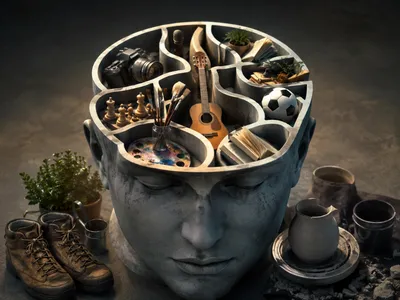
True fulfillment in a hobby begins when individuals experience a sense of volitional choice. Engaging in an activity freely, without external pressure, transforms an ordinary pastime into a meaningful pursuit. The internal drive to master a skill, known as competence, fuels sustained engagement, as people gain deep satisfaction from noticing incremental progress and overcoming small challenges. Self-determination theory emphasizes that autonomy and competence are not mere enhancements but essential psychological nutrients, and when a hobby satisfies both, it shifts from passive consumption to active, identity-reinforcing practice.
This dynamic explains why hobbies chosen under obligation often feel hollow. The freedom to fail safely, combined with visible skill growth, creates a feedback loop where effort itself becomes rewarding. Mastery is a journey, not a destination, and this journey must feel self-directed. Intrinsic motivation therefore serves as the driving force for long-term fulfillment, far outweighing external rewards such as recognition or competition.
The Flow State and the Pursuit of Fulfillment in Hobbies
A fulfilling hobby must balance between boredom and anxiety. Activities that are too simple lead to apathy, while overly difficult tasks cause frustration. Psychologists describe this optimal zone as the flow state, where skill level aligns with task difficulty, and achieving flow requires clear goals and immediate feedback on performance.
Repeated experiences of flow provide a profound sense of purpose that goes beyond mere relaxation. The hobby becomes a context for growth, demanding focused attention while offering a feeling of effortless control. Research on optimal experience highlights the value of just-manageable challenges, ensuring that the activity evolves alongside the practitioner and sustains intellectual curiosity. Discovering unconventional hobbies to boost creativity can provide these exact dynamic landscapes, where incrementally escalating difficulty keeps engagement high and prevents stagnation.
This principle explains why many abandon hobbies once initial enthusiasm wanes. Without a structured path toward progressively harder tasks, the activity loses its potential to provide meaningful accomplishment. Deliberate practice, when self-directed rather than externally imposed, transforms a casual interest into a lifelong source of fulfillment.
| Challenge Type | Psychological Outcome | Fulfillment Potential |
|---|---|---|
| Under-challenge | Apathy, boredom, disengagement | Low |
| Optimal challenge | Flow, focused immersion, growth | High |
| Over-challenge | Anxiety, frustration, avoidance | Low |
The table above illustrates how the intensity of challenge directly shapes emotional and motivational outcomes. A hobby that consistently offers calibrated difficulty becomes a reliable source of psychological restoration and self-expansion.
The Social Dimension and Identity
Sharing a hobby within a community transforms private enjoyment into collective meaning. Social connection provides validation, shared knowledge, and a sense of belonging beyond the activity itself. When individuals integrate a hobby into their self-concept, it becomes a core part of their identity, turning an occasional pursuit into a defining personal narrative.
Communities built around shared interests offer structured pathways for deepening engagement. Mentorship, collaborative projects, and friendly competition create layers of meaning that solitary practice cannot replicate. Belonging amplifies purpose, reinforcing commitment through mutual accountability and celebration of milestones. Research shows that social contexts enhance skill development and emotional resilience, as engaging with others who value the same craft provides unspoken encouragement during plateaus and genuine recognition for achievements.
The connection between hobby and identity becomes most apparent when individuals describe themselves using their avocation—a runner, a potter, or a birder. When considering the question, "Is your hobby shaping your identity?", such self-labeling reflects deep integration, where the hobby supplies not just enjoyment but a framework for interpreting experience. Identity fusion in this context predicts higher persistence and greater overall fulfillment. Before examining the psychological functions of such communities, it is useful to consider how different social structures support hobby engagement.
The list below outlines common relational modes that enrich personal pursuits.
- Mentorship circles – structured guidance that accelerates competence and provides role models.
- Peer practice groups – collaborative settings where shared goals normalize effort and foster accountability.
- Communities of recognition – audiences or judging panels that offer external validation and motivate refinement.
- Informal affinity networks – casual gatherings that prioritize belonging over achievement.
Mindfulness and A Psychological Reset
A fulfilling hobby often acts as a portal to present-moment awareness. Engaging in an absorbing activity quiets ruminative thought patterns and anchors attention in the here and now.
This shift from doing to being allows the mind to disengage from work-related pressures and daily stressors. The hobby becomes a sanctuary where judgment is suspended and process takes precedence over outcome.
Modern life fragments attention across multiple demands, leaving little space for sustained focus. Integrating specific mindfulness practices for daily life through activities requiring gentle concentration naturally induces a state of mindfulness. The rhythmic nature of practice serves as a cognitive reset, restoring depleted attentional resources.
Neuroscientific perspectives suggest that such immersive states activate the brain’s default mode network differently than passive leisure. Rather than fostering mind-wandering into stress loops, a well-chosen hobby encourages restful engagement—alert yet relaxed. This unique combination supports emotional regulation and builds psychological resilience over time, making the hobby a genuine tool for mental health maintenance.