How Do NFTs Create Verifiable Digital Scarcity?
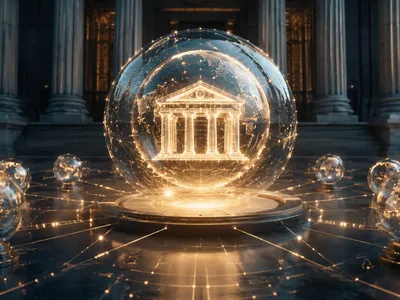
Digital scarcity has shifted from centralized verification to decentralized systems through NFTs, where ownership and provenance are recorded on immutable ledgers. This removes the need for central authorities and reshapes how digital assets are authenticated and exchanged.
Verifiable rarity becomes programmable via smart contracts, ensuring scarcity without human oversight and reducing counterparty risk. With built-in authenticity guarantees, NFTs provide cryptographic certainty, enabling new utility models in areas like art, gaming, and licensing while supporting seamless secondary markets.
Programmable Ownership Models
Ownership in traditional systems often stops at possession, leaving rights and revenue streams disconnected. Programmable NFTs embed these elements directly into the asset’s code.
Royalty mechanisms automatically distribute secondary sale proceeds to creators, aligning incentives across the lifecycle. Such automation reduces administrative overhead and contractual disputes.
More advanced implementations introduce modular ownership, where utility—such as access or governance—can be separated from the base token. This separation enables sophisticated fractionalization and leasing arrangements that mirror real‑world asset structures. Conditional transfers based on time or external data further expand the design space for digital property.
These programmable features turn NFTs from static certificates into dynamic instruments. Developers now build decentralized applications where ownership triggers automated workflows, such as unlocking content upon payment or voting in decentralized autonomous organizations. By embedding logic directly into the token standard, the boundary between asset and application blurs, creating new categories of digitally native goods that were previously impossible to execute with traditional contracts. Interoperability standards like ERC‑1155 allow these programmable assets to function across multiple platforms, amplifying their practical utility.
Bridging Physical and Digital Assets
Phygital ecosystems connect physical goods to NFTs, assigning them secure digital identities through technologies like NFC tags or QR codes. This enables decentralized authentication and ownership verification without relying on central authorities.
By creating immutable provenance trails, these systems track products from production to resale, helping combat counterfeiting while enabling features like royalties. The token serves as a reliable record of ownership, maintenance, and authenticity, allowing physical items to gain digital programmability through smart contract automation.
On a broader scale, tokenized assets reshape inventory and supply chain management by improving transparency, reducing fraud, and unlocking new revenue opportunities. This integration of physical and digital systems marks a significant transformation in how value is monitored and exchanged.
Community Access and Governance
NFTs have evolved from collectibles into instruments for organizing digital communities. Token holdings now determine membership in exclusive ecosystems, granting access to content, experiences, and decision‑making processes previously reserved for centralized administrators.
Governance tokens embedded within NFT contracts enable holders to propose and vote on protocol changes, treasury allocations, or creative direction. This structure distributes authority across a verified stakeholder base while maintaining cryptographic proof of participation.
The utility of community‑driven NFTs extends beyond simple access. Membership can unlock tiered benefits based on token age, activity, or cross‑project interoperability. The following mechanisms illustrate how projects translate ownership into structured participation:
- Token-gated platforms – exclusive chat rooms, events, or content only accessible with specific NFT holdings
- Quadratic voting systems – governance weight adjusted to prevent whale dominance while rewarding long-term engagement
- Multi-token DAO structures – separate tokens for voting, treasury management, and work contribution to avoid conflating roles
- Reputation-based modules – on-chain activity scores that unlock additional governance powers or rewards
These frameworks transform passive ownership into active participation. Projects that implement robust governance models report higher retention and more aligned incentives between creators and communities. Decentralized coordination through NFT‑based systems challenges traditional organizational hierarchies, offering a scalable alternative for collective resource management.
How Are NFTs Evolving Beyond Speculation?
Although market volatility initially framed NFTs as speculative assets, their underlying infrastructure has evolved toward practical applications that deliver consistent value. Utility-driven models now emphasize ongoing engagement by integrating NFTs into workflows, memberships, and operational systems, where sustained utility arises from their role as access keys, credentials, or coordination tools rather than one-time sale assets.
The transition from speculation to utility manifests across several domains. The table below illustrates how different sectors are embedding NFTs into durable use cases that generate consistent engagement.
| Sector | Utility Mechanism | Measurable Outcome |
|---|---|---|
| Professional Credentials | Verifiable certifications stored as NFTs | Reduced fraud, instant verification, portable career records |
| Supply Chain | Tokenized goods with provenance tracking | Counterfeit reduction, streamlined recalls, automated compliance |
| Decentralized Science (DeSci) | NFTs representing intellectual property shares | Transparent funding, revenue sharing, collaborative research |
| Event Ticketing | Scam‑resistant tickets with programmable royalties | Eliminated scalping, direct artist revenue, post‑event community access |
Each of these applications demonstrates that sustained utility arises when the token serves a necessary function within an existing ecosystem rather than creating artificial scarcity for its own sake. Projects that survive market cycles share a common trait: the NFT is instrumental, not ornamental. They reduce transaction costs, enforce agreements automatically, or provide access that cannot be replicated off‑chain. As infrastructure improves—with lower gas fees, cross‑chain interoperability, and better user interfaces—the gap between speculative hype and genuine utility continues to narrow. Integration with legacy systems further accelerates adoption by allowing enterprises to adopt NFT technology without disrupting existing workflows.
Can NFTs Maintain Long-Term Utility?
Determining whether an NFT project will sustain its utility requires examining technical, economic, and governance fundamentals. Tokenomics must align incentives between early adopters, developers, and long‑term users to avoid value extraction that leaves the ecosystem depleted.
Governance structures that distribute decision‑making authority while preventing capture by large holders contribute to resilience. Projects with transparent roadmaps and verifiable on‑chain activity offer clearer signals of continued development than those driven by marketing momentum alone. Interoperability across platforms reduces vendor lock‑in, allowing assets to retain value even if individual applications decline.