The Seamless Digital-Physical Mosaic
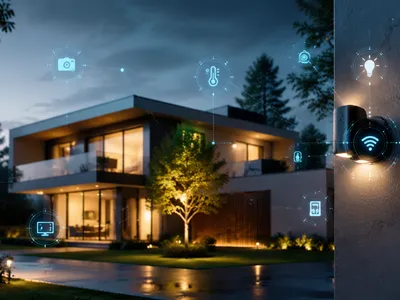
The most profound technological shift is the erosion of boundaries between the digital and physical worlds. This integration moves beyond simple smartphone connectivity to create a continuous, responsive environment.
Ambient computing, powered by distributed sensors and low-power networks, embeds intelligence into the very fabric of buildings, objects, and public spaces. These systems operate passively in the background, anticipating needs and orchestrating interactions without requiring direct human commands. The environment itself becomes an interface.
This convergence is accelerated by advances in material science and edge computing. Smart materials with embedded sensing capabilities and microprocessors that process data locally enable real-time adaptation. The result is a context-aware ecosystem that blends digital information and physical action seamlessly, fundamentally altering daily routines and environmental management.
Autonomous Mobility and Urban Redesign
The maturation of autonomous vehicle (AV) technology promises to reconfigure the anatomy of cities and the experience of movement.
Beyond self-driving cars, the proliferation of swarms of autonomous delivery robots, drones, and public transit pods will create a multi-layered mobility network. This shift necessitates a redesign of urban infrastructure, prioritizing efficient flow and interaction between different types of automated agents over static, human-centric design.
The societal implications are vast. With a significant reduction in private car ownership, vast tracts of land currently dedicated to parking can be repurposed for green space, housing, or commercial use. Traffic management evolves from regulating flow to coordinating a synchronized mobility service, potentially eliminating congestion. Furthermore, this transition provides unprecedented independence for the elderly and disabled, while simultaneously demanding robust cybersecurity frameworks and new ethical guidelines for machine decision-making in complex public spaces. The city transforms from a collection of routes into a dynamic, service-oriented organism.
The core technological pillars enabling this future include:
- 🔭 Sensor Fusion: Combining LiDAR, radar, and computer vision for 360-degree, all-weather perception.
- 📡 V2X (Vehicle-to-Everything) Communication: Enabling real-time data exchange between vehicles, infrastructure, and pedestrians.
- 🗺️ High-Definition Dynamic Mapping: Providing continuously updated, centimeter-accurate road models for precise navigation.
Can AI Become a Personal Companion?
Artificial intelligence is transitioning from a tool for task automation to a potential partner in daily life, raising profound questions about the nature of interaction and support.
Next-generation AI agents leverage large language models and multimodal learning to engage in contextually rich, longitudinal dialogues. These systems move beyond command-response protocols to build persistent memory models of individual user preferences, habits, and goals. The development of affective computing enables these agents to detect and adapt to human emotional cues, aiming to provide not just information but also contextualized support.
This evolution towards companionship introduces complex ethical and social dilemmas. Issues of algorithmic bias, data privacy, and psychological dependency become paramount when dealing with systems designed for personal intimacy. The anthropomorphism of AI can blur necessary boundaries, while the black-box nature of deep learning models challenges transparncy and trust. The central technical hurdle lies in creating AI that can navigate the unstructured, nuanced flow of human life with genuine empathy and without manipulative design.
The landscape of AI companions can be categorized by their primary function and technological approach, as summarized below.
| Type | Core Function | Enabling Technology |
|---|---|---|
| Cognitive Assistants | Managing schedules, information filtering, and complex problem-solving. | Predictive analytics and reasoning engines. |
| Social & Emotional Agents | Providing conversational engagement and mood-adaptive responses. | Affective computing and sentiment analysis. |
| Embodied Co-learners | Collaborating on creative tasks and skill development through dialogue. | Interactive machine teaching and generative models. |
Quantum Sensing and Invisible Networks
Quantum technologies are moving from theoretical labs into practical applications, with sensing poised to create a layer of imperceptible but supremely accurate data about our world.
Quantum sensors exploit the principles of superposition and entanglement to measure physical quantities—such as magnetic fields, gravity, or time—with orders of magnitude greater precision than classical devices. This enables the detection of signals previously lost in noise, from monitoring neural activity non-invasively to identifying subterranean structures. These devices create a new perceptual layer for infrastructure and biology.
The integration of such sensors into distributed networks will give rise to "invisible" monitoring systems. Ultra-precise timing from atomic clocks will synchronize financial networks and global positioning with unbreachable security, while networks of magnetometers could monitor city-wide traffic flows or underground utility health in real time. This paradigm shift towards continuous, ambient measurement promises predictive maintenance for everything from bridges to the human body, but it also necessitates a framework for the ethical use of such pervasive and powerfully revealing data, challenging conventional notions of privacy and surveillance.
Key application areas demonstrate the transformative potential of this silent sensing revolution.
| Application Field | Quantum Principle Used | Potential Impact |
|---|---|---|
| Precision Navigation | Atom interferometry (inertial sensing) | GPS-independent positioning for autonomous systems. |
| Biomedical Imaging | Nitrogen-vacancy centers in diamond (magnetometry) | Mapping brain function at the neural level. |
| Critical Infrastructure Monitoring | Superconducting quantum interference devices (SQUIDs) | Early detection of subsidence or corrosion in pipelines and foundations. |
Hyper-Personalized Generative Environments
The convergence of generative artificial intelligence, spatial computing, and the Internet of Things is ushering in an era of environments that dynamically adapt to individual cognitive and emotional states.
These environments transcend static smart home automation by employing real-time biosignal data and behavioral analytics to alter spatial parameters. A workspace might subtly adjust lighting hue and acoustic dampening in response to detected focus levels, while a home entrtainment system could regenerate narrative elements or visual scenery aligned with a viewer's mood. The physical world gains a dynamic, generative layer.
This personalization is powered by a feedback loop between ambient sensors, generative models, and actuator networks. Neural networks trained on multimodal data streams continuously infer user intent and state, prompting localized changes in the environment. This raises significant questions about algorithmic influence on behavior and the erosion of shared experiential baselines, as no two individuals may perceive the same physical space identically. The technology demands robust frameworks for user agency and data sovereignty, ensuring personalization does not become a form of pervasive behavioral conditioning.
The technical architecture enabling these responsive spaces relies on several interconnected layers:
- 👁️ Perception Layer: A network of cameras, microphones, and non-invasive biosensors (e.g., millimeter-wave radar for vital signs) that continuously gathers contextual and physiological data.
- 🧠 Inference Engine: On-edge or fog-computing nodes running lightweight AI models that process sensor data to infer cognitive load, emotional valence, and explicit intent.
- 🎨 Generative Content Kernel: A suite of models (e.g., diffusion models, NeRFs) capable of rendering visual, auditory, or even olfactory outputs tailored to the inferred state and user history.
- ⚙️ Actuation Mesh: A series of physical output devices, from smart surfaces and holographic displays to shape-shifting furniture and ambient scent diffusers, that manifest the generative content.
Will Biology Become Our New Technology Platform?
Moving beyond treating biology as a subject for intervention, synthetic biology and bio-integrated devices propose using biological components and principles as the foundational substrate for next-generation technology.
This paradigm shift involves engineering chassis organisms or designing hybrid bio-digital systems for computation, manufacturing, and environmental remediation. Bacteria can be programmed as living sensors to detect pathogens or pollutants, while fungal mycelium networks are being explored as self-growing, biodegradable structural materials and circuit boards. The goal is to leverage attributes intrinsic to life—self-replication, self-repair, and energy efficiency—for technological ends.
The most profound implications lie in medicine and human augmentation. Engineered tissues and organoids provide unprecedented platforms for drug discovery and personalized therapy. Closed-loop biological systems, such as implanted insulin-producing cells regulated by a synthetic gene circuit, promise autonomous disease management. However, this bio-convergence forces a re-evaluation of boundaries: between organism and machine, treatment and enhancement, and natural and artificial. The field grapples with biosecurity risks, environmental containment of engineered organisms, and the profound ethical dimensions of programming life itself.
The emerging field of bio-hybrid systems can be categorized by their primary function and the nature of the biological integration, illustrating the breadth of this technological frontier.
| System Category | Biological Component | Technological Function |
|---|---|---|
| Living Sensors & Computing | Engineered cells with genetic circuits | Detecting chemicals, pathogens, or performing Boolean logic operations within a biological substrate. |
| Biologically Fabricated Materials | Bacterial cellulose, fungal mycelium, engineered silk | Producing sustainable, low-energy structural materials, textiles, and electronics substrates. |
| Regenerative & Therapeutic Interfaces | Neural organoids, bioelectronic implants | Creating bidirectional interfaces for neuroprosthetics or tissue regeneration guided by electrical cues. |