Can Asteroid Mining Become a Viable Industry?
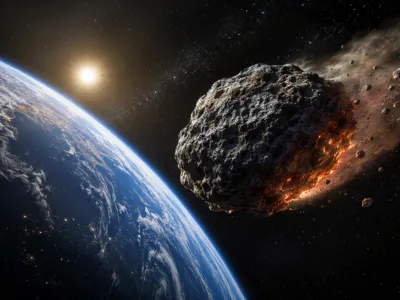
The notion of extracting resources from near-Earth objects has shifted from speculative fiction to a strategically vital industrial prospect. This transition rests upon evolving capabilities in deep-space navigation and autonomous robotics.
Platinum-group metals and water ice represent the primary economic drivers, yet the operational frameworks required remain largely untested. Mission architecture must balance payload constraints against the extreme delta-v requirements of asteroid rendezvous.
A coherent legal and regulatory structure is notably absent, with the Outer Space Treaty of 1967 offering only ambiguous guidance on property rights. Subsequent agreements such as the Moon Agreement failed to gain broad ratification, leaving a fragmented landscape where national legislation, like the U.S. Commercial Space Launch Competitiveness Act, attempts to fill the void. This patchwork creates significant uncertainty for long-term capital investment, as investors demand clear title transfer mechanisms before committing to multi-billion-dollar extraction campaigns. The interplay between resource sovereignty and the common heritage of mankind continues to generate intense diplomatic debate, influencing the pace at which operational ventures can secure financing and governmental backing.
What Determines the Profitability of Asteroid Mining?
A single platinum-rich asteroid such as 16 Psyche may contain metal reserves valued well beyond the annual output of the global economy, creating market saturation risks as a paradoxical challenge for early entrants. Current capital expenditure estimates suggest that a full-scale mining mission would require roughly $2.5 to $3.5 billion in upfront investment before generating any returns, making risk mitigation through public-private partnerships a key focus in modern feasibility analyses.
Profitability hinges on three interdependent variables: extraction efficiency, in-situ resource utilization for propellant, and the ability to pre-sell resources through long-term contracts with space agencies or satellite operators. The creation of a cis-lunar supply chain would drastically reduce the cost of deep-space exploration, effectively acting as a force multiplier for national space programs. While the terrestrial market for platinum group metals remains vulnerable to price collapse from a sudden influx, the strategic value lies in establishing a self-sustaining space economy that decouples industrial growth from Earth’s finite resources, shaping the future of space exploration and what it means for humanity.
| Resource Type | Primary Application | Estimated Value (per ton) |
|---|---|---|
| Water Ice | Propellant, Life Support | $5–15 million |
| Platinum Group Metals | Electronics, Catalysts | $25–50 million |
| Iron/Nickel Alloys | In-Space Construction | $0.5–2 million |
The table above illustrates the stark divergence in market applications. While water ice offers the highest strategic utility through propellant production, its relatively lower per‑ton value necessitates bulk extraction methods and in‑orbit refueling infrastructure to achieve profitability. Platinum‑group metals command premium pricing but require more sophisticated processing and introduce significant supply‑side market disruption risks.
Technological Hurdles
Autonomous navigation and precision landing on irregular, fast-rotating asteroids remain unsolved challenges. State estimation algorithms must function without real‑time Earth communication, relying on onboard sensor fusion to avoid catastrophic collisions.
Extraction technologies such as cryogenic drilling and electromagnetic ore sorting have only been tested in terrestrial analogues, never in microgravity with unknown regolith properties. Thermal management across wide temperature fluctuations further complicates hardware reliability.
The most formidable obstacle involves in‑situ resource utilization (ISRU) systems capable of converting asteroid material into propellant and structural components. These systems must operate autonomously for years while withstanding abrasive dust, radiation, and extreme thermal cycles. Without ISRU, the cost of ferrying fuel from Earth renders any mining operation economically untenable. Closed‑loop manufacturing architectures represent the critical threshold that separates proof‑of‑concept missions from sustainable industrial activity.
The following technological domains currently demand breakthroughs before commercial operations can commence:
- High‑efficiency solar electric propulsion Δv > 10 km/s
- Autonomous multi‑robot coordination TRL 3–4
- In‑space chemical refining No flight heritage
- Radiation‑hardened AI processors Critical path
Who Owns the Cosmos
The Outer Space Treaty prohibits national appropriation but remains silent on private ownership of extracted resources. Operational interpretation now varies sharply between the United States, Luxembourg, and signatories advocating for a common heritage framework.
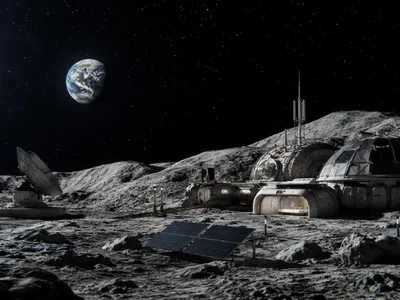
Divergent national laws have created a jurisdictional patchwork where a single mission may fall under multiple, sometimes conflicting, legal regimes. Treaty reinterpretation through the Artemis Accords offers a non‑binding alternative, which is crucial for establishing long-term infrastructure like building a base on the Moon, yet it excludes major spacefaring nations like Russia and China.
Without an internationally recognized dispute resolution mechanism, investors face unacceptable expropriation risks. The UN Committee on the Peaceful Uses of Outer Space has made little progress on binding rules, pushing commercial actors toward reliance on bilateral agreements and national licensing systems that may not withstand future geopolitical shifts.
How Would Asteroid Resources Be Extracted and Processed?
Asteroid resource extraction demands approaches fundamentally different from those used in terrestrial mining. Volatile extraction through thermal sublimation is a promising method for harvesting water ice, while refractory metals require mechanical fragmentation followed by electromagnetic separation. In the absence of gravity, conventional beneficiation techniques become ineffective, pushing engineers to design centrifugal or fluidized-bed concentration systems that can function within tight mass and energy constraints while remaining reliable oover missions lasting several years.
Processing architectures generally bifurcate into two approaches: in‑situ manufacturing of propellant and structural feedstocks, or return of bulk ore to cis‑lunar space for centralized refining. The former reduces transportation costs but demands unprecedented autonomous factory capabilities; the latter simplifies processing but introduces the hazards of moving massive irregular masses through orbital regimes. These foundational logistical developments will inevitably pave the way for the future of space travel across the solar system. Electrostatic beneficiation prototypes have demonstrated proof of concept in microgravity flights, yet no system has been validated against the unpredictable mineralogy of a real asteroid.
Key processing technologies under active development include:
- Molten salt electrolysis
Metal extraction without water - Microwave thermal drilling
Penetrating cohesive regolith - Supercritical CO₂ leaching
Selective dissolution of PGMs