An Information Layer Over Reality
Augmented reality glasses impose a contextual layer of data directly onto the user's field of vision, effectively merging digital information with the physical environment. This synthesis transforms how individuals perceive and interact with their surroundings on a moment-to-moment basis.
Navigation prompts appear as surface arrows on the actual sidewalk, while historical significance markers hover silently over buildings. Reviews from peers float adjacent to restaurant storefronts, eliminating the need to consult a handheld screen for such details.
These devices promise to make information access instantaneous and spatially relevant, reducing the cognitive distance between a question and its answer. The world itself becomes the primary interface for data retrieval and interaction.
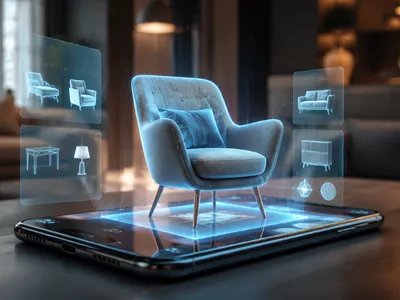
A more profound implication involves the persistence of digital objects within physical spaces. Future users might leave virtual notes on a colleague's office door or see the real-time status of a conference room displayed above its entrance. Such capabilities will fundamentally alter workplace communication and personal organization by anchoring digital ephemera to specific locations. Researchers are currently investigating the psychological effects of this constant informational overlay, particularly concerning attention spans and memory formation in environments saturated with context-aware cues. The transition from pulling out a phone to simply looking at the world represents a significant shift in human-computer interaction paradigms.
Recent scholarship categorizes these digital enhancements into several functional domains that augment everyday perception.
| Functional Domain | Everyday Example |
|---|---|
| Informational Annotation | Name and profession floating above a new acquaintance |
| Spatial Navigation | Directional indicators painted onto the actual pavement |
| Contextual Commerce | Price comparison data visible while looking at a product |
| Social Cueing | Subtle indicators of a person's availability for conversation |
Redefining Professional Skills and Training
The integration of smart glasses into professional environments is catalyzing a shift in how procedural knowledge is acquired and applied. Traditional training manuals and video tutorials are gradually being superseded by immersive, hands-on guidance.
Novice technicians can now see step-by-step repair instructions overlaid directly onto the machinery they are fixing. This real-time visual support significantly reduces error rates and accelerates the journey from novice to competent practitioner.
In fields like surgery and engineering, this technology enables remote expert mentorship where a specialist can see the trainee's perspective and annotate their field of view. This collaborative approach breaks down geographical barriers and allows for the instantaneous transfer of specialized skills. The trainee receives immediate visual feedback without the expert needing to be physically present, fundamentally altering the economics and logistics of professional development.
Beyond initial instruction, AR glasses are poised to redefine ongoing competency assessment and credentialing. Imagine a scenario where a mechanic's proficiency is continuously validated by the system, which tracks their adherence to protocols during complex procedures. This data could inform personalized refresher modules, ensuring that skill degradation is addressed proactively. Furthermore, the concept of the "just-in-time" worker emerges, where individuals can be guided through infrequent, highly complex tasks with a confidence previously reserved for daily routines. This has profound implications for workforce flexibility and the very definition of expertise in a technologically mediated workplace.
Practical implementations across industries demonstrate this paradigm shift in skill transmission and execution.
- Surgical residents practice on cadavers with critical anatomical structures highlighted Medical
- Aviation mechanics view torque specifications projected onto engine components Aerospace
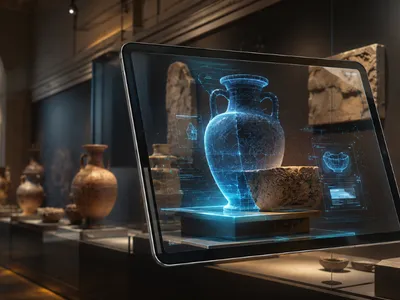
- Museum curators test exhibit layouts by placing virtual artifacts in physical halls Cultural Heritage
- Welders receive real-time feedback on angle and speed through helmet-based displays Manufacturing
Can AR Glasses Replace the Smartphone?
The smartphone's dominance as the primary hub of personal computing is increasingly challenged by hands-free augmented reality glasses, which shift interaction from a device we look at to one we look through, fundamentally transforming user engagement. Advocates suggest that the spatial computing paradigm enabled by AR glasses will gradually absorb many smartphone functions, making calls, checking messages, or navigating a city seamless, context-aware actions rather than tasks demanding focused attention on a separate screen.
However, significant technical obstacles and social hurdles remain before replacement becomes feasible. Current challenges include limited battery life, the need for miniaturized components, and the critical issue of overcoming the social awkwardness associated with wearing conspicuous head-mounted displays. Scholars suggest that the path to ubiquity requires a device that is aesthetically indistinguishable from standard eyewear while delivering battery life that can sustain a full day of intensive use. The smartphne will likely persist as a powerful indispensable personal device for computationally intensive tasks, functioning as the engine that wirelessly streams data to the more lightweight glasses, creating a symbiotic rather than purely competitive relationship between the two form factors.
Transforming Social Connection and Communication
Augmented reality glasses are poised to reshape the landscape of human interaction by embedding digital communication into our shared physical spaces. Remote participants can be projected as life-sized holograms into a living room, creating a sense of presence that current video calls fail to deliver.
These shared visual spaces allow for digital body language to supplement verbal communication. A distant friend can gesture toward a physical object you are both looking at, or an architect can collaboratively walk a client through a virtual building model placed on an actual table.
This technological mediation introduces new complexities regarding authenticity and attention. The ability to discreetly display biographical information about a conversation partner raises profound questions about privacy and the construction of first impressions. Designers are grappling with creating interfaces that enhance rather than detract from the social warmth of face-to-face encounters, ensuring that digital overlays do not create barriers between individuals sharing a mutual augmented space.
The potential for shared experiences extends beyond simple communication into collective memory and storytelling. Families could view historical photographs superimposed on the locations where they were originally taken, turning a simple walk into an immersive narrative experience. Concerts and public events could offer personalized information layers, such as translating lyrics in real-time or providing biographical details about the performers on stage. This fusion of digital data with collective physical presence could create new forms of cultural expression and community bonding. Yet, the ethical implications of persistently recording and annotating social interactions demand careful consideration, as the boundary between public observation and private intrusion becomes increasingly porous in a world viewed through connected lenses.
The evolution of social interaction through AR can be understood through distinct modes of engagement.
| Interaction Mode | Description | Social Implication |
|---|---|---|
| Anchored Communication | Digital notes or messages left in specific physical locations | Creates persistent social traces in public spaces |
| Remote Embodiment | Holographic presence of distant individuals in local environment | Blurs the distinction between physical and remote attendance |
| Shared Gaze Cueing | Visual indicators showing where an interaction partner is looking | Enhances coordination but may increase social monitoring |
Understanding these modes helps anticipate the social protocols that may emerge alongside the technology. The following scenarios illustrate potential applications currently under academic investigation.
-
Language acquisition through real-time subtitle overlays during conversations with native speakers.
-
Social anxiety therapy using simulated crowds with progressively complex behavioral patterns.
-
Professional networking at conferences where mutual interests are discreetly displayed.
How Do AR Glasses Redefine Spatial Navigation?
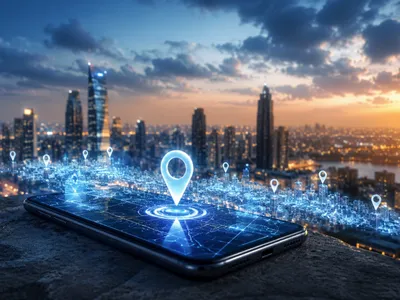
The evolution from two-dimensional maps on screens to three-dimensional directional cues embedded in the environment represents a fundamental shift in spatial orientation. AR glasses transform abstract cartographic symbols into intuitive, world-anchored guidance systems that reduce cognitive load during navigation.
This technology enables a form of spatial indexing where digital information is tied to specific geographic coordinates rather than screen-based representations. A user approaching a transit hub might see real-time departure times hovering above the correct entrance, while underground utility lines become visible to construction workers before excavation begins. The cognitive load reduction achieved through this direct perception allows individuals to allocate more attention to their surroundings rather than dividing focus between a handheld device and the physical world.
Recent research in human-computer interaction emphasizes that effective spatial computing requires more than just accurate positioning; it demands a nuanced semantic understanding of the environment. The glasses must distinguish between a storefront window displaying advertisements and a glass door that leads into the building, providing navigation prompts that respect physical affordances. This context-aware algorithm processes visual data to determine not only where the user is, but what they are likely trying to accomplish in that specific space. When combined with predictive modeling of pedestrian traffic patterns, these systems can suggest routes that avoid congestion or point out points of interest that align with the user's historical preferences, effectively turning every journey into a personalizd discovery experience while maintaining navigational efficiency. The integration of real-time environmental data transforms urban exploration into a dynamic information landscape.
The components enabling this three-dimensional contextual awareness are increasingly sophisticated.
| Technological Component | Functional Role | User Experience Outcome |
|---|---|---|
| Simultaneous Localization and Mapping | Builds real-time 3D models of the environment | Digital objects remain stable as user moves through space |
| Semantic Scene Understanding | Identifies objects and their functions | System distinguishes between a stairway and a seating area |
| Predictive Path Planning | Anticipates user destination based on context | Proactive suggestions reduce decision-making friction |