Sleep Tracking and the Science of Better Recovery
Recent years have witnessed a paradigm shift in how individuals approach sleep, moving from a passive state to an active pursuit of optimal nocturnal recovery. This transformation is largely driven by the proliferation of consumer-grade sleep technologies. These devices promise not just to track but to actively enhance the architecture of nightly rest.
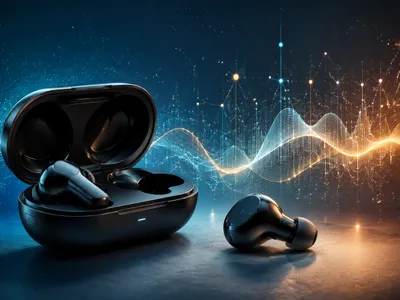
The core of this quiet revolution lies in the transition from subjective sleep diaries to objective, data-driven physiological monitoring. Modern sensors and wireless earbuds that track health metrics can now detect movement, heart rate variability, and even blood oxygen saturation with remarkable precision. This granular data provides a window into the body's intricate processes during the night, revealing patterns previously only observable in clinical sleep labs.
This technological influx has democratized sleep science, placing powerful analytical tools in the hands of consumers. Individuals can now identify correlations between their daily habits and subsequent sleep quality, fostering a more informed and proactive approach to health. The ability to visualize sleep architecture empowers users to make evidence-based lifestyle adjustments, fundamentally altering the cultural perception of sleep from a luxury to a biological necessity.
Smart Technology and the Future of Sleep Optimization
Early sleep trackers were often simplistic, primarily focused on duration and basic movement. However, the current generation of technology has evolved into sophisticated holistic sleep solutions. These systems integrate multiple data streams to offer a comprehensive view of sleep health, moving beyond mere quantification to provide actionable insights and interventions.
A key development is the integration of environmental and behavioral data. Devices now consider factors like ambient temperature, light exposure, and pre-sleep routines to build a complete picture. For instance, a smartwatch might note that a late evening workout, combined with a bright bedroom environment, correlates with reduced deep sleep, prompting the user to adjust their habits accordingly.
The market now offers a diverse range of tools designed to intervene and optimize the sleep environment. These range from smart beds that adjust firmness and noise-cancelling tech beyond headphones to light-based alarm clocks that simulate a natural dawn. The goal is to create a closed-loop system where technology not only monitors but also actively cultivates the ideal conditions for restorative sleep. These interventions are increasingly grounded in chronobiology, the study of biological rhythms.
Consider the following examples of how technology facilitates a holistic sleep strategy through next-gen gadgets. These tools represent a move towards a more integrated and personalized sleep health ecosystem. The focus is on creating a seamless feedback loop between the sleeper, their environment, and the technology itself, aiming for continuous, iterative improvement in sleep quality. This approach acknowledges that sleep is influenced by a complex interplay of factors, not just time in bed.
Common categories of holistic sleep technology include:
- Wearable biometric monitors HRV & SpO2
- Environmental optimization devices Temp & Light
- Smart bedding systems Passive sensing
- Audio-based brainwave entrainment Acoustic stimulation
Decoding the Architecture of Sleep Stages
Sleep measurement goes beyond total duration, examining the complex structure of sleep stages and cycles. Modern technologies aim to distinguish light, deep, and REM sleep with growing precision using proprietary algorithms to interpret physiological signals. Deep sleep features slow-wave activity essential for physical restoration, while REM sleep, marked by rapid eye movements, supports memory consolidation. Wearables track these stages via accelerometers and heart rate monitors, a method called actigraphy-based staging, and machine learning algorithms trained on large datasets help reveal subtle markers of sleep quality, like the micro-architecture of spindles and K-complexes.
Identifying transitions between sleep stages remains challenging, as shifts from light to deep sleep are often gradual, causing misclassifications and variations in reported patterns. Long-term tracking can provide insights into an individual’s chronotype and lifestyle factors, highlighting patterns linked to stress, illness, or routine changes. This approach transforms sleep science into a personalized, dynamic view of health, emphasizing stage stability and overall sleep quality.
| Sleep Stage | Primary Function | Typical Proportion |
|---|---|---|
| N1 (Light Sleep) | Transition to sleep; easy arousal | 5-10% |
| N2 (Light Sleep) | Memory consolidation; heart rate slows | 45-55% |
| N3 (Deep Sleep) | Physical repair; growth hormone release | 15-25% |
| REM Sleep | Dreaming; emotional regulation; learning | 20-25% |
Is Your Sleep Tracker Actually Accurate?
Despite their proliferation, a critical question remains regarding the clinical validity and reliability of consumer sleep trackers. Validation studies often reveal discrepancies between tracker data and the gold standard, polysomnography, particularly in detecting specific sleep stages. These differences can be substantial enough to question the utility of raw stage data for some individuals.
A major challenge lies in the fact that most trackers measure proxies for sleep, such as movement and heart rate, rather than brain activity directly. This methodological limitation means they may misclassify quiet wakefulness as sleep or fail to accurately capture brief arousals, a phenomenon highlighted by recent research. The algorithms employed are often proprietary and not subject to external validation.
The accuracy of these devices can also vary significantly based on the sleep stage, the specific brand, and even the sleeper's individual physiology. For instance, they tend to be more accurate in detecting deep sleep in healthy adults but less so in individuals with sleep disorders or in distinguishing light sleep ffrom REM. Understanding these inherent limitations is crucial for interpreting personal data and avoiding unnecessary health anxiety.
Researchers advocate for a shift in focus from absolute accuracy to reliability and trend analysis. While a device may not correctly identify every sleep stage on a single night, it can be highly reliable in tracking changes over time. This consistency allows users to observe how modifications to their routine impact their sleep architecture, making the data useful despite its absolute limitations.
| Metric | Tracker Accuracy (vs. PSG) | Practical Utility |
|---|---|---|
| Total Sleep Time | Good to High | High for duration tracking |
| Sleep/Wake Detection | High | Reliable for fragmentation |
| Deep/Light/REM Staging | Moderate to Low | Useful for trends, not absolute values |
| Sleep Onset Latency | Variable | Often overestimated |