How Can Active Noise Control Create Quiet Zones?
The foundational principle of destructive interference has moved far beyond the headphone jack. Modern research focuses on creating zones of quiet within three-dimensional environments like rooms or vehicle cabins. This involves deploying an array of microphones and speakers to analyze and counteract incoming noise waves in real-time.
Active noise control in larger spaces faces the significant challenge of creating a coherent anti-noise wavefront across an extended area. Unlike the sealed environment of headphones, open spaces allow sound to diffract and reflect, complicating the interference pattern. Engineers are now leveraging acoustic metamaterials with novel properties to shape and direct anti-noise more effectively, creating larger and more stable quiet zones.
A key advancement lies in the development of sophisticated adaptive algorithms. These systems, powered by machine learning models, can predict noise patterns and adjust the output of numerous speakers instantaneously. This computational approach allows the system to maintain a quiet zone even as a noise source, like a passing truck, moves relative to the protected space. The integration of distributed sensor networks within a room feeds data to a central processor, which then orchestrates a symphony of destructive interference from speakers embedded in walls, furniture, or ceilings.
Early implementations of this technology are appearing in high-end automobiles, where it actively reduces road and engine noise for all passengers, not just those wearing headphones. This creates a premium, serene cabin experience. The transition from personal to shared spatial noise cancellation represents a fundamental shift in acoustic engineering, turning entire structures into active components of the sound management system. The ultimate goal is to design architectural spaces that are not passively insulated but are intrinsically quiet by design.
Open Offices Compared with Quiet Cars
The modern open-plan office presents a unique acoustic challenge, often becoming a source of distraction and reduced productivity. To combat this, researchers are applying spatial noise-cancelling techniques to create oases of calm within these bustling environments. The focus is not on total silence, but on managing speech privacy and reducing intrusive, intermittent sounds.
One promising approach involves the use of parametric speakers that generate highly directional sound beams for localized audio masking. Instead of blasting white noise across the entire floor, these systems can create targeted sound fields around individual desks. This allows for the masking of a nearby conversation without increasing the overall noise floor for everyone. The table below outlines the primary strategies and their focal points within shared environments.
| Strategy | Primary Application | Core Objective |
|---|---|---|
| Active Noise Cancellation | Enclosed spaces (car cabins, phone booths) | Eliminate low-frequency droning sounds (engine, road noise) |
| Sound Masking | Open-plan offices, waiting rooms | Increase speech privacy and reduce distraction |
| Personal Sound Zones | Vehicles, shared workspaces | Create individual acoustic bubbles without headphones |
In the automotive sector, the pursuit of quiet and comfortable cabins has accelerated the adoption of these technologies. Modern electric vehicles, lacking engine noise to mask other sounds, have made road and wind noise cancellation a top priority. Systems now use accelerometers on the chassis to predict vibrations before they become audible sound inside the cabin, feeding this data to the audio system to generate preemptive anti-noise.
The convergence of office and automotive acoustic research is driving innovation in personalized sound zones. The goal is to allow individuals within a shared physical space, whether an office or a car, to experience their own acoustic environment. This is achieved through complex arrays of speakers and microphones that use constructive and destructive interference to keep sound contained within a specific volume, effectively creating a personal sound bubble for each occupant.
How Can Windows Block City Noise?
Urban living often means constant exposure to low-frequency rumble from traffic and construction. Traditional double-glazing offers passive insulation, but researchers are now developing active noise-cancelling windows that neutralize specific frequencies. These systems use thin, transparent films as speakers to generate anti-noise directly on the glass surface.
The core challenge lies in managing the structural acoustics of the window pane itself. When activated, the glass vibrates to produce counter-signals, but these vibrations can also radiate sound inward if not precisely controlled. Recent prototypes employ distributed piezoelectric actuators that convert electrical signals into mechanical motion, creating a targeted anti-noise field that preserves the view while eliminating the din. This approach is particularly effective against the persistent drone of highway traffic or idling buses.
Metamaterial-enhanced glazing represents another frontier in this domain. By embedding microscopic resonant structures within the glass or its laminate layers, engineers can create panels that reflect or absorb specific sound frequencies while remaining optically transparent. These metamaterials are designed to complement active systems, tackling the mid-to-high frequency sounds that active cancellation finds more challenging. The combination of active and passive techniques allows a single window unit to attenuate a broader spectrum of urban noise, effectively creating a frequency-selective acoustic barrier. Initial field tests in buildings adjacent to major thoroughfares have shown a marked reduction in perceived annoyance, even with the window slightly ajar for ventilation. The table below outlines the key technologies being integrated into next-generation window systems.
Before examining specific implementations, it is useful to categorize the primary methods being explored. The following list details the main technological approaches to creating quieter building envelopes.
- Active Noise Control: Uses transparent actuators and microphones to generate destructive interference directly on the glass.
- Acoustic Metamaterials: Employs engineered microscopic structures to block or redirect specific sound frequencies.
- Hybrid Glazing Systems: Combines active electronics with passive metamaterial layers for broadband noise reduction.
- Smart Ventilation Integration: Develops noise-cancelling openings that allow airflow while maintaining quiet.
Wearable Sound Bubbles and Hearables
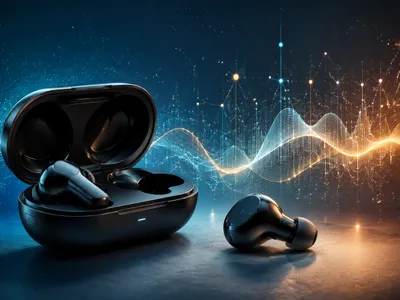
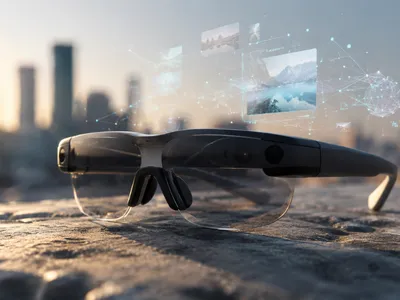
The miniaturization of acoustic technology has propelled the evolution of hearables—smart earbuds that do far more than play audio. Working alongside personal devices like augmented reality glasses for everyday use, these devices now function as personalized acoustic filters, capable of amplifying a conversation in a crowded room while simultaneously attenuating background chatter. This is achieved through advanced beamforming microphone arrays and real-time digital signal processing.
A significant leap forward is the creation of wearable sound bubbles. Instead of isolating the user from their environment entirely, these systems use multiple outward-facing microphones on the earbud to analyze ambient noise. The device then selectively cancels noise only within a small radius around the user's head, preserving spatial awareness of important sounds like alarms or approaching vehicles. This represents a shift from total isolation to context-aware acoustic augmentation, enhancing the sounds the user wants to hear while silencing those they do not.
Research into bone conduction and intra-ear communication is further refining this technology. By transmitting the anti-noise signal through the skull or directly into the ear canal via specialized transducers, these systems can achieve remarkable cancellation without the occluded feeling of traditional earbuds. This allows for all-day wearability and seamless integration into daily life, while modern features such as wireless earbuds that track health metrics further expand their role as everyday personal devices. The ultimate vision is a hearable that can create a dynamic soundscape, perhaps boosting high-frequency sounds for someone with mild hearing loss while simultaneously cancelling the low-frequency hum of an airplane cabin. These devices are becoming wearable acoustic computers, constantly adapting to the user's location and auditory preferences.
The implications for auditory health and accessibility are profound. Beyond mere noise cancellation, hearables can function as personalized hearing protection in industrial settings, alerting workers to dangerous noise levels. They can also serve as discreet assistive devices for individuals with auditory processing disorders, clarifying speech in real-time. Thiss convergence of consumer electronics and medical-grade acoustic engineering is rapidly transforming the humble earbud into an indispensable tool for navigating a noisy world.