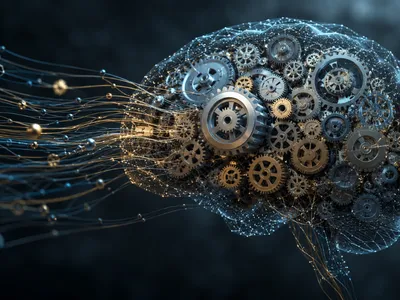
The Confluence of Creativity and Code
Creative automation represents a paradigmatic shift in digital content production, merging algorithmic precision with human creative insight. This synergy enables the scalable generation of personalized marketing assets and dynamic media.
At its core, the discipline leverages artificial intelligence and machine learning to automate repetitive tasks within the creative workflow, from image resizing to copy variation. This does not signify the replacement of the creative professional but rather their augmentation, freeing cognitive resources for higher-order strategic and conceptual thinking. The foundational principle rests on the concept of templatized intelligence, where master creative templates are infused with data-driven logic to produce myriad contextual outputs. Consequently, organizations can maintain brand consistency while achieving unprecedented levels of personalization and market responsiveness, fundamentally altering the economics and velocity of creative operations across global enterprises.
Core Components and Technological Architecture
The operational efficacy of any creative automation platform hinges on a robust and interconnected technological stack. This architecture is typically composed of several key layers that work in concert.
The data integration layer serves as the foundational input, connecting to Customer Relationship Management (CRM) systems, Product Information Management (PIM), and Digital Asset Management (DAM) solutions.
Sitting above this is the logic and decisioning engine, often powered by AI, which applies business rules, audience segmentation data, and real-time signals to determine the most relevant creative output. The most visible component is the design templating layer, where dynamic templates are created using tools that allow for variable fields for text, imagery, and layout. These templates are then rendered by a high-volume production enginee capable of generating thousands of asset variants in multiple formats. Finally, an orchestration and distribution layer manages the deployment of these assets across chosen channels, from social media to programmatic ad platforms. This modular architecture ensures scalability and adaptability.
| Architectural Layer | Primary Function | Key Technologies |
|---|---|---|
| Data Integration | Ingests and unifies audience, product, and brand data from source systems. | APIs, ETL pipelines, DAM connectors |
| Logic Engine | Applies rules and AI models to decide on creative parameters and personalization. | Rule-based systems, Machine Learning algorithms |
| Design Templating | Provides the canvas for creating dynamic, variable-ready master designs. | HTML5, JSON-based templating, Visual editors |
- Dynamic Creative Optimization (DCO) Platforms: Specialized engines for real-time ad assembly and testing.
- Creative Management Platforms (CMPs): Centralized hubs for storing, managing, and automating creative workflows.
- Generative AI Models: Advanced systems like GANs and diffusion models that create original visual and textual elements from prompts.
- Workflow Automation Tools: Software that automates the review, approval, and deployment steps in the creative lifecycle.
From Mass Production to Mass Personalization
The evolution from industrial-era mass production to today's data-driven mass personalization marks a critical inflection point in marketing and media. This transition is fueled by consumer demand for relevant, individualized experiences.
Creative automation is the primary enabler of this shift. It moves beyond static batch production to a dynamic, on-demand model where a single template can generate near-infinite variations, each tailored to a specific audience segment, context, or even individual user profile.
This paradigm leverages granular data points—such as browsing behavior, purchase history, location, and demographic information—to inform creative decisions in real-time. The result is a move from "one-to-many" broadcasting to "one-to-one" contextual communication, dramatically increasing relevance and engagement metrics while optimizing media spend through higher-performing assets. The scale it enables was previously unimaginable.
- Contextual Dynamic Content: Ads that change based on weather, time of day, or local events.
- Behavioral Trigger-based Marketing: Automated email or banner sequences triggered by specific user actions.
- Product-level Personalization: Creative assets that automatically populate with products a user has viewed or are likely to purchase.
Implementing Creative Automation A Strategic Roadmap
Deploying creative automation successfully requires a methodical, phased approach that aligns technology, people, and processes. A haphazard implementation often leads to underutilization and suboptimal ROI.
The initial phase must involve a comprehensive audit of existing creative workflows to identify bottlenecks, repetitive tasks, and high-volume, low-variation output areas. This is followed by securing cross-functional buy-in, particularly from marketing leadership, IT, and creative teams, to foster a culture of experimentation and data-driven creativity.
The technical selection process should prioritize platforms that integrate seamlessly with the existing martech stack, emphasizing scalability and user-friendliness for non-technical creatives. A critical and often overlooked step is the development of a robust governance framework, defining clear rules for brand compliance, template usage, data security, and approval workflows. Piloting the technology on a controlled use case—such as generating localized versions of a social media campaign—allows for iterative testing and refinement before a full-scale rollout. Continuous optimization, guided by performance analytics and user feedback, ensures the system evolves to meet changing business objectives and maximizes long-term value creation across the organization. Strategic patience is key to realizing its full potential.
| Implementation Phase | Key Activities | Success Metrics |
|---|---|---|
| Assessment & Planning | Workflow audit, stakeholder alignment, defining initial use cases, and ROI modeling. | Clear scope document, stakeholder sign-off, defined KPIs |
| Technology Piloting | Platform selection, template development for pilot, limited user training, and testing. | Pilot campaign performance, user adoption rate, process speed increase |
| Scale & Optimize | Organization-wide rollout, advanced training, process integration, and establishment of a center of excellence. | Volume of automated assets, cost savings, creative team satisfaction, overall campaign lift |
- Start with a high-impact, scalable use case to demonstrate quick value and secure ongoing investment.
- Invest heavily in change management to alleviate creative team concerns and foster a collaborative human-AI workflow.
- Establish a feedback loop where performance data from automated campaigns informs future creative strategy and template design.
Navigating the Challenges and Ethical Implications
Despite its transformative potential, the adoption of creative automation presents significant operational and philosophical challenges that organizations must conscientiously address. The initial barrier often lies in the substantial technological integration complexity and the upfront investment required for platform licensing and specialized talent.
A more profound issue centers on the perceived threat to creative professions, potentially leading to cultural resistance within marketing and design teams who fear the devaluation of their craft.
Beyond operational hurdles, the technology raises critical ethical questions regarding data privacy and algorithmic bias. The personalization engines that drive automation rely on extensive consumer data collection, necessitating strict adherence to global regulations like the GDPR and CCPA. Furthermore, if the training data for generative AI models contains societal biases, the automated outputs can perpetuate and even amplify stereotypes, leading to harmful brand messaging. This necessitates robust ethical govrnance frameworks. Consequently, organizations must implement transparent data usage policies, conduct regular bias audits of their AI systems, and establish clear human oversight protocols to ensure that automated creativity aligns with brand values and societal norms, thereby maintaining consumer trust in an increasingly automated media landscape.
Industry Applications Transforming Marketing and Beyond
The practical applications of creative automation are revolutionizing numerous industries, with the most profound impact observed in digital marketing and e-commerce. Here, the technology enables the real-time generation of personalized advertising at an unprecedented scale.
In performance marketing, Dynamic Creative Optimization (DCO) platforms automatically assemble and test thousands of ad variants to identify the highest-performing combinations of visuals, copy, and calls-to-action, dramatically improving click-through and conversion rates.
Beyond consumer-facing communications, creative automation streamlines internal and B2B processes. It automates the production of data-driven reports, personalized sales presentations, and customized client-facing materials, ensuring consistency and freeing valuable human resources for strategic consultation. The publishing and entertainment industries leverage these tools to generate localized content versions and promotional assets, while retail giants automate the creation of millions of unique product catalog pages and promotional banners. The cross-industry utility is vast and expanding.

| Industry Sector | Primary Application | Key Benefit |
|---|---|---|
| E-commerce & Retail | Automated generation of product-specific ads, email campaigns, and social media posts. | Hyper-personalization at scale, increased sales velocity |
| Financial Services | Compliance-approved, personalized client communications and investment reports. | Regulatory compliance, enhanced client engagement |
| Media & Entertainment | Dynamic trailer creation, localized promotional assets for global content releases. | Global reach efficiency, audience-specific marketing |
| Healthcare (Marketing) | Personalized patient education materials and compliant drug marketing campaigns. | Improved health outcomes, strict adherence to regulations |
- Programmatic Advertising: The largest application area, where ads are assembled in real-time based on auction data and user profiles.
- Social Media Marketing: Automated creation of platform-optimized content variations for A/B testing and audience segmentation.
- Email Marketing Automation: Generation of personalized email content blocks based on subscriber behavior and preferences.
- Personalized Video: Automated video editing to insert personalized text, images, and narrative branches for individual viewers.
The Future Landscape Human-AI Symbiosis in Creative Domains
The trajectory of creative automation points toward a future of deepened human-AI symbiosis, where collaboration transcends mere tool usage and evolves into a cohesive partnership.
We are moving beyond automation of execution toward the automation of inspiration and conceptual ideation. Emerging generative AI models will act as co-creative partners, capable of producing novel design concepts, narrative structures, and musical compositions from natural language prompts. This will fundamentally redefine creative roles, shifting human effort from manual production to strategic direction, curation, and emotional intelligence. The creative professional of the future will function as an orchestrator and editor, leveraging AI to rapidly explore vast creative possibility spaces, then applying critical judgment, cultural context, and ethical consideration to refine outputs. This partnership promises to unlock unprecedented levels of innovation, allowing for the exploration of aesthetic territories that would be prohibitively time-consuming or conceptually difficult to reach through purely human endeavor. The role of human judgment becomes more critical than ever.
This evolution will be accelerated by advancements in multimodal AI, affective computing, and real-time collaborative platforms.
As these technologies mature, we will witness the rise of perpetual and adaptive creative ecosystems. Marketing campaigns will no longer be finite projects but living, breathing systems that learn from audience interaction in real-time, dynamically evolving their messaging, visuals, and channel strategy. In entertainment, personalized narrative arcs could become the norm, with storylines and characters adapting to individual viewer preferences. The ultimate horizon is a seamless, intuitive creative flow where the boundaries between human intent and machine execution blur, creating a fluid dialogue between creator and algorithm. This necessitates a parallel evolution in education, emphasizing hybrid skills in data literacy, creative strategy, and AI ethics to equip the next generation of professionals not just to use these tools, but to masterfully guide them toward meaningful and authentic human connection.