How Do AR and VR Transform Digital Experiences?
The convergence of Augmented Reality (AR) and Virtual Reality (VR) represents a paradigm shift in human-computer interaction. These technologies are not merely novel interfaces but fundamentally new mediums for experiencing and manipulating information. AR overlays digital content onto the physical world, while VR immerses users in entirely synthetic environments, collectively expanding the boundaries of perceived reality.
Their foundational technologies, including advanced computer vision, spatial mapping, and high-fidelity graphics rendering, have matured significantly. This maturation has moved applications beyond early prototypes into robust platforms capable of supporting complex, sustained engagement in critical sectors.
The theoretical underpinning for their efficacy lies in constructivist learning theory and presence psychology. Constructivism posits that knowledge is built through active experience, a principle perfectly aligned with immersive technology's "learning by doing" approach. Simultaneously, the sense of "presence"—the feeling of being physically located in a virtual environment—enhances emotional engagement and cognitive allocation, making experiences more memorable and impactful than passive observation.
AR and VR Transform Experiential Learning
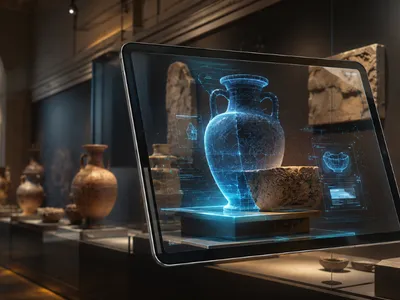
In educational contexts, AR and VR facilitate experiential learning that was previously impossible, dangerous, or prohibitively expensive. Medical students can perform virtual dissections or observe holographic organs from every angle. History students can "walk" through reconstructed ancient cities, and engineering students can interact with 3D models of complex machinery.
This shift moves pedagogy from abstract description to concrete simulation. The fidelity of simulated environments directly correlates with knowledge transfer, as high levels of immersion reduce cognitive load associated with visualization. Learners internalize spatial relationships and procedural steps more intuitively.
| Learning Paradigm | Traditional Method | AR/VR-Enhanced Method | Key Benefit |
|---|---|---|---|
| Skills Training | Manuals, Videos, Supervised Practice | Haptic-feedback simulations in VR | Risk-free repetition, muscle memory development |
| Conceptual Understanding | Diagrams, 2D Models, Text | Interactive 3D models & spatial data visualization in AR | Intuitive grasp of scale, structure, and dynamic systems |
| Cultural & Historical Empathy | Books, Photos, Film | Immersive recreation of historical sites/events in VR | Fosters perspective-taking and emotional connection |
Furthermore, AR enables contextual learning, where information is delivered precisely when and where it is needed. A technician repairing equipmnt can see animated instructions overlaid directly on the machinery via AR glasses. This just-in-time information delivery enhances accuracy and reduces task completion time.
The scalability of virtual laboratories and field trips democratizes access to high-quality educational resources. Institutions can share sophisticated VR modules, allowing students from anywhere to conduct advanced physics experiments or explore marine ecosystems, thereby bridging resource gaps between institutions.
A New Stage for Storytelling and Play
In the entertainment sphere, AR and VR are dismantling the traditional fourth wall, transforming audiences from spectators into participants and co-creators. This represents a shift from narrative consumption to narrative experience, where the user's choices and explorations actively shape the story.
VR gaming and narrative experiences leverage presence and agency to produce unparalleled emotional engagement. A user's physiological responses—heart rate, galvanic skin response—mirror those expected in real analogous situations, demonstrating the technology's power to hijack our perceptual and emotional apparatus for creative ends.
Beyond gaming, AR is creating persistent, shared entertainment layers over the physical world. Location-based AR games turn cities into playgrounds, while social VR platforms redefine concerts, cinema, and social gatherings, creating new economies and forms of cultural expression that blend digtal and physical identities seamlessly.
How Can VR Foster Empathy and Social Connection?
Beyond skill acquisition, immersive technologies possess a profound capacity for fostering empathy and prosocial attitudes. VR, in particular, has been validated as a potent tool for perspective-taking exercises, allowing users to literally "see the world through another's eyes." This application is revolutionizing fields from diversity training to clinical therapy.
Simulations that embody the experiences of individuals with disabilities, refugees, or those facing social prejudice have demonstrated significant and lasting increases in empathetic concern and attitudinal shifts among participants. The embodied simulation theory suggests that first-person virtual experiences can trigger cognitive and emotional responses similar to real-life experiences, thereby breaking down abstract biases.
| Application Area | Mechanism of Action | Measured Outcome |
|---|---|---|
| Clinical Therapy (e.g., PTSD, Phobias) | Gradual, controlled exposure in a safe virtual environment | Reduction in symptom severity, improved coping mechanisms |
| Social Skills Training | Practice complex social interactions with AI-driven avatars | Increased confidence and competence in real-world settings |
| Collaborative Design & Architecture | Shared virtual spaces for real-time co-creation and review | Enhanced team alignment, faster iteration cycles, fewer errors |
Multi-user VR platforms are creating new paradigms for remote collaboration and social interaction. These are not mere video conferencing tools but shared volumetric spaces where presence, body language, and co-presence with virtual objects enable a richness of interaction that approximates physical meetings, mitigating the transactional nature of remote work.
This social dimension extends to entertainment, where massively multiplayer VR experiences and live events create deeply felt communal experiences, challenging notions of digital isolation and pointing toward a future of spatially rich digital sociality.
AR and VR Adoption Barriers and Accessibility Issues
Despite its transformative potential, widespread adoption of AR/VR is impeded by significant technological and infrastructural challenges. The pursuit of perfect immersion—characterized by high-resolution, wide-field-of-view displays, photorealistic graphics, and ultra-low latency—creates immense computational demands. This often necessitates expensive, high-end hardware, creating a substantial accessibility and equity gap.
Key technical bottlenecks include visual-vestibular mismatch causing user discomfort, limited haptic feedback fidelity, and the unresolved challenge of natural locomotion in infinite virtual spaces. Furthermore, the development of compelling, high-quality educational and entertainment content remains resource-intensive, acting as a barrier to scalable production.
- 🥽 Hardware Cost & Ergonomics: Premium standalone or PC-tethered headsets are costly, and device bulk/weight can limit comfortable use duration.
- 🌐 Network Dependency: Cloud-based rendering and social VR require high-bandwidth, low-latency connectivity, excluding areas with poor digital infrastructure.
- 📐 Content Standardization: A lack of universal standards for file formats, interaction models, and evaluation metrics hinders interoperability and resource sharing, especially in academia.
The digital divide is thus exacerbated, risking a scenario where immersive learning becomes a privilege of well-funded institutions, while others are left behind. Ethical considerations around data privacy, psychological safety in immersive environments, and long-term behavioral effects are also critically under-regulated, requiring urgent scholarly and policy attention.
Addressing these hurdles necessitates concerted efforts in translational research, focusing on cost-reduction through technological innovation, the development of lightweight yet compelling "mobile VR/AR" experiences, and the creation of open-source platforms and asset libraries to democratize content creation for educators and independent artists alike.