Transforming Modern Education with Augmented Reality
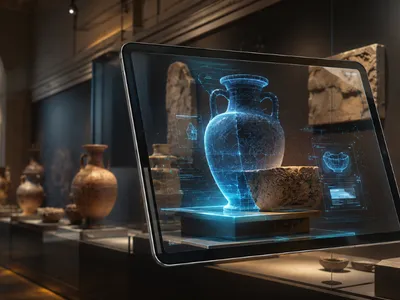
Augmented Reality has transitioned from a technological spectacle to a pedagogical imperative within contemporary educational discourse. This shift is driven by its unique capacity to merge digital information with the physical environment.
Early applications were often demonstration-based, focusing on engagement rather than deep learning outcomes. Current integrations are fundamentally altering instructional design, moving beyond simple visual augmentation to support complex cognitive and psychomotor skill development across diverse disciplines.
The evolution is marked by a pivot from developer-centric, costly systems to accessible, cloud-based platforms and mobile applications. This democratization of technology facilitates scalable implementation, allowing educators to create and deploy AR experiences that directly align with specific curricular objectives and competency frameworks. The focus is now on measurable improvements in knowledge retention, spatial understanding, and procedural accuracy.
How Does AR Transform Learning Theories?
AR directly operationalizes situated cognition by anchoring learning within authentic, often impossible-to-replicate contexts. Learners interact with 3D models and data overlays in real-time, bridging abstract concepts and tangible experience.
This mediation supports constructivist and experiential learning paradigms. The technology acts as a scaffold, enabling students to manipulate variables, visualize hidden processes, and construct knowledge through direct manipulation of hybrid objects.
From a cognitive load theory perspective, AR can manage intrinsic load by simplifying complex systems through layered information. It also reduces extraneous load by integrating information directly into the task environment, preventing split-attention effects. This fosters deeper semantic processing and schema acquisition, which are critical for long-term retention and transfer of skills to novel problems.
The embodied interaction facilitated by AR—where physical movement and digital feedback are linked—further strengthens memory encoding and procedural knowledge, making it particularly powerful for mastering spatial and mechanical tasks.
Anatomy and Engineering
In medical education, AR provides unparalleled access to anatomical study. Students can explore holographic cadavers and systems physiology in a collaborative, risk-free space.
This technology allows for the visualization of pathological processes and surgical procedures layered onto physical mannequins or even a peer's body. The fidelity of these models supports advanced learning stages, moving from identification to intervention planning, which traditional textbooks or even static 3D software cannot facilitate.
Engineering disciplines leverage AR for complex assembly, maintenance training, and design visualization. Trainees interact with step-by-step digital instructions overlaid directly onto machinery, reducing errors and improving speed. In civil and mechanical engineering, AR enables the projection of architectural models onto physical sites or the visualization of stress forces and fluid dynamcs on prototypes, creating a powerful iterative design loop that merges theoretical calculations with tangible understanding.
A Bridge to the Workplace
Vocational and professional training has become a primary beneficiary of AR's capabilities. The technology creates a safe simulated environment for practicing high-risk tasks, from electrical grid maintenance to aircraft repair.
This simulation-based training translates complex manuals into interactive, contextual guidance, significantly shortening the time to competency. Performance data can be captured and analyzed in real-time, providing objective metrics for assessment and personalized feedback loops that target specific skill deficiencies.
Beyond technical skills, AR is instrumental in soft skills development, such as communication, leadership, and customer service. Trainees can engage with realistic avatar-based scenarios that require critical decision-making and interpersonal interaction. This application provides a scalable, consistent method for experiential learning that is both measurable and repeatable, effectively bridging the gap between classroom knowledge and workplace application with a direct impact on productivity and safety compliance.
Overcoming Barriers to Widespread Adoption
Despite its potential, integrating AR into mainstream education faces significant hurdles. High initial costs for hardware and software development remain a primary constraint for many institutions.
A critical challenge is the lack of teacher readiness and pedagogical frameworks specifically designed for immersive technology. Professional development must move beyond technical operation to focus on curriculum alignment and the design of meaningful AR-enhanced learning activities.
The scarcity of high-quality, interoperable educational content and concerns over data privacy within AR applications also slow adoption. A sustainable ecosystem requires collaborative content repositories and clear ethical guidelines for data use. The following table summarizes the primary challenges and corresponding strategic responses necessary for scalable implementation.
| Primary Challenge | Strategic Response |
|---|---|
| Cost and Resource Inequality | Cloud-based AR and BYOD (Bring Your Own Device) policies |
| Pedagogical Integration Gap | Investing in educator training and evidence-based design principles |
| Content Accessibility & Quality | Open educational resource platforms and authoring tools for educators |
| Technical Infrastructure & Support | Robust institutional IT planning and dedicated support roles |
Moving forward, a multi-stakeholder approach is essential. Success hinges on addressing not just the technology but the human and systemic factors surrounding it.
Effective implementation relies on strategic planning at an institutional level. Key actionable pillars for organizations include the following coordinated efforts.
- 🎯 Establishing clear learning outcome alignment for any AR initiative, ensuring technology serves pedagogy.
- 🤝 Creating communities of practice where educators co-develop and share AR learning scenarios.
- 📊 Developing comprehensive assessment protocols to measure the impact on skills and knowledge beyond engagement.
- 🚀 Pursuing phased roll-outs that start with pilot programs to build evidence and institutional buy-in.