Wearable Technology Evolving Into Intelligent Systems
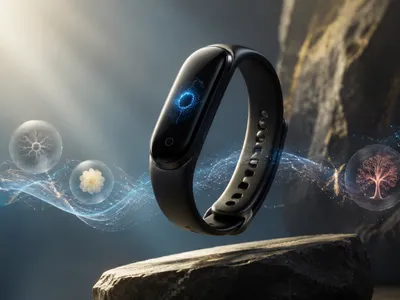
The trajectory of wearable technology has been a compelling narrative of miniaturization and convergence, evolving from rudimentary, single-purpose gadgets to sophisticated, interconnected systems. Initial iterations, such as calculator watches and early fitness trackers, were fundamentally data loggers, capturing limited metrics without analytical depth or contextual integration.
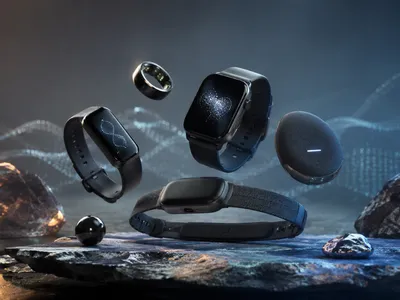
The paradigm shift commenced with the seamless integration of Bluetooth connectivity and inertial measurement units, transforming wearables from isolated novelties into peripheral nodes within a broader digital ecosystem. This evolution was catalyzed by breakthroughs in low-power microprocessors, flexible sensor design, and energy-dense batteries. The subsequent proliferation of smartwatches and advanced biosensing platforms marked a critical juncture, establishing the foundational hardware and software architecture upon which modern wearable AI is being constructed, moving beyond passive monitoring to proactive, intelligent assistance.
How Does Wearable AI Understand User Context?
The defining leap in wearable evolution is the shift from mere computation to contextual awareness. Early devices processed predefined inputs, but modern wearable AI utilizes sensor fusion algorithms to interpret complex, multi-modal data streams in real-time, creating a dynamic model of the user's state and environment.
This awareness is powered by on-device machine learning models that perform inference locally, ensuring low latency and privacy. These models analyze physiological signals, motion patterns, ambient sound, and location to infer activities, stress levels, and even social context. For instance, a device can now distinguish between a heart rate spike from exercise versus anxiety, enabling more nuanced interventions.
The architectural backbone of this capability is the Neural Processing Unit (NPU), a specialized microchip designed for efficient tensor operations. Unlike general-purpose CPUs, NPUs enable complex deep learning tasks—such as natural language processing for voice assistants or convolutional networks for gesture recognition—while maintaining all-day battery life, a non-negotiable constraint for wearables.
| Sensor Type | Data Stream | Contextual Inference | AI Model Example |
|---|---|---|---|
| Photoplethysmogram (PPG) | Blood volume pulse | Stress, sleep stage, atrial fibrillation | Time-series classifier (LSTM) |
| Accelerometer/Gyroscope | 3D acceleration, angular velocity | Activity type (walking, swimming), fall detection | Convolutional Neural Network (CNN) |
| Microphone (Ambient) | Audio waveform | Environmental noise levels, social engagement | Audio event detection model |
| Electrodermal Activity (EDA) | Skin conductance | Emotional arousal, cognitive load | Peak detection & clustering algorithm |
This paradigm demands a new software framework, moving from static apps to adaptive agent-based systems. These agents, powered by small language models and reinforcement learning, can proactively surface information, automate routines, and provide just-in-time coaching without explicit user commands, fundamentally changing the human-computer interaction model from transactional to relational.
However, achieving robust contextual awareness presents significant challenges. Sensor noise, data drift over time, and the vast interpersonal variability in physiological signals necessitate continuous model personalization and calibration, often using federated learning techniques to improve shared models without compromising individual data privacy.
Hardware Innovations Powering Next-Generation Wearables
The next evolutionary leap in wearable AI is constrained not by software, but by hardware limitations. Current breakthroughs are fundamentally tied to advancements in materials science and energy management, which dictate device form factor, functionality, and user adoption.
The pursuit of invisible computing drives research into novel substrates. Flexible, stretchable electronics based on polymers and liquid metals enable sensors to conform to the curvilinear human body without causing discomfort or motion artifacts. Simultaneously, the development of biocompatible and even biodegradable materials addresses long-term wearability and environmental end-of-life concerns.
Energy harvesting is the critical bottleneck. Relying solely on battery technology limits device longevity and sustainability. Cutting-edge research focuses on multi-source energy scavenging, integrating photovoltaic, thermoelectric, and piezoelectric systems to convert body heat, motion, and ambient light into usable power, aiming for energy-autonomous operation.
The sensor frontier is expanding towards non-invasive molecular sensing. Emerging technologies, such as spectroscopic PPG and electrochemical sweat sensors, aim to move beyond macro-physiology to continuously monitor biomarkers like cortisol, lactate, or drug levels, effectively turning the skin into an interface for real-time blood chemistry analysis without needles.
These material advancements converge with neuromorphic computing architectures inspired by the human brain. These chips process informtion in an event-driven, asynchronous manner, offering orders-of-magnitude improvements in energy efficiency for pattern recognition tasks, which is paramount for always-on AI wearables. This hardware evolution will ultimately determine whether these devices remain noticeable accessories or dissolve seamlessly into the fabric of everyday life.
Ambient Intelligence and the Next Wave of Wearables
The ultimate trajectory of wearable AI points toward an invisible revolution, where technology recedes from conscious interaction and becomes an ambient, integrated layer of human experience.
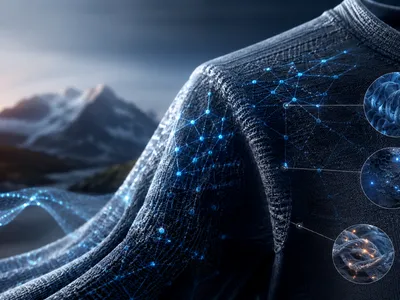
This evolution is marked by the transition from discrete devices to distributed sensor networks woven into clothing, attached to skin as temporary tattoos, or even embedded within the body, fundamentally erasing the traditional hardware paradigm.
Future systems will operate less as tools and more as cognitive prostheses, anticipating needs and acting autonomously within predefined ethical boundaries to optimize health, productivity, and social interaction.
The convergence with ambient intelligence and smart environments will create a seamless feedback loop, where wearables communicate with intelligent homes, vehicles, and urban infrastructure to orchestrate a holistic, context-aware ecosystem that adapts in real-time to the user's physiological and psychological state.
This trajectory necessitates the development of advanced human-AI collaboration frameworks, where the AI's role shifts from assistant to symbiotic partner, requiring intuitive, non-invasive interaction modalities like subvocal recognition, direct neural interfaces, or affective computing that responds to emotional states without explicit command.
| Technology Horizon | Key Enablers | Primary Application Shift | Major Challenges |
|---|---|---|---|
| Near-Term (2-5 years) | Improved NPUs, Multi-modal Fusion, Edge-Cloud Hybrid Models | From monitoring to prescriptive health & contextual automation | Regulatory approval, data interoperability, battery life |
| Mid-Term (5-10 years) | Biodegradable electronics, Molecular sensing, Energy harvesting textiles | From prescription to prevention & embodied cognitive offloading | Societal acceptance, digital divide, robust security protocols |
| Long-Term (10+ years) | Neural lace interfaces, Closed-loop biofeedback, Autonomous AI agents | From augmentation to symbiotic partnership & enhanced human capability | Neuroethical concerns, definition of human identity, existential risk governance |
However, the endpoint of this trajectory is not merely technological but profoundly philosophical, forcing a re-examination of core human concepts such as privacy, autonomy, and even consciousness. The democratization of such powerful technology also poses critical questions about equitable access, potentially creating a new class divide between the augmented and the non-augmented.
The challenge for researchers, policymakers, and society will be to steer this invisible revolution toward human-centric outcomes, ensuring that these technologies enhance human flourishing without eroding the essential, unmediated experiences that define our humanity, thereby navigating the fine line between augmentation and alienation in the coming age of pervasive intelligence.