XR Technologies: VR, AR, MR
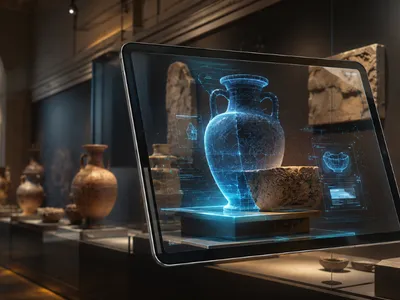
The evolution of Extended Reality (XR) as an umbrella term encompasses a spectrum of immersive technologies, each with distinct pedagogical and operational implications for training and simulation. At its core, XR integrates Virtual Reality (VR), Augmented Reality (AR), and Mixed Reality (MR), creating environments that range from fully synthetic to digitally augmented physical spaces. The fundamental distinction lies in the level of immersion and the nature of user interaction with the virtual content. VR, characterized by a complete sensory detachment from the physical world, is unparalleled for high-risk or logistically constrained training scenarios, such as flight simulation or surgical procedures. Meanwhile, AR overlays contextual digital information onto the real-world view, supporting just-in-time performance guidance and maintenance tasks. MR represents a more advanced convergence, where virtual objects are spatially mapped and persist within the physical environment, enabling complex collaborative design and interactive assembly simulations. The selection of a specific modality is therefore not merely a technical decision but a strategic one, profoundly influencing cognitive load, skill transfer efficacy, and ultimately, the return on training investment.
Recent advancements in computer vision and simultaneous localization and mapping (SLAM) algorithms have significantly enhanced the spatial awareness and environmental understanding of AR and MR systems. This allows for more stable and realistic overlays, which is critical for procedural accuracy in fields like advanced manufacturing or complex machinery repair. Furthermore, the miniaturization and increased processing power of head-mounted displays (HMDs) have reduced user fatigue, enabling longer, more effective training sessions. However, a key challenge persists in achieving seamless integration of kinesthetic and visual feedback, which is essential for developing true muscle memory. The disparity between what a trainee sees and what they physically feel can lead to a cognitive dissonance that hinders the learning process, an issue that is now being addressed through convergent trends in haptic technology.
From an instructional design perspective, the efficacy of XR-based training is maximized when the technology is aligned with specific learning objectives. For instance, VR excels in teaching spatial relationships and psychomotor skills under stress, while AR is more suited for reinforcing declarative knowledge and procedural steps in situ. The table below delineates the primary applications and technological requirements of each XR modality within professional training contexts, highlighting their complementary roles in a comprehensive digital learning ecosystem.
| Modality | Primary Training Application | Key Hardware | Immersion Level |
|---|---|---|---|
| Virtual Reality (VR) | Full-task simulation in controlled, repeatable environments (e.g., pilot training, safety drills) | Head-Mounted Display (HMD), motion controllers, haptic suits | Full Immersion |
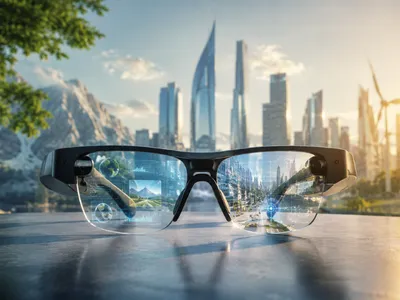
| Augmented Reality (AR) | On-the-job guidance, information overlay, and remote expert collaboration (e.g., equipment maintenance) | Smart glasses, tablets, smartphones | Partial Immersion |
| Mixed Reality (MR) | Interactive design prototyping, complex assembly training with persistent digital objects | See-through HMD with environmental understanding (e.g., Microsoft HoloLens) | Blended Immersion |
The interoperability between these technologies is becoming increasingly important. A trend toward cloud-based XR platforms allows for the centralized management of training modules, data analytics on user performance, and the scalable deployment of simulations across geographically dispersed locations. This shift not only reduces hardware dependency but also facilitates the aggregation of big data, which can be leveraged to refine simulations and create adaptive learning pathways tailored to individual trainee progress.
Haptic Feedback & Immersion
While visual and auditory fidelity in XR has seen remarkable progress, the frontier for achieving true presence and effective psychomotor skill transfer lies in the domain of haptic feedback. Haptics, encompassing both tactile (cutaneous) and kinesthetic (force) feedback, is critical for closing the experiential loop between the virtual action and the user's sensory perception. Advanced haptic interfaces are moving beyond simple vibration to provide nuanced sensations such as texture, weight, rigidity, and even thermal properties. For instance, in surgical simulation, the replication of tissue resistance and the subtle pulse of a virtual artery are paramount for training delicate motor skills. The integration of force feedback exoskeletons and pneumatic actuators enables users to manipulte virtual objects with a realistic sense of mass and force, fundamentally enhancing the ecological validity of the training scenario. This multisensory integration is governed by the concept of "sensorimotor contingencies," where the learner's expectations of physical interaction must be met by the system's responses to avoid break-in-presence and ensure the learned skills are accurately transferred to real-world tasks.
The technical challenge in delivering high-fidelity haptics is multifaceted, involving latency reduction, increasing degrees of freedom, and ensuring user safety. High latency between a user's movement and the haptic response can cause disorientation and simulator sickness, undermining training objectives. Modern systems employ predictive algorithms and edge computing to minimize this lag. Furthermore, the development of wearable haptic garments and ultrasonic mid-air feedback systems points toward a future where users can experience full-body tactile sensations without being tethered to bulky mechanical devices. These innovations are particularly relevant for training in fields requiring whole-body interaction, such as firefighting, patient handling, or military operations, where environmental awareness and physical response are inextricably linked.
How Does AI Enhance XR Training Simulations?
The convergence of Artificial Intelligence (AI) with Extended Reality is fundamentally transforming training paradigms from static, scripted experiences into dynamic, adaptive learning environments. AI algorithms, particularly those underpinned by machine learning and natural language processing, serve as the cognitive engine within XR simulations, enabling real-time scenario modulation, personalized feedback, and intelligent tutoring. This symbiosis allows for the creation of proactive simulation ecosystems that can analyze a trainee's performance metrics—such as gaze direction, decision latency, and procedural accuracy—to dynamically adjust difficulty, introduce unexpected variables, or provide targeted scaffolding. For instance, in a virtual leadership training scenario, an AI-powered non-player character (NPC) can employ sentiment analysis to alter its dialogue and behavior based on the trainee's communiction style, thereby offering a uniquely tailored interpersonal challenge. This moves simulation design beyond pre-defined branching paths toward a truly generative and responsive experience, which is critical for mastering complex, non-linear skills in fields like crisis management, advanced customer service, or tactical decision-making.
A particularly impactful application is the use of AI for predictive performance analytics and automated assessment. By continuously processing multimodal data streams from the XR environment—including motion capture, biometrics, and interaction logs—AI models can identify subtle patterns indicative of skill proficiency, cognitive overload, or the development of incorrect techniques. This facilitates a shift from summative to formative assessment, where feedback is immediate, contextual, and prescriptive. Furthermore, AI-driven procedural content generation can create near-infinite variations of training scenarios, ensuring that learners cannot simply memorize a sequence but must internalize underlying principles. This is paramount for maintaining training efficacy and preventing skill decay over time, as the system ensures that each session presents novel but pedagogically relevant challenges.
Where is XR Transforming Professional Training?
The practical deployment of XR in training and simulation is yielding transformative outcomes across diverse industrial and professional sectors, each with unique requirements and constraints. In healthcare and medical training, XR enables risk-free rehearsal of complex surgical procedures, anatomical exploration in 3D space, and empathy-building simulations for patient interaction. Surgeons can practice on patient-specific holograms derived from CT or MRI scans, increasing preoperative preparedness. The defense and aerospace sector remains a pioneering adopter, utilizing VR for full-mission rehearsal, cockpit familiarization, and maintenance training for intricate systems. These applications significantly reduce operational costs, equipment downtime, and physical risks. Meanwhile, in industrial manufacturing and energy, AR is revolutionizing field service and complex assembly by providing technicians with hands-free, contextual schematics and remote expert vision, directly overlaying step-by-step instructions onto machinery. This not only accelerates task completion but also drastically reduces error rates, enhancing overall operational safety and efficiency.
Beyond these established domains, corporate training is increasingly leveraging VR for soft skills development, placing employees in challenging conversational simulations that would be difficult, costly, or unethical to stage in reality. Furthermore, high-risk industries like mining, oil and gas, and chemical processing use XR for immersive safety drills, allowing workers to experience and respond to emergency scenarios—such as fires or gas leaks—in a completely safe yet psychologically convincing environment. This experiential learning approach is proven to enhance knowledge retention and instinctual response compared to traditional classroom-based safety training.