The Emergence of New Realities
Augmented Reality (AR) and Virtual Reality (VR) represent a fundamental shift in human-computer interaction, moving beyond flat screens to create spatially aware, immersive digital experiences. These technologies are redefining our perceptual boundaries.
Initially propelled by gaming and entertainment, these immersive tools have undergone a rapid evolution, transitioning from niche novelties to powerful professional instruments. This journey aligns with the Gartner Hype Cycle, where early exuberance has given way to substantive, value-driven development. The broader continuum, often termed Extended Reality (XR), encapsulates the entire spectrum from partial to full immersion. The core transformation lies not in the technology itself, but in its capacity to alter cognitive load and spatial understanding.
Augmented Reality's Integration and Application
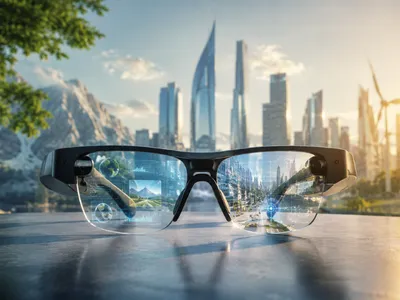
AR functions by superimposing digital assets onto the user’s physical environment via devices like smartphones or smart glasses. Its power derives from delivering real-time, context-aware information directly within the user’s field of view. This layer of digital augmentation is designed to enhance, not replace, human perception and capability.
In industrial settings, AR assists in complex assembly, maintenance, and logistics. Technicians can view schematic overlays on machinery, reducing errors and training time. For remote collaboration, experts can project annotations into a field worker’s view, revolutionizing support and predictive maintenance protocols.
The healthcare sector leverages AR for enhanced surgical planning and medical training, allowing surgeons to visualize anatomy in 3D space before an incision. In retail, virtual try-ons for apparel and cosmetics or previewing furniture in a customer’s living room are becoming standard, directly linking digital engagement to conversion rates. These applications demonstrate AR's role as a pervasive computing interface.
Despite its promise, widespread AR integration faces hurdles. Hardware limitations, such as field-of-view constraints and battery life in wearable devices, persist. Furthermore, the computational demands of real-time environmental mapping and object recognition require robust, often cloud-supported, processing pipelines. The creation of sustainable, scalable digital contnt for diverse real-world contexts remains a significant challenge.
Virtual Reality's Depth of Immersion
In contrast to AR's layered approach, Virtual Reality (VR) constructs a comprehensive synthetic environment, completely displacing the user’s physical surroundings. This total sensory isolation is the cornerstone of its efficacy, creating a powerful sense of presence—the psychological state of "being there" within the virtual space.
Achieving this presence demands a high-fidelity technical ecosystem. Critical factors include high-resolution displays, wide field of view, sub-20ms motion-to-photon latency, and precise six degrees-of-freedom (6DoF) tracking. Any compromise in these areas can induce cybersickness, breaking immersion and limiting utility.
Beyond entertainment, VR's capacity for safe, repeatable, and cost-effective simulation has revolutionized high-stakes training. Surgeons practice complex procedures, pilots navigate emergency scenarios, and first responders train for disaster management—all within a zero-risk virtual setting. The pedagogical power lies in experiential learning, where users learn by doing rather than observing, leading to superior knowledge retention and skill transfer.
Therapeutic applications represent another profound frontier. VR-based exposure therapy for PTSD, phobias, and anxiety disorders allows clinicians to create controlled, graded environments for patient treatment. Furthermore, social VR platforms are exploring new paradigms for remote collaboration and interaction, challenging traditional notions of communication and shared space by embodying users as avatars in a persistent digital world.
However, the very immersion that defines VR also presents significant ethical and practical challenges. Prolonged use can cause dissociation, and the design of virtual environments can subtly influence user behavior and cognition through persuasive design. The collection of biometric and behavioral data within these immersive spaces raises unprecedented privacy concerns. The hardware, while advancing, often remains bulky and costly, creating accessibility barriers for widespread adoption, and the "social isolation" critique persists despite advances in multi-user experiences. The technology's power necessitates a parallel development of robust ethical frameworks.
Technical Hurdles and Scalability Questions
The path to mainstream adoption of AR and VR is fraught with significant technical impediments. Foremost among these is the challenge of creating hardware that is simultaneously powerful, comfortable, and socially acceptable.
Visual fidelity demands high-resolution, high-refresh-rate displays, which in turn require substantial processing power and generate considerable heat. Balancing this with ergonomic design and all-day battery life remains a paramount engineering puzzle.
For AR, achieving precise and robust environmental understanding in real-time is non-negotiable. Systems must seamlessly integrate computer vision, inertial measurement units (IMUs), and increasingly, machine learning models to understand and interact with a dynamic, unstructured world, a task that is exponentially more complex than rendering a controlled virtual environment.
The computational burden of rendering complex 3D environments, especially for wireless VR or advanced AR, often exceeds the capabilities of onboard processors. This has led to the exploration of edge and cloud rendering solutions, where heavy graphical computations are offloaded to remote servers. However, this approach introduces a critical dependency on ultra-low-latency, high-bandwidth networks (like 5G/6G) to stream the experience without perceptible delay, raising questions about infrastructure equity and global scalability. The "network edge" thus becomes a crucial battleground for the feasibility of next-generation immersive experiences.
Beyond hardware, the lack of universal standards and interoperability poses a major barrier to scalability. Content created for one platform is often incompatible with another, fragmenting the developer ecosystem and limiting content libraries. Furthermore, the creation of high-quality 3D assets and environments is a resource-intensive process. The industry is actively developing tools for photogrammetry, neural radiance fields (NeRFs), and AI-assisted 3D modeling to democratize content creation, but the challenge of building a vast, interconnected "metaverse" of experiences that can scale globally hinges on solving these foundational issues of interoperability, creator tools, and sustainable economic models.