The Great Oxygenation Catalyst
Between 2.4 and 2.1 billion years ago, photosynthetic cyanobacteria flooded Earth’s oceans with oxygen. This seemingly benign metabolic byproduct triggered the most profound climatic upheaval in planetary history.
The newly released oxygen rapidly oxidized atmospheric methane, a potent greenhouse gas. As methane levels collapsed, so did the planet’s ability to retain heat, plunging the surface into a deep freeze.
The Great Oxidation Event did not merely alter atmospheric chemistry; it dismantled a stable methane greenhouse, instigating the Huronian glaciation, a series of ice ages lasting hundreds of millions of years. This climatic cascade fundamentally restructured global biogeochemical cycles, forcing microbial life to adapt to oxidative stress and extreme temperature swings. Earth’s first major climate catastrophe thus became a crucible, selecting for oxygen-tolerant metabolisms and setting the stage for complex eukaryotic life.
How Does Climate Change Drive Mass Extinctions?
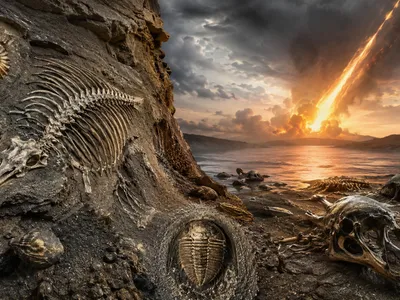
Rapid changes in temperature, carbon cycling, and ocean chemistry have consistently acted as powerful evolutionary forces. Mass extinction events, from the Ordovician to the Cretaceous, are now widely interpreted through the lens of abrupt climate disruption. The end-Permian extinction—the most severe in the Phanerozoic—was triggered by massive volcanic emissions of CO₂ and methane from the Siberian Traps, leading to runaway global warming, ocean acidification, and extensive anoxic conditions.
Such hyperthermal events decimated over 90% of marine species, yet they also reorganized ecosystems with lasting consequences. Rapid carbon release outpaced natural feedback mechanisms, creating a lethal combination of high temperatures and low oxygen that few organisms could endure. The end-Permian extinction exemplifies how climate volatility, rather than gradual change, acts as the primary agent of biotic turnover, resetting evolutionary trajectories for millions of years.
The mechanisms linking climate to extinction follow recurring patterns across deep time. Below are the most prevalent drivers identified in the geologic record:
- Volcanic mega-provinces releasing massive CO₂ and sulfur aerosols
- Runaway greenhouse warming exceeding thermal tolerance thresholds
- Ocean deoxygenation and acidification disrupting marine food webs
- Destabilization of methane clathrates causing abrupt positive feedback
Paleoclimate proxies reveal that these events consistently coincide with the collapse of carbon sinks, underscoring the fragility of Earth’s climate system. Each extinction pulse, while catastrophic, also opened ecological niches that drove subsequent adaptive radiations.
Adaptive Leaps in a Volatile World
Climate volatility in deep time frequently served as a catalyst for evolutionary innovation rather than mere extinction. Physiological innovations such as biomineralization, land colonization, and endothermy often emerged during intervals of pronounced climatic stress.
The late Ediacaran to early Cambrian transition witnessed dramatic swings in global temperature and ocean chemistry, coinciding with the rapid appearance of most major animal phyla. Biomineralization arose as a protective response to increased predation pressure and shifting seawater saturation states driven by climate-linked weathering pulses.
Oxygen fluctuations during the Paleozoic provided selective advantages for organisms capable of regulating internal environments, paving the way for complex circulatory and respiratory systems. Marine arthropods and early vertebrates diversified as continental margins experienced repeated transgressions and regressions tied to glacial-interglacial cycles. Climate-driven hhabitat fragmentation repeatedly isolated populations, accelerating speciation rates through allopatric mechanisms. The colonization of land by plants and arthropods unfolded during intervals when atmospheric CO₂ levels fluctuated widely, demanding new adaptations for desiccation resistance and nutrient acquisition.
| Climate Driver | Evolutionary Outcome | Time Interval |
|---|---|---|
| Neoproterozoic glaciation cycles | Emergence of multicellularity, animal motility | ~650–541 Ma |
| Ordovician cooling & glaciation | Radiation of planktonic graptolites, reef builders | ~485–443 Ma |
| Carboniferous–Permian icehouse | Evolution of amniotic eggs, seed plants | ~359–252 Ma |
| Cretaceous oceanic anoxic events | Plankton diversification, angiosperm expansion | ~125–94 Ma |
Each climatic perturbation acted as a filter, favoring traits that conferred resilience. The Pleistocene climate oscillations further refined adaptations in hominins, illustrating that environmental instability remains a persistent engine of evolutionary change across all timescales.
The Deep Freeze Evolutionary Pump
Prolonged icehouse intervals, particularly the Cryogenian “Snowball Earth” events and the late Paleozoic ice age, did not simply arrest evolution but instead acted as powerful selective pumps. Glacial refugia and extreme environmental heterogeneity drove rapid genetic divergence and subsequent diversification upon deglaciation.
The Sturtian and Marinoan glaciations (717–635 Ma) encased the planet in ice for millions of years, yet fossil evidence indicates that eukaryotic life persisted in oxygenated meltwater ponds, shallow marine refugia, and volcanic geothermal oases. These isolated pockets became evolutionary laboratories.
Following the meltdown, the Cryogenian–Ediacaran transition witnessed the first macroscopic, complex organisms. This evolutionary pump operated through bottleneck effects: only lineages with robust metabolic flexibility and dispersal capabilities survived, and their subsequent radiation filled newly available niches. The Neoproterozoic oxygenation event, coupled with post-glacial greenhouse climates, provided the nutrients and environmental stability required for the rise of animals. Key adaptations accelerated during these recovery phases:
- Enhanced osmoregulation for fluctuating salinity in glacial meltwater environments
- Symbiotic partnerships (e.g., algae-fungi) that improved nutrient acquisition in nutrient-poor post-glacial seas
- Development of sexual reproduction and encystment stages for survival during prolonged ice cover
- Rapid diversification of body plans during the Avalon and Cambrian explosions
Paleoclimatic reconstructions from glacial deposits, banded iron formations, and isotope chemostratigraphy confirm that these deep freezes were not evolutionary dead ends. Instead, they concentrated evolutionary potential into resilient clades, which then explosively diversified once favorable climates returned.
Greenhouse Climates and the Rise of Giants
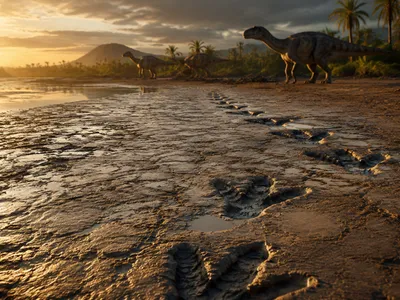
Extended intervals of elevated atmospheric CO₂ and warm global temperatures repeatedly facilitated the evolution of gigantism across multiple lineages. Mesozoic sauropods, Carboniferous arthropods, and Paleogene mammals all achieved maximum body sizes during greenhouse regimes.
High pCO₂ enhanced primary productivity through elevated photosynthetic rates and expanded tropical biomes, generating unprecedented biomass at the base of food webs. This productivity surplus cascaded upward, enabling the evolution of massive herbivores and their predators. Warm, equable climates also reduced metabolic constraints, allowing ectothermic lineages to attain larger sizes without overheating.
Oceanic anoxic events during the Cretaceous greenhouse fostered exceptional preservation of organic matter and the diversification of marine reptiles such as ichthyosaurs and plesiosaurs. Terrestrial ecosystems saw the rise of angiosperm-dominated floras that supported immense sauropod herds across Pangean landscapes. Gigantism in sauropods was not merely a passive response to high resources; it required complex physiological adaptations, including avian-style respiratory systems and hollowed bones, which emerged precisely as atmospheric oxygen levels fluctuated within the greenhouse framework. Climate-driven habitat continuity across supercontinents allowed these giants to migrate seasonally, optimizing resource use and sustaining populations for tens of millions of years.
| Greenhouse Interval | Peak CO₂ (ppm) | Evolutionary Giant |
|---|---|---|
| Late Carboniferous–Permian | ~800–1500 | Meganeura (giant dragonfly), Arthropleura (giant millipede) |
| Jurassic–Cretaceous | ~1000–2000 | Argentinosaurus (sauropod), Liopleurodon (marine reptile) |
| Early Eocene | ~1000–1500 | Uintatherium, giant ground sloths, early cetaceans |
Resilience and Collapse Lessons for the Anthropocene
Deep-time climate transitions reveal consistent patterns: rapid carbon injection, regardless of source, triggers cascading feedbacks that ecosystems cannot match. The geologic record offers calibrated baselines for understanding modern anthropogenic change.
The Paleocene-Eocene Thermal Maximum (PETM), driven by a carbon pulse comparable to projected future emissions, caused ~5–8°C of global warming, ocean acidification, and a pronounced biotic turnover. Benthic foraminifera suffered mass extinction, while mammals underwent dwarfism and rapid dispersal across land bridges. Recovery required over 100,000 years, underscoring the protracted timescales of Earth system re-equilibration.
Hyperthermal events from the Triassic to the Cretaceous show that climate tipping points are often reached when atmospheric CO₂ rises above 1000 ppm alongside methane hydrate destabilization. Modern carbon emission rates exceed even the fastest ancient events, yet the impacts—ocean acidification, poleward biome shifts, and intensified hydrologic extremes—closely resemble those recorded in sedimentary archives. Comparisons with the End-Permian are particularly striking, when the Siberian Traps released around 40,000 gigatons of carbon, causing the only known simultaneous collapse of terrestrial and marine ecosystems.
Today, cumulative human-driven emissions have already reached nearly 10% of that scale in less than two centuries, with current trajectories indicating similar destabilization of carbon sinks. Paleoclimate data also indicate that once initiated, feedback mechanisms such as permafrost thaw and albedo loss can amplify warming independently of human influence, locking in effects for thousands of years. While resilience in ancient biotas—through refugia, rapid post-extinction diversification, and physiological adaptation—offers some guidance, the unprecedented pace of change in the Anthropocene presents a far greater challenge.