Mechatronic Wrist Design
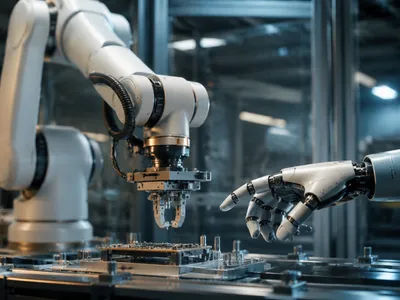
The foundation of robotic precision is the mechatronic wrist, an engineered joint that replicates—and even exceeds—human articulation, allowing instruments to move with seven degrees of freedom and perform intricate maneuvers within confined anatomical spaces. Unlike conventional laparoscopic tools, these systems deliver enhanced dexterity through cable-driven or gear-based mechanisms, enabling surgeons to suture, dissect, and cauterize at angles unattainable by the human hand alone.
This mechanical advantage is formally termed robot-assisted surgery kinematics, where the system translates the surgeon's wrist rotations at the console into precise, scaled movements of the instrument tip. The elimination of the fulcrum effect found in laparoscopy further reduces cognitive load.
Advanced kinematic modeling embedded in the system software continuously optimizes the trajectory of the EndoWrist instruments. These models compensate for gravitational forces and joint friction, ensuring that the commanded motion is executed with sub-millimeter accuracy, which is particularly critical during microsurgical anastomosis.
High-Definition 3D Vision
Precision surgery is not solely about manipulation; it is equally dependent on visualization. Robotic platforms integrate high-definition 3D cameras that provide surgeons with true depth perception, a significant upgrade from the two-dimensional views of conventional laparoscopy.
This immersive visual feedback is achieved through dual-lens stereoscopic endoscopes that capture separate left and right eye images. The console then projects these images to create a magnified, high-fidelity representation of the operative field.
The enhanced immersive visualization allows for meticulous identification of tissue planes and vascular structures. Surgeons report improved hand-eye coordination as the visual alignment within the console mirrors the natural spatial relationship of their hands to the surgical site.
Studies correlating spatial resolution with surgical outcomes indicate that superior image quality directly reduces the risk of iatrogenic injury. The ability to zoom digitally while maintaining a steady, close-up view enables precise dissection around delicate nerves and vessels, thereby shortening the learning curve for complex oncologic procedures.
Tremor Filtration Software
Robotic systems employ sophisticated software to distinguish intended surgical motions from physiological tremor. This digital filtration ensures that only deliberate movements are transmitted to the instruments, achieving sub-millimeter precision even in unsteady hands.
The software algorithms utilize high-pass filters to analyze incoming motion data from the kinematic sensors at a rate of hundreds of times per second. By identifying the frequency signature of tremors, typically in the 8-12 Hz range, the system applies a corrective filter to smooth the instrument's trajectory before it reaches the patient.
This active cancellation of micro-movements translates directly into superior clinical outcomes. Surgeons performing delicate tasks such as retinal membrane peeling or nerve anastomosis rely on this motion scaling technology to operate within safe margins, significantly reducing the likelihood of vascular puncture or inadvertent tissue trauma.
Open Incisions and Keyhole Access
The transition from traditional open surgery to minimally invasive techniques has been profoundly accelerated by robotic platforms. The following table illustrates the comparative advantages of robotic assistance in achieving true keyhole access while maintaining surgical efficacy.
| Surgical Approach | Incision Characteristics | Recovery & Precision Profile |
|---|---|---|
| Traditional Open Surgery | Large incisions for direct manual access | Extended recovery, higher morbidity, maximal haptic feedback |
| Conventional Laparoscopy | Multiple small ports with rigid instruments | Reduced trauma, faster recovery, limited dexterity |
| Robot-Assisted Surgery | Minimal access ports with wristed instruments | Minimal blood loss, short hospital stay, enhanced precision |
Robotic platforms eliminate the fulcrum effect inherent in conventional laparoscopy, where instrument movement is reversed relative to the surgeon's hand. This normalization of hand-instrument coordination allows for more intuitive manipulation of tissues through the small port sites.
The reduction in surgical trauma achieved through minimally invasive access correlates with decreased postoperative pain aand lower rates of surgical site infections. Patients undergoing robotic procedures often experience significantly shorter hospitalizations and can return to normal activities more rapidly.
This paradigm shift towards keyhole surgery is not merely about smaller incisions; it fundamentally alters the surgical approach to complex pathologies. For instance, in prostatectomies or deep-seated tumor resections, the robotic system's ability to navigate anatomical bottlenecks without extensive tissue dissection preserves critical structures like neurovascular bundles. The long-term oncological outcomes remain comparable to, and in some metrics surpass, those of open techniques, validating the efficacy of this technological evolution. The patient-centric benefits coupled with uncompromised surgical standards underscore why robotic assistance has become the preferred modality for many complex procedures.
Data-Driven Feedback and Tactile Sensation
One of the most significant challenges in robotic surgery has been the loss of direct haptic feedback, the tactile sensation that allows surgeons to feel tissue consistency and tension. Current research focuses on restoring this sensory dimension through tactile fidelity innovations that translate forces at the instrument tip into meaningful sensory information.
Modern robotic platforms increasingly incorporate sensory substitution techniques that convert force measurements into visual or auditory cues. Surgeons learn to interpret color-coded overlays or tonal variations as indicators of tissue tension, effectively developing a new sensory language for surgical manipulation.
The integration of real-time force data provides unprecedented opportunities for surgical optimization. Consider the following key benefits derived from current force-sensing technologies integrated into robotic platforms.
- Tissue characterization through measured deformation responses Real-time
- Force feedback algorithms preventing excessive suture tension Safety
- Automated recognition of tissue planes via density differentials Precision
- Quantitative assessment of anastomotic integrity during construction Outcomes
These data-driven insights transform robotic surgery from a purely mechanical endeavor into an information-rich intervention where every manipulation generates analyzable metrics. The accumulation of force profiles across thousands of similar procedures enbles the development of predictive models that alert surgeons to potentially dangerous maneuvers before tissue injury occurs. This proactive safety paradigm represents a fundamental advancement over traditional surgery, where feedback is inherently reactive and dependent on irreversible tissue damage to signal excessive force application.
Emerging research explores direct haptic feedback through advanced master console designs that physically resist or assist surgeon movements based on real-time force readings. These future predictive haptic interfaces promise to restore the intuitive tactile dimension of surgery while maintaining the precision advantages of robotic assistance. The following table summarizes the evolution of sensory feedback technologies in robotic surgery and their anticipated impact on clinical practice.
| Feedback Generation | Current Technology | Clinical Implication |
|---|---|---|
| First Generation | Visual force indicators, auditory alarms | Surgeon interpretation required, tactile augmentation limited |
| Second Generation | Vibratory feedback at console handles | Basic haptic cues for critical force thresholds |
| Third Generation | Force-reflecting masters with resilient control | True haptic feedback preserving tissue feel |
The convergence of machine learning with force-sensing instrumentation promises to unlock predictive capabilities that extend beyond real-time feedback. Future systems may analyze patterns of instrument-tissue interaction to recommend optimal suture placement or predict areas at risk for postoperative complications based on intraoperative force profiles. This synthesis of mechanical precision with cognitive assistance positions robotic surgery at the forefront of personalized surgical care, where each procedure benefits from the accumulated experience of countless prior operations translated into actionable intraoperative guidance.