From Pedometers to Predictive Analytics
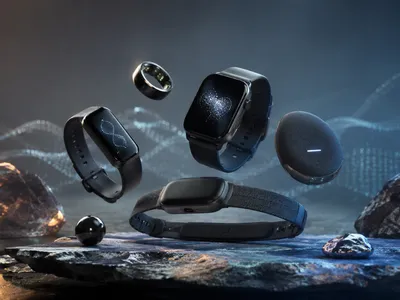
The evolution of wearable health technology represents a paradigm shift from simple activity monitoring to sophisticated predictive health analytics. Early devices, epitomized by basic pedometers, provided a unidimensional view of physical activity, typically limited to step counts. Contemporary systems, however, harness complex algorithms and vast datasets to offer insights that were once exclusive to clinical settings.
This transition is fundamentally driven by advancements in microprocessor power, miniaturization of sensors, and the proliferation of machine learning techniques. The core value has shifted from mere data collection to actionable intelligence, enabling preemptive health interventions. The ability to analyze trends over time transforms raw biometric data into a narrative of an individual's health trajectory.
The integration of predictive analytics in consumer wearables marks a critical juncture. By applying statistical models to continuous physiological data streams, these devices can identify subtle deviations from personal baselines. For instance, prolonged increases in resting heart rate or decreases in heart rate variability may signal the onset of illness, sleep deprivation, or excessive strain long before overt symptoms appear, effectively creating a digital phenotype for the user.
The Multimodal Sensing Revolution
Modern health tracking is characterized by a convergence of multimodal sensor data. No longer reliant on a single metric, devices simultaneously capture photoplethysmography (PPG) for heart rate, accelermetry for movement, gyroscope data for orientation, and skin temperature and electrodermal activity for stress indicators. This sensor fusion is crucial for disambiguating signals and enhancing overall accuracy.
The synergy between different sensing modalities allows for the derivation of complex metrics. For example, combining motion data with optical heart rate monitoring enables the precise calculation of heart rate variability (HRV), a key marker of autonomic nervous system function and recovery status. Similarly, fusing accelerometer and PPG data helps filter out motion artifacts, a perennial challenge in wrist-based photoplethysmography.
| Sensor Type | Primary Measurement | Derived Health Metric | Clinical Relevance |
|---|---|---|---|
| Optical PPG | Blood volume changes | Resting Heart Rate, HRV, Oxygen Saturation (SpO2) | Cardiovascular fitness, stress, sleep apnea screening |
| Triaxial Accelerometer | Acceleration forces | Step count, activity intensity, sleep stages, fall detection | Physical activity levels, sleep quality, geriatric care |
| Bioimpedance Sensor | Electrical resistance of tissue | Body composition, hydration levels, respiratory rate | Metabolic health, fluid status, sleep analysis |
This multimodal approach underpins the transition from generic fitness tracking to personalized health monitoring. By correlating data from disparate sources, wearables can construct a more holistic and context-aware picture of the user's physiological state, moving closer to the diagnostic power of medical-grade equipment in an ambulatory setting.
Data as the New Diagnostic Lens
The sheer volume of biometric data generated by wearables necessitates advanced analytical frameworks to extract clinical meaning. Raw data points are transformed into actionable health insights through sophisticated computational pipelines, including signal processing, feature extraction, and pattern recognition algorithms.
This process enables the identification of subclinical biomarkers—subtle physiological changs that precede overt disease manifestation. Continuous monitoring provides a density of data unattainable through sporadic clinical visits, creating a dynamic baseline unique to each individual and enhancing the precision of health assessments.
The true diagnostic power emerges from longitudinal analysis and population-scale comparisons. Machine learning models trained on aggregated, anonymized data from millions of users can detect patterns associated with specific conditions, such as atrial fibrillation or sleep disorders, with increasing sensitivity. This turns the wearable from a passive tracker into an active screening tool, potentially enabling earlier interventions and shifting healthcare from a reactive to a proactive model.
- Longitudinal Baselines: Establishing personal norms for metrics like resting heart rate, HRV, and activity levels, against which deviations are measured.
- Contextual Data Correlation: Cross-referencing physiological data with self-reported symptoms, environmentl factors, and medication logs to identify triggers.
- Population Health Analytics: Anonymized data aggregation for public health research, tracking disease trends and the effectiveness of lifestyle interventions on a large scale.
Behavioral Nudges and Personalized Intervention
Wearables exert their most direct impact on health through behavioral modification. By leveraging insights from behavioral economics and psychology, these devices deliver personalized nudges—timely, context-aware suggestions that encourage healthier choices without being coercive.
The effectiveness of these interventions hinges on personalization algorithms that consider the user's historical data, goals, and even current physiological state. For instance, a stress notification might be suppressed during a known workout, while a hydration reminder could be triggered by elevated skin temperature and increased activity.
| Intervention Type | Wearable Trigger | Behavioral Nudge | Theoretical Basis |
|---|---|---|---|
| Activity Reinforcement | Prolonged sedentary period detected by accelerometer | "Time to move! A short walk can boost your metabolism." | Habit formation, breaking prolonged sitting for metabolic health |
| Cognitive-Behavioral | Elevated resting heart rate & reduced HRV suggesting stress | "Your body shows signs of stress. Try a 2-minute breathing exercise." | Psychophysiological feedback, promoting mindfulness |
| Circadian Alignment | Consistently late sleep onset inferred from light & activity sensors | "Wind down earlier tonight. Dimming your lights can help signal sleep." | Sleep hygiene, entrainment of circadian rhythms |
The gamification of health goals through badges, milestones, and social sharing further leverages intrinsic and extrinsic motivation. This creates a positive feedback loop where healthy behaviors are reinforced, increasing user engagement and the likelihood of long-term habit adherence, which is critical for managing chronic conditions.
However, the efficacy of these nudges varies widely based on individual differences in motivation, socioeconomic factors, and technological literacy. The next frontier involves adaptive intervention systems that learn from user responses to tailor the timing, modality, and content of suggestions, thereby maximizing their impact and reducing notification fatigue.
- Micro-Interventions: Short, actionable tasks (e.g., "stand for 2 minutes") that require minimal cognitive load, promoting compliance.
- Just-in-Time Adaptive Interventions (JITAIs): AI-driven systems that deliver support at moments of greatest need and receptivity, based on real-time sensor data.
- Integrated Coaching Platforms: Combining device data with human or AI coaching to provide tailored advice, accountability, and emotional support.
Navigating the Complexities of Accuracy and Validation in Consumer Devices
A critical academic discourse surrounds the validation and accuracy of health metrics generated by consumer wearables. Unlike regulated medical devices, these products often operate under a different set of standards, raising questions about the clinical reliability of their data. The interpretative gap between consumer-grade measurements and diagnostic-grade precision remains a significant hurdle.
Variability in sensor placement, skin tone, motion artifacts, and individual physiology can significantly skew readings. Consequently, a core research focus involves developing robust signal processing algorithms and compensatory models that account for these confounders to improve the fidelity of the captured physiological signals.
The gold standard for validation involves rigorous comparison against reference clinical instruments in controlled and free-living studies. However, results are often mixed; while optical heart rate monitors may show acceptable accuracy during steady-state walking, they can fail during high-intensity interval training or for individuals with specific arrhythmias. This underscores the necessity for context-specific validation protocols that reflect real-world use rather than idealized laboratory conditions.
The black-box nature of proprietary algorithms poses a transparency challenge. The lack of peer-reviewed documentation for the specific photoplethysmography (PPG) waveform analysis or sleep stage classification techniques used in commercial devces makes independent verification difficult. This opacity necessitates a critical, evidence-based approach from both the research community and informed consumers when interpreting device-generated health data.
The regulatory landscape is evolving to address these concerns, with agencies like the FDA increasingly granting clearances for specific software-as-a-medical-device (SaMD) features within wearables, such as atrial fibrillation detection or sleep apnea screening. This trend towards regulatory oversight is pivotal, as it mandates a higher level of clinical validation and post-market surveillance, thereby enhancing the potential for these technologies to be safely integrated into remote patient management and decentralized clinical trial frameworks, bridging the gap between consumer wellness and regulated healthcare.
The Future Frontier: Integrative Health Ecosystems
The trajectory of wearable health technology points toward the development of comprehensive integrative health ecosystems. Future devices will not function as isolated data silos but as interconnected nodes within a broader digital health infrastructure, facilitating seamless data exchange between patients, clinicians, and healthcare systems.
This ecosystem model relies on the adoption of interoperability standards like HL7 FHIR (Fast Healthcare Interoperability Resources), which enable wearables to securely populate personal health records (PHRs) and electronic health records (EHRs). Such integration transforms episodic clinical encounters into continuous, data-informed partnerships in care.
A key evolution will be the shift from descriptive analytics to prescriptive and decision-support systems. By synthesizing wearable data with genomic information, environmental exposures, and social determinants of health, advanced AI platforms could generate highly personalized health risk assessments and tailored intervention plans, moving beyond generic recommendations.
The convergence with implantable and digestible sensors will further erase the boundary between external monitoring and internal physiology. Next-generation devices may offer continuous, non-invasive monitoring of core biomarkers like glucose, lactate, or cortisol, providing unprecedented insight into metabolic and endocrine function in real-time.
However, this data-rich future necessitates parallel advancements in data security, privacy-preserving analytics, and ethical governance. The aggregation of such intimate, longitudinal data creates significant risks if breached or misused. Developing decentralized data architectures (e.g., using blockchain or federated learning) that allow for model training and insight generation without centralizing raw personal data will be a critical area of research and development to ensure user trust and systemic resilience.
The success of these ecosystems hinges on demonstrating improved health outcomes and cost-effectiveness in large-scale, real-world studies. The promise lies in creating a closed-loop system where continuous monitoring informs timely interventions, which in turn modify health behaviors and physiological states, creating a virtuous cycle of prevention and personalized health optimization that could fundamentally reshape the delivery and economics of healthcare.
The academic and industrial challenge is to ensure these systems are equitable, accessible, and designed with a human-centric focus, avoiding the pitfalls of technological solutionism while genuinely empowering individuals and populations to achieve better health through informed, data-supported choices.