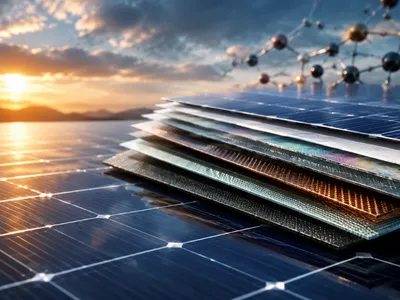
From Alchemy to Algorithm

The historical quest for novel materials relied on serendipity and laborious trial-and-error, a process akin to alchemical experimentation. Today, a paradigm shift is underway, powered by computational materials science. Researchers utilize density functional theory (DFT) and high-throughput screening to predict properties of hypothetical compounds before synthesis, dramatically accelerating discovery timelines for green technologies.

This computational approach allows scientists to model complex phenomena at the atomic scale, such as ion migration in battery electrolytes or light absorption in novel semiconductors.

By simulating millions of potential material combinations, algorithms identify the most promising candidates for targeted applications, moving discovery from the forge to the data center. This is not merely an acceleration but a fundamental change in methodology. The integration of machine learning and artificial intelligence further refines these predictions, learning from existing experimental data to guide the exploration of vast chemical spaces with unprecedented efficiency and accuracy.

The development cycle for critical materials, from conception to laboratory validation, has been compressed from decades to mere years or even months.

Next-Generation Photovoltaics Beyond Silicon

While silicon photovoltaics dominate the market, their efficiency is approaching theoretical limits. Next-generation materials seek to overcome these barriers and unlock new applications. Perovskite solar cells have emerged as a revolutionary contender, achieving staggering efficiency gains from 3% to over 25% in just a decade. Their tunable bandgap and low-temperature solution processability offer a path to ultra-low-cost, lightweight, and flexible solar modules.

However, challenges with long-term stability under environmental stress remain a significant focus of materials research.

Simultaneously, tandem cell architectures combine different light-absorbing materials to capture a broader spectrum of sunlight. A perovskite layer can be stacked atop silicon, with the perovskite efficiently converting high-energy photons and silicon capturing the lower-energy infrared light. This synergistic approach pushes single-junction limits. Another promising avenue is the development of organic photovoltaics (OPVs), which utilize carbon-based polymers and molecules. Their mechanical flexibility and potential for transparent designs open doors for building-integrated photovoltaics, turning windows and facades into power generators. The quest for non-toxic, stable, and abundant absorber materials is central to sustainable PV advancement.

PV Technology Key Material(s) Highest Lab Efficiency (%) Primary Advantage Key Challenge
Single-Junction Silicon Crystalline Si 26.8 Stability, Maturity ~50% Cost in Installation
Perovskite Hybrid Organic-Inorganic Halides 25.7 Rapid Efficiency Gains, Tunability Long-Term Operational Stability
Perovskite/Si Tandem Perovskite + Silicon 33.9 Exceeds Single-Junction Limit Complex Fabrication
Organic PV (OPV) Conjugated Polymers/Fullerenes 19.2 Flexibility, Semi-Transparency Lower Efficiency & Stability

Materials innovation also targets the supporting components of solar modules. Advanced anti-reflective and self-cleaning coatings, often based on nanostructured oxides, maximize light ingress and reduce maintenance, thereby improving the energy yield over the system's lifetime. The encapsulation materials, typically ethylene-vinyl acetate (EVA), are being enhanced with superior ultraviolet light blockers and moisture barriers to protect the sensitive inner layers, particularly for perovskites, from degradation.

  • Perovskite Composition Engineering: Partial substitution of cations (e.g., formamidinium, cesium) and anions (e.g., mixed halides) to improve thermal and phase stability.
  • Interface Passivation: Development of monolayer-thick organic molecules or 2D materials (e.g., graphene oxide) to suppress charge recombination at layer interfaces, a major source of efficiency loss.
  • Ink Formulation & Deposition: Designing precursor inks for scalable printing techniques like slot-die coating, focusing on solvent engineering and additive use to control film morphology and crystallization.

The Solid-State Revolution in Energy Storage

The pursuit of higher energy density and intrinsic safety is driving a fundamental shift from liquid electrolytes to solid-state batteries (SSBs). Solid-state electrolytes, encompassing ceramics, polymers, and composites, promise to suppress dendritic lithium growth—a major fire hazard—and enable the use of high-capacity lithium metal anodes. This paradigm hinges on achieving competitive ionic conductivity at room temperature, a longstanding materials challenge.

Recent breakthroughs in sulfide-based (e.g., Li10GeP2S12) and halide-based solid electrolytes have demonstrated conductivities rivaling their liquid counterparts. However, interfacial instability between the solid electrolyte and electrode materials leads to high resistance and capacity fade. Addressing this requires meticulous engineering of interface layers, often through atomic layer deposition or the design of composite electrodes that accommodate volume changes during cycling.

Beyond lithium-ion, solid-state designs are revitalizing other chemistries. For grid-scale storage, sodium-based SSBs utilizing abundant elements offer a cost-effective alternative. The integration of solid-state technology is not limited to batteries; it also enhances the safety and efficiency of next-generation supercapacitors, which require electrolytes with high electrochemical stability windows. The scalability of thin-film fabrication techniques for these brittle ceramic materials remains a critical hurdle for mass adoption.

Research is intensely focused on optimizing the microstructure of solid electrolytes to balance ionic transport with mechanical robustness. Garnet-type oxides (e.g., Li7La3Zr2O12) show excellent stability against lithium metal but suffer from poor interfacial contact. Hybrid polymer-ceramic composites seek to combine the processability of polymers with the high conductivity of ceramics, creating flexible electrolyte membranes. Furthermore, advanced characterization techniques like cryo-electron microscopy are revealing the nanoscale degradation mechanisms at buried interfaces, guiding the rational design of more durable systems. The ultimate goal is a manufacturable cell that offers at least 500 Wh/kg and 1000 cycles with minimal degradation, a target that requires simultaneous innovation across multiple material classes.

  • Ceramic Electrolytes: Oxide (Garnet, Perovskite) and Sulfide types, prized for high conductivity and stability but challenged by brittleness and grain boundary resistance.
  • Polymer Electrolytes: PEO-based composites, offering flexibility and ease of processing but typically requiring elevated temperatures for sufficient conductivity.
  • Interface Engineering: Use of artificial interlayers (Li3N, Al2O3) and buffer coatings to mitigate chemical reactions and improve wettability between solid components.

Advanced Materials for Carbon Capture and Utilization

Effective decarbonization necessitates not only reducing emissions but actively removing CO2 from point sources and the atmosphere. Metal-Organic Frameworks (MOFs) represent a pinnacle of tailored porosity, with surface areas exceeding 7000 m²/g.

Their modular nature allows for precise tuning of pore chemistry to selectively capture CO2 under flue gas conditions. However, stability in the presence of water and the energy cost of regeneration are key hurdles.

Concurrently, amine-functionalized sorbents, either in solid supports or liquid solutions, remain industrially prevalent due to their high affinity for CO2.

Novel materials like porous polymer networks and zeolitic imidazolate frameworks (ZIFs) offer improved hydrothermal stability and lower regeneration energies compared to first-generation options.

The captured carbon must be viewed as a feedstock, not a waste. This is the realm of Carbon Capture and Utilization (CCU). Catalytic conversion of CO2 into value-added chemicals—such as methanol, formic acid, or olefins—requires highly selective and active catalysts. Recent advances in multifunctional electrocatalysts and photothermal materials are enabling these reactions at lower temperatures and pressures, improving process economics.

Beyond chemicals, mineralization processes that convert CO2 into stable carbonates for construction materials present a permanent sequestration pathway. Innovations here focus on accelerating the slow natural carbonation reaction using engineered silicate materials or industrial waste streams like fly ash. The integration of capture and conversion into a single, streamlined process—such as in electrochemical or membrane-based systems—is a cutting-edge frontier. These systems aim to minimize energy penalties by avoiding the separate sorbent regeneration step. Ultimately, the success of CCU depends on developing materials that are not only high-performing but also composed of earth-abundant elements and compatible with large-scale, continuous opertion. The lifecycle assessment of these materials is crucial to ensure net-negative carbon footprints.

Catalysts for a Hydrogen-Powered Future

The viability of a green hydrogen economy hinges on the efficiency and cost of its two cornerstone processes: water electrolysis for production and fuel cells for conversion. Both rely critically on advanced catalytic materials. For proton exchange membrane (PEM) electrolyzers, which produce hydrogen from renewable electricity, the oxygen evolution reaction (OER) at the anode is a major bottleneck.

While iridium oxide is the benchmark catalyst, its scarcity and cost are prohibitive for terawatt-scale deployment.

Intensive research is therefore focused on developing high-activity, low-cost alternatives, including engineered perovskites, layered double hydroxides, and defect-rich oxides. Strategies such as strain engineering and surface doping are employed to optimize the binding energy of reaction intermediates and enhance conductivity. Simultaneously, for the hydrogen evolution reaction (HER) at the cathode, non-platinum group metal catalysts based on transition metal phosphides, sulfides, and carbides are showing promising activity and durability in acidic environments.

In fuel cells, the sluggish kinetics of the oxygen reduction reaction (ORR) at the cathode necessitate platinum-based catalysts, which account for a significant portion of system cost. Breakthroughs in core-shell nanostructures and atomically dispersed single-atom catalysts (SACs) maximize the utilization of precious metals by exposing nearly every atom as an active site. Support materials have evolved from conventional carbon black to heteroatom-doped graphene and conductive metal oxides, which improve catalyst stability and mitigate carbon corrosion.

Process & Reaction Benchmark Catalyst Key Material Challenges Emerging Alternatives
Electrolysis: OER IrO2, RuO2 Scarcity, High Cost, Acidic Stability Co/Ni-Fe Oxyhydroxides, Perovskites (e.g., SrIrO3)
Electrolysis: HER Pt/C Cost, CO Poisoning MoS2, Ni2P, WC, Single-Atom Ni/N-C
Fuel Cell: ORR Pt/C Cost, Degradation, Fuel Impurity Tolerance Pt Alloys (Pt-Co), Pt Monolayers, Fe-N-C SACs

Beyond these electrochemical devices, catalysis is equally vital for hydrogen carrier technologies, such as ammonia synthesis and liquid organic hydrogen carriers (LOHCs). The Haber-Bosch process remains energy-intensive, driving research into low-temperature, low-pressure heterogeneous and electrochemical ammonia synthesis catalysts. For LOHCs, efficient dehydrogenation catalysts based on supported precious metals or tailored metal complexes are required to release hydrogen on-demand. The integration of computational screening and robotic high-throughput experimentation is accelerating the discovery of multifunctional catalysts that can operate under milder conditions, using earth-abundant elements. This holistic materials advancement across the entire hydrogen value chain—production, storage, conversion, and release—is essential to make green hydrogen a cost-competitive pillar of the energy transition.


  • Iridium Minimization: Development of ultra-low Ir-loading catalysts, core-shell structures, and blended oxides to reduce dependency on this critical raw material.
  • Alkaline Exchange Membranes: Design of stable anion-exchange membranes (AEMs) to enable the use of non-PGM catalysts in both electrolyzers and fuel cells.
  • Operando Characterization: Use of X-ray spectroscopy and electron microscopy under working conditions to underrstand catalyst degradation pathways and design more robust materials.

Scalability and The Circular Economy Imperative

The translation of laboratory material breakthroughs to gigaton-scale impact is a non-trivial engineering and economic challenge. Scalability encompasses not only manufacturing but also the sustainable sourcing of raw materials.

Many advanced materials rely on critical elements like lithium, cobalt, iridium, and rare earths, whose supply chains are geographically concentrated and environmentally taxing.

This vulnerability necessitates a paradigm shift towards circular design principles, where materials are engineered for durability, easy disassembly, and efficient recycling from the outset. For instance, developing cathode materials with reduced cobalt content or designing solar cell stacks with separable layers for end-of-life recovery. Advanced recycling technologies, such as direct cathode recycling for batteries or solvent-based separation for photovoltaic modules, aim to recover high-purity materials at lower energy cost than traditional pyrometallurgy. Designing for circularity is now a core metric in materials science for energy.

The environmental footprint of novel materials must be evaluated through rigorous life cycle assessment (LCA) to avoid burden-shifting. A catalyst that doubles efficiency but requires a tenfold increase in energy-intensive synthesis may offer no net benefit. Therefore, green chemistry principles—using aqueous solvents, lower temperatures, and bio-based precursors—are increasingly integrated into materials synthesis routes. The ultimate goal is to create high-performance materials that are not only functional but also derived from abundant or renewable feedstocks, manufactured with minimal waste, and fully integrated into closed-loop material flows, ensuring the long-term sustainability of the green technologies they enable.