The Looming Carbon Shadow
Atmospheric carbon dioxide concentrations now exceed 420 parts per million, a threshold unseen in human history. The ocean has silently absorbed nearly one-third of these emissions, sparing the atmosphere from even more extreme warming. This immense service, however, does not come without profound consequences for marine chemistry.
The fundamental mechanism involves the dissolution of carbon dioxide into seawater to form carbonic acid. This weak acid rapidly dissociates, releasing hydrogen ions that drive down the pH of the ocean. The current rate of acidification is estimated to be ten times faster than any period in the last 55 million years. Such velocity challenges the adaptive capacity of countless marine organisms.
Physical ocean mixing and the biological carbon pump transport this anthropogenic carbon from the surface to the deep sea. Planktonic foraminifera and coccolithophores incorporate carbonate ions into their shells, and upon death, their remains sink to the abyssal plains. This process sequesters carbon for centuries, yet it also strips the upper ocean of the very ions required by reef-building corals and shellfish. The ocean's role as a carbon sink is fundamentally altering its primordial recipe. Without this chemical buffer, global temperatures would already be substantially higher, but the trade-off is a more corrosive marine environment, highlighting why oceanography is critical for climate studies in understanding these complex shifts.
Oceanic Buffering Power
The ocean's capacity to neutralize acid is governed by its alkalinity, primarily supplied by the weathering of continental rocks and the dissolution of calcium carbonate sediments. This buffering system operates on immense geological timescales, naturally balancing pH over millennia. The challenge of the modern climate crisis is the unprecedented speed at which we are adding carbon dioxide, overwhelming the slow, natural feedback loops of mineral dissolution.
Current research focuses on whether we can accelerate this natural antacid reaction. The dissolution of minerals like olivine or limestone in coastal waters is a prime candidate for intervention. When these silicate and carbonate rocks dissolve, they release alkalinity into the water column, which converts dissolved carbon dioxide into stable bicarbonate and carbonate ions. This process theoretically reverses acidification locally and draws additional atmospheric carbon into the sea.
However, the efficiency of this buffering power is not uniform across the global ocean. Cold, high-latitude waters absorb carbon dioxide more readily than warm tropical seas, but they also host distinct ecosystems uniquely vulnerable to changes in saturation state. Enhancing alkalinity could lock away gigatons of carbon dioxide for tens of thousands of years. The viability of such strategies hinges on whether the energy required to mine, crush, and distribute these vast quantities of rock produces less carbon than the process ultimately sequesters, prompting researchers to continue exploring oceanography and climate impact on a global scale.
The list below details several key drivers that influence the ocean's natural chemical response to rising atmospheric carbon, illustrating why the rate of change is as critical as the magnitude of emissions. Understanding these variables is essential before any artificial enhancement of buffering can be considered safe or effective.
- 🌊 Carbonate Compensation Depth (CCD): The depth below which calcium carbonate dissolves faster than it accumulates. This boundary is shoaling upward due to acidification, shrinking viable habitat for deep-sea calcifiers.
- 🌡️ Sea Surface Temperature: Warmer water holds less dissolved gas. As the surface ocean warms, its solubility pump weakens, reducing its capacity to take up new anthropogenic CO₂ from the atmosphere.
- 🐟 Coastal Hypoxia and Eutrophication: Nutrient runoff fuels algal blooms that, upon decay, consume oxygen and release additional CO₂, further lowering pH in estuaries and shelf seas beyond what atmospheric invasion alone would cause.
- 🪨 Terrestrial Weathering Flux: The natural delivery of silicate and carbonate minerals via rivers is the ultimate planetary thermostat, but its rate is insufficient to counteract the modern pulse of fossil fuel carbon.
A Deadly Chemical Side Effect
The sequestration of carbon dioxide comes at a steep biological price known as ocean acidification. This phenomenon reduces the availability of carbonate ions essential for shell and skeleton construction. Organisms from microscopic pteropods to massive coral reefs struggle to maintain their calcium carbonate structures.
Laboratory and field studies reveal that aragonite saturation horizons are shoaling rapidly in high-latitude waters. Pteropods, often called sea butterflies, exhibit severe shell dissolution when exposed to waters undersaturated with respect to aragonite. Their fragile bodies are corroding in real time within corrosive polar seas. These mollusks form a critical link in the marine food web supporting salmon, herring, and even whales.
Beyond individual species, acidification disrupts complex ecological interactions and biogeochemical cycles. The combined stress of warming and acidification reduces the ocean's capacity to act as a net carbon sink over multi-centennial timescales. As calcifying plankton decline, the efficiency of the biological pump transporting organic matter to the deep sea diminishes. This feedback loop could leave more anthropogenic carbon dioxide lingering in the surface ocean and atmosphere, accelerating the very problem we rely on the ocean to mitigate. The chemical buffering capacity is not infinite; it is a finite resource being eroded by the sheer volume of industrial emissions.
Can We Engineer the Seas Safely?
The prospect of actively altering seawater chemistry to combat climate change has moved from science fiction to serious academic discourse. Approaches generally fall under the umbrella of marine carbon dioxide removal. These methods aim to accelerate natural processes that draw down atmospheric carbon or neutralize the acidity caused by its dissolution.
The allure of the ocean is its vast surface area and its pre-existing role in the global carbon cycle. Proponents argue that enhancing the ocean's alkalinity or productivity could sequester gigatons of carbon with a smaller land footprint than terrestrial reforestation. Such interventions, however, carry significant ecological and governance risks. The ocean is not a uniform test tube but a dynamic, interconnected system where local experiments could have far-field consequences.
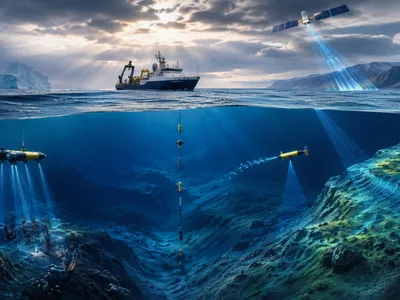
A primary concern involves the unintended consequences of perturbing marine food webs and nutrient stoichiometry. Adding large quantities of reactive minerals like olivine might release trace metals, including nickel and chromium, that are toxic to phytoplankton at elevated concentrations. Moreover, the energy demands and financial costs associated with mining, crushing, and distributing billions of tons of rock annually raise critical questions about net carbon negativity. Verification of carbon uptake in open, turbulent ocean environments remains an immense technological and observational challenge that scientific instruments are not yet fully equipped to resolve with the required precision and spatial coverage.
The following list outlines several prominent proposals currently under investigation, each with distinct mechanisms and associated uncertainties regarding their efficacy and potential for environmental harm.
- 🧪 Ocean Alkalinity Enhancement (OAE): Spreading finely ground silicate or carbonate minerals onto coastal shelves or open waters to increase pH and convert dissolved CO₂ into stable bicarbonate. Major unknowns include dissolution kinetics and biological impacts of trace metal mobilization.
- 🌊 Artificial Upwelling and Downwelling: Using pumps or pipes to bring nutrient-rich deep water to the surface to stimulate phytoplankton blooms, or to push surface carbon into the deep ocean. Energy costs and disruption of thermal stratification present substantial ecological drawbacks.
- ⚡ Electrochemical Carbon Capture: Employing renewable energy to split seawater, extract acid, and increase the alkalinity of the remaining effluent before returning it to the ocean. This method is energy-intensive but offers precise chemical control and verifiable carbon accounting.
- 🪨 Coastal Enhanced Weathering: Applying crushed rock dust to agricultural fields and beaches, relying on natural runoff to carry alkalinity into estuaries and nearshore zones. The timescale of the carbon benefit relative to the immediate energy footprint requires careful life-cycle assessment.