Materials Imperative for Energy Transition
The shift from fossil-based energy systems to sustainable alternatives is fundamentally a materials science challenge. This transition hinges on the development of advanced substances that can efficiently capture, convert, store, and transport energy derived from renewable sources.
The performance, durability, and cost-effectiveness of photovoltaic cells, electrolyzers, and large-scale battery systems are all dictated by the properties of their constituent materials. Innovations in this field are not merely incremental improvements but are essential for achieving the necessary technological leaps to meet global decarbonization targets, making material discovery and engineering the cornerstone of the green energy paradigm.
Perovskite Solar Cell Revolution
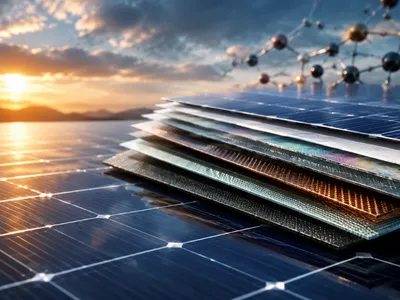
Perovskite solar cells have emerged as a disruptive force in photovoltaics, challenging the long-standing dominance of crystalline silicon. Their remarkable rise is attributed to exceptional optoelectronic properties, including high absorption coefficients and tunable bandgaps.
The core innovation lies in the solution-processable fabrication of perovskite films, which promises dramatically lower manufacturing costs compared to the energy-intensive production of silicon wafers. This materials platform enables the creation of lightweight, flexible panels suitable for novel applications beyond traditional rigid installations.
The rapid escalation of their power conversion efficiency from single digits to over 25% in just a decade is unprecedented in the history of solar technology. This progress highlights the immense potential of perovskite semiconductors to redefine the economics of solar energy. Key material challenges and their corresponding research frontiers are summarized in the following table.
| Material Challenge | Research Focus | Impact on Cell Performance |
|---|---|---|
| Phase Stability | Compositional engineering (A-site cation mixing) | Enhances operational lifetime under heat/light stress |
| Ion Migration | Grain boundary passivation, interface layers | Reduces current-voltage hysteresis & degradation |
| Lead Toxicity Concerns | Tin (Sn)-based & other lead-free perovskites | Addresses environmental and safety barriers to commercialization |
| Scalable Deposition | Slot-die coating, blade coating, vapor deposition | Enables uniform, high-quality films for large-area modules |
Next-Generation Energy Storage
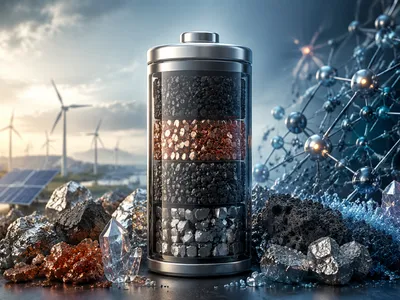
The intermittency of solar and wind power creates an urgent need for advanced energy storage solutions that go beyond traditional lithium-ion chemistries. Next-generation systems must offer higher energy density, longer cycle life, and improved safety at a lower cost.
Solid-state batteries represent a pivotal innovation by replacing the flammable liquid electrolyte with a solid ionic conductor. This material shift enables the use of a metallic lithium anode, which dramatically increases theoretical energy density while mitigating fire risks. The search for optimal solid electrolytes with high ionic conductivity and electrochemical stability is a primary research frontier.
Other promising material platforms include redox flow batteries for grid-scale storage, which rely on advanced organic or metal-organic molecules in liquid electrolytes, and sodium-ion batteries that utilize abundant elements to circumvent supply chain constraints for lithium and cobalt. Each technology's viability depends on breakthroughs in specific material components, as outlined below.
| Storage Technology | Critical Material Component | Key Performance Target |
|---|---|---|
| Solid-State Batteries | Sulfide or oxide solid electrolytes | Ionic conductivity > 1 mS/cm at room temperature |
| Redox Flow Batteries | Organometallic or aqueous organic electrolytes | High solubility & ultra-stable redox cycling |
| Sodium-Ion Batteries | Prussian blue analogues or layered oxide cathodes | High specific capacity & minimal voltage hysteresis |
| Supercapacitors | Graphene or MXene electrodes | Maximized surface area & controlled pore architecture |
Material degradation mechanisms at interfaces, such as dendrite formation in solid-state cells or crossover in flow batteries, are major obstacles. Interdisciplinary research combining computational materials design with advanced characterization iis essential to engineer stable interfaces and novel electrode architectures that can withstand thousands of deep charge-discharge cycles.
Catalysts for Green Hydrogen
The production of green hydrogen through water electrolysis is a cornerstone of deep decarbonization for industry and transport. The efficiency and cost of this process are governed by the electrocatalysts that drive the oxygen and hydrogen evolution reactions (OER and HER).
Traditional catalysts rely on scarce and expensive noble metals like iridium and platinum, creating a significant barrier to large-scale deployment. Current research is intensely focused on developing earth-abundant alternatives that match or exceed the activity and stability of these benchmarks. Transition metal oxides, phosphides, and nitrides have shown remarkable promise, particularly when engineered at the nanoscale.
A profound understanding of the active site structure under operational conditions is critical. For example, surface reconstruction of precatalyst materials often forms the true catalytically active phase, a dynamic process that must be designed for rather than circumvented. The strategic doping of base materials or the creation of heterostructures can optimize the binding energy of reaction intermediates, directly enhancing turnover frequency.
The ultimate goal is to create durable catalyst systems that operate efficiently in the highly corrosive environment of commercial electrolyzers, often at high current densities and fluctuating renewable energy input. Innovations in nanostructuring, support interactions, and the exploration of completely novel material classes like high-entropy alloys are pivotal to driving down the levelized cost of green hydrogen and enabling a sustainable fuel economy.