How Does Ice Loss Reshape the Deep Ocean?
The cryosphere’s mass loss now exceeds historic rates, with Greenland and Antarctica contributing nearly 500 gigatons annually to sea level rise. This influx of freshwater alters ocean surface buoyancy, fundamentally changing density-driven circulation patterns across basins. Cryospheric mass loss from mountain glaciers further amplifies the freshwater flux into key marine regions, intensifying regional impacts.
Beyond sea level rise, the redistribution of freshwater generates a critical stratification anomaly in high-latitude basins. This anomaly suppresses vertical mixing, insulating deeper waters from atmospheric interactions and trapping heat in the ocean interior, which accelerates sub-surface warming and destabilizes marine ice margins. Accelerating polar amplification thus becomes a self-reinforcing driver of deep-ocean change.
The Deep Ocean Pump
Global overturning circulation relies on dense water formation in regions like the Nordic Seas and the Weddell Sea, where brine rejection and cooling generate sinking water masses.
Freshwater dilution from melting ice lowers surface water density, directly weakening this conveyor belt and slowing the ventilation of the deep ocean.
Observations and high-resolution models reveal a notable slowdown in Atlantic Meridional Overturning Circulation (AMOC), with some estimates showing a 15–20% decline over the past sixty years. This weakening reduces northward heat transport and diminishes oxygen-rich deep waters, expanding hypoxic zones and altering sediment biogeochemistry. Southern Ocean overturning is similarly affected as basal melt injects cold freshwater, shifting deep convection patterns. Such coupled perturbations suggest a systemic reconfiguration of the global overturning system, with cascading impacts on carbon storage and nutrient cycling.
| Overturning Component | Primary Driver | Ice‑Melt Impact |
|---|---|---|
| North Atlantic Deep Water (NADW) | Brine rejection & cooling | Freshening reduces density, slows formation |
| Antarctic Bottom Water (AABW) | Ice shelf melt & sea ice production | Increased meltwater weakens bottom‑water volume |
| Southern Ocean Upwelling | Wind‑driven divergence | Stratification inhibits deep return flow |
Declining abyssal ventilation represents a fundamental shift in ocean carbon sequestration capacity and marine ecosystem support, with multi‑centennial recovery times once thresholds are crossed.
How Are Deep-Ocean Conditions Changing?
Stratification intensification traps heat beneath the mixed layer, accelerating sub-surface warming and amplifying glacial melt feedbacks at grounding zones. Concurrently, expanding oxygen minimum zones now reach continental shelves as sluggish circulation limits deep-water renewal, reshaping benthic habitat viability.
Carbon cycle decoupling arises as surface biological pumps weaken while deep reservoirs experience reduced ventilation, diminishing long-term carbon storage efficiency. Progressive acidification of intermediate and abyssal waters, driven by both anthropogenic CO₂ and respired carbon accumulation, further stresses marine ecosystems. This dual stressor—warming combined with acidification— undermines calcification in pelagic and benthic organisms and shifts microbial metabolism toward heterotrophy, altering nutrient regeneration.
Together, these physical and chemical changes reconfigure the ocean’s internal environment, setting the stage for biological responses from the surface mixed layer down to the hadal zone, with potential biogeochemical tipping points occurring regionally before global overturning stabilizes.
| Deoxygenation hotspots | Expanding at 1–3% per decade in key deep basins |
| Aragonite saturation horizon shoaling | Upward migration exceeding 50 m per decade in high latitudes |
| Heat uptake intensification | Over 90% of excess heat stored in the deep ocean |
How is Deep-Sea Biodiversity Being Reshaped?
Reduced vertical connectivity disrupts trophic subsidies that sustain deep-sea communities, decoupling surface productivity pulses from benthic responses. Bathymetric range contractions and range shifts now affect key forage fish and deep-sea coral populations, forcing the reorganization of predator-prey networks.
Long-term data from abyssal observatories show dramatic declines in epifaunal density and diversity following suppressed particulate organic carbon flux, with recovery lagging decades behind surface productivity rebounds. Cold-water coral reefs at intermediate water interfaces face compounded stress from warming, deoxygenation, and acidification, reducing calcification and increasing bioerosion. Foundation species loss triggers cascading biodiversity declines, altering essential fish habitat and diminishing ecosystem services that support fisheries and coastal protection.
The following patterns illustrate observed and projected shifts across depth strata:
- ⭐ Epipelagic (0–200 m): Phenological mismatches between phytoplankton blooms and grazer life cycles
- ⭐ Mesopelagic (200–1000 m): Oxygen minimum zone expansion compresses diel vertical migrator habitat
- ⭐ Bathypelagic & Abyssopelagic (>1000 m): Reduced food delivery shifts community composition toward opportunistic scavengers
Deep-Ocean Tipping Points and Uncertain Climate Futures
Projections under high‑emission scenarios suggest Antarctic ice shelf collapse could accelerate beyond current model capabilities, introducing deep‑ocean circulation tipping points within centuries.
Ice‑sheet model coupling with ocean biogeochemical modules remains in early stages, limiting predictive skill for nutrient redistribution and carbon cycle feedbacks on millennial timescales.
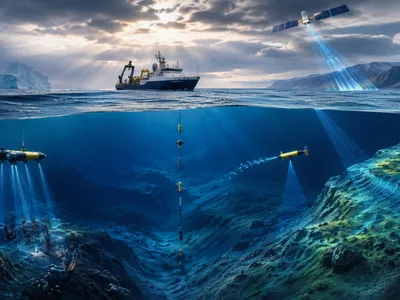
Emerging observational networks, including autonomous profiling floats and cabled seafloor observatories, now capture previously unresolved high‑frequency variability in abyssal properties, revealing that deep mixing events occur more episodically than earlier coarse‑resolution models suggested. These findings challenge steady‑state assumptions underlying long‑term projections, implying that transient ventilation events may temporarily buffer or accelerate biogeochemical shifts depending on their timing and spatial footprint.
A critical knowledge gap persists regarding the response of deep microbial communities and chemosynthetic ecosystems to prolonged stratification and reduced organic matter delivery. While metagenomic surveys have expanded our understanding of baseline functional diversity, experimental manipulation studies at abyssal pressures remain rare, hindering mechanistic predictions of microbial feedbacks on greenhouse gas production, particularly methane release from destabilizing hydrates. Interdisciplinary synthesis across cryospheric science, physical oceanography, and microbial ecology will be essential to constrain the ensemble of plausible futures.