The Oceanic Engine of Storms
The ocean is not merely a passive surface beneath the weather; it acts as the primary energy source for the most powerful storms on Earth. Tropical cyclones, including hurricanes and typhoons, are fundamentally heat engines driven by the transfer of latent heat from the ocean's surface to the atmosphere. This process begins with the evaporation of warm seawater, a crucial fuel for storm development and intensification.
Sea surface temperature (SST) serves as the most critical initial indicator for potential storm formation. Meteorologists have long identified a thermal threshold of approximately 26.5°C (80°F) extending through a depth of about 50 meters as a basic requirement. Waters at or above this temperature provide the necessary thermal energy to sustain deep convection and maintain a cyclone's core structure against disruptive winds.
Beyond simple surface measurements, the ocean's layered structure plays a decisive role. A storm's own movement churns the upper ocean, potentially bringing cooler, deeper water to the surface in its wake. This phenomenon, known as ocean feedback or cold upwelling, can starve a cyclone of its energy source and lead to rapid weakening if the storm moves slowly over a region.
The intricate coupling between the ocean mixed layer's depth and its temperature stratification is therefore a key predictive variable. A deep, warm layer acts as a vast energy reservoir, while a shallow warm layer atop cold deep water represents a limited fuel supply. Forecasting intensity changes hinges on this three-dimensional thermal profile.
Broader oceanic conditions set the stage for seasonal activity. Large-scale climate modes like the El Niño-Southern Oscillation (ENSO) alter wind shear and thermal patterns across entire basins. An El Niño event in the Pacific, for instance, can suppress Atlantic hurricane activity while potentially enhancing it in the Central and Eastern Pacific regions.
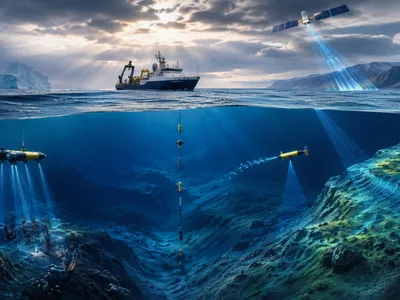
The Satellite Eyes and Robotic Depths Perspective
Modern oceanographic monitoring for storm prediction relies on a multi-platform observing network. This system integrates satellite remote sensing with direct in-situ measurements to build a comprehensive, real-time picture of oceanic conditions. Each technology contributes unique and vital data streams for numerical weather prediction models.
Satellites provide unparalleled spatial coverage, measuring sea surface temperature, sea surface height, and ocean color on a global scale daily. Advanced scatterometer instruments can even deduce surface wind vectors over the open ocean by analyzing radar backscatter from capillary waves. This data is indispensable for initializing forecast models in data-sparse oceanic regions.
However, satellites primarily sense only the ocean's "skin," the top millimeter. To understand the heat content available to a storm, scientists must probe the subsurface. This is achieved through a global fleet of autonomous profiling floats, most notably the Argo network. These robotic instruments drift for years, periodically diving to depths of 2,000 meters to measure temperature and salinity profiles before surfacing to transmit their data.
- 🛰️ Satellite Altimetry: Measures sea surface height anomalies, which reveal warm, thick layers of water like eddies that contain enormous heat potential.
- 🌊 Drifting Buoys: Provide direct, point-based measurements of SST and atmospheric pressure as they move with currents.
- 🤿 Gliders: Autonomous underwater vehicles that can be directed into a storm's path to collect high-resolution vertical profiles before and after passage.
- ✈️ Airborne Expendables: Deployed from "hurricane hunter" aircraft, these probes collect oceanic and atmospheric data directly in the storm environment.
The integration of these diverse data streams is a formidable challenge. Data assimilation techniques statistically blend observations with model forecasts to produce the most accurate possible initial ocean state. The quality of this synthesized ocean analysis is now recognized as a primary factor limiting the accuracy of intensity forecasts for approaching storms.
Decoding the Ocean's Thermal Signals
The raw data collected from the ocean must be transformed into actionable indices for forecasters. Scientists have developed specialized metrics that quantify the ocean's true energetic potential, moving beyond simple surface readings. These indices integrate temperature measurements across the upper ocean layers into a single, more informative value.
A fundamental concept is the Ocean Heat Content (OHC), which calculates the total heat energy stored in the water column above the 26°C isotherm. This metric, expressed in kilojoules per square centimeter, represents the available fuel for a storm. High OHC values correlate strongly with the potential for rapid intensification, a major forecasting challenge.
| Key Oceanic Metric | Description | Forecasting Utility |
|---|---|---|
| Sea Surface Temperature (SST) | Temperature of the ocean's top layer (~1 mm). | Initial storm genesis potential and track influence. |
| Ocean Heat Content (OHC) | Integrated heat from surface to 26°C isotherm depth. | Predicting intensity change and maximum potential intensity. |
| Tropical Cyclone Heat Potential (TCHP) | Heat content in the upper layer above a fixed depth. | Assessing energy reservoir for sustaining storm strength. |
| Mixed Layer Depth (MLD) | Depth of the uniform surface layer. | Estimating resistance to cold upwelling from storm churn. |
Another critical signal is the presence of warm core eddies, large rotating masses of water that peel off from major currents like the Gulf Stream. These eddies transport enormous volumes of warm, deep water into regions that might otherwise be cooler. A hurricane crossing such an eddy gains access to a deep, replenishable heat source, often leading to unexpected strengthening.
Forecast models assimilate these complex signals to predict ocean response. The cool wake generated by a storm modifies the environment for subsequent systems. Accurately simulating this feedback is essential for predicting intensity changes in storms that follow similar paths days later, a process known as the oceanic memory effect.
The Critical Role of Oceanic Heat Content
While all oceanic metrics are valuable, OHC has emerged as a superior predictor of hurricane intensity compared to SST alone. Historical analysis reveals that many major storms underwent rapid intensification over regions with anomalously high OHC, even when surface temperatures were not exceptional. This underscores the importance of the subsurface energy reservoir.
The process of intensification relies on a continuous supply of latent heat from the ocean to the cyclone's core. If the ocean layer is shallow, the storm's own turbulence mixes cool water to the surface, creating a negative feedback that limits growth. A deep, warm mixed layer mitigates this cooling effect, allowing the storm to maintain or increase its power output.
Advanced coupled hurricane-ocean models explicitly simulate this interaction. These models treat the ocean and atmosphere as a dynamic, interactive system rather than a static lower boundary. They forecast how the storm will extract heat from the ocean and how the ocean's structure will evolve in response, leading to more accurate intensity forecasts, especially for slow-moving or stationary storms.
| Impact of High Oceanic Heat Content on Storm Behavior | ||
|---|---|---|
| Scenario | Ocean Condition | Likely Storm Response |
| Storm moves over a warm, shallow layer | High SST, Low OHC | Initial intensification possible, but high risk of rapid weakening due to cold upwelling. |
| Storm moves over a warm, deep layer or eddy | High SST, Very High OHC | Potential for sustained intensification and higher peak intensity; more resilient structure. |
| Storm stalls over a high-OHC region | Persistent deep heat source | Prolonged intensification period, potentially leading to an extreme major hurricane. |
Operational forecasting centers now routinely incorporate OHC analyses into their guidance. Products like the Hurricane Heat Potential charts are vital tools for hurricane specialists at the National Hurricane Center. These charts visually highlight regions of deep, warm water that pose a significant threat for fueling dangerous storms, allowing for more precise warnings.
The relationship between OHC and intensity is not perfectly linear, as atmospheric conditions like wind shear also play a decisive role. However, high OHC is a necessary precondition for achieving the greatest possible storm intensities. It essentially sets the upper thermodynamic limit on a storm's strength, defining the ceiling that atmospheric factors can either allow it to reach or prevent it from attaining.
How Can Ocean Storm Forecasting Become More Accurate?
Despite significant advances, substantial challenges persist in oceanic storm prediction. The vastness and inaccessibility of the open ocean mean that data coverage, while improved, remains sparse compared to terrestrial networks. Critical gaps exist in remote basins and during severe weather conditions when data collection is most dangerous yet most valuable.
The high cost of maintaining and deploying oceanic instrumentation is a perennial constraint. Autonomous systems have reduced costs, but the logistics of global coverage are formidable. Furthermore, the complex physics of air-sea interaction at extreme wind speeds, where sea spray and foam alter energy transfer, are still not fully understood or accurately parameterized in models.
This knowledge gap is a primary source of error in predicting the upper limit of storm intensity. The transfer of enthalpy—both sensible and latent heat—from ocean to atmosphere under hurricane-force winds involves processes occurring at the millimeter scale, yet they determine the megascale outcome. Current models rely on simplified approximations of these turbulent fluxes, leading to uncertainties in peak wind speed forecasts.
Integrating diverse data streams from satellites, floats, gliders, and drones into a coherent, real-time analysis is a monumental computational and analytical task. Disparities in measurement techniques, spatial scales, and timing must be reconciled through advanced data assimilation schemes, which themselves require continuous refinement to avoid introducing biases or smoothing out critical small-scale ocean features.