Surgical Precision Evolution

The trajectory of surgical robotics is advancing beyond master-slave telemanipulation systems towards greater intraoperative autonomy and cognitive assistance. This evolution is fundamentally altering the surgical workflow, enabling procedures with superhuman steadiness and access to anatomically complex regions. Future systems are poised to integrate multi-modal sensory data, providing surgeons with enhanced perceptual capabilities and decision-support in real-time.

Key innovations focus on haptic feedback augmentation and machine vision. The lack of tactile sensation in current platforms remains a significant limitation. Research is developing sensory substitution techniques, where forces are conveyed visually or through auditory signals, and advanced force-sensing instruments that calculate tissue interaction properties. These advancements aim to restore the surgeon's kinesthetic sense, crucial for delicate tissue manipulation.

Concurrently, the integration of augmented reality (AR) overlays preoperative scans and vital anatomical landmarks directly onto the endoscopic view. This fusion of real and virtual data guides resection margins and identifies critical structures like nerves and blood vessels, potentially reducing surgical errors. The next frontier involves context-aware systems that can anticipate surgical steps and autonomously manage routine tasks such as suturing or retraction, moving from tool to collaborative agent.

The following table delineates the core technological vectors propelling the next generation of surgical robotics beyond foundational capabilities.

Technological Vector Core Function Clinical Impact
Artificial Intelligence Guidance Real-time analysis of surgical video to identify anatomy and suggest actions. Enhances decision-making and may standardize procedural quality.
Micro-invasive Robotic Platforms Ultra-miniature instruments for single-port or natural orifice access. Further reduces trauma, scarring, and recovery time for patients.
Robotic-assisted Interventional Radiology Precise needle guidance and catheter navigation under imaging. Improves accuracy in biopsies, ablations, and vascular procedures.

The convergence of haptics, AR, and AI is transitioning surgical robots from advanced tools into intelligent partners in the operating room.

Rehabilitation and Personalized Physiotherapy

Rehabilitation robotics is shifting from one-size-fits-all mobilization devices to adaptive systems that deliver personalized, data-driven therapy. These robots now employ sophisticated sensor arrays and AI to continuously assess a patient's motor performance, fatigue, and engagement. This biofeedback loop allows for the dynamic adjustment of therapy difficulty and support in real-time, optimizing neuroplasticity and recovery outcomes.

Upper and lower extremity exoskeletons are becoming lighter, more compliant, and capable of understanding user intent through biomechanical sensing or brain-computer interfaces (BCIs). This enables more natural and patient-led movement therapy, which is crucial for motor relearning. The data collected on movement kinematics, force, and compliance creates a digital biomarker of recovery, allowing for objective progress tracking beyond subjective clinical scales.

The rise of telerehabilitation platforms powered by robotic devices and wearable sensors democratizes access to high-quality therapy. Patients can perform guided exercises at home while therapists remotely monitor compliance and efficacy, adjusting programs via cloud-based interfaces. This model addresses critical barriers of cost and accessibility, extending continuous care beyond clinical settings.

The operational paradigms of modern rehabilitative robotics are characterized by several key features, as outlined below.

  • Adaptive Assistance: Software algorithms modulate robotic support based on real-time performance metrics.
  • Gamification and Engagement: Therapy is embedded in interactive video games to improve patient motivation and adherence.
  • Digital Twins: Patient-specific virtual models simulate rehabilitation progress and predict optimal therapy pathways.
  • Closed-Loop Neuromodulation: Systems that pair robotic movement with non-invasive brain stimulation to enhance cortical reorganization.

The integration of robotics with virtual reality creates immersive environments for task-specific training, such as simulating activities of daily living. This approach provides contextualized practice that better translates to functional gains. The table below contrasts traditional methods with emerging robotic-augmented approaches in neuromotor rehabilitation.

Aspect Traditional Physiotherapy Robotic-Augmented Therapy
Dosage Control Limited by therapist stamina and manual effort. Capable of delivering high-intensity, repetitive, and consistent movement cycles.
Objective Measurement Relies on intermittent clinical assessment (e.g., Fugl-Meyer). Provides continuous, high-resolution data on movement quality and strength.
Personalization Broadly adapted based on clinical observation. Precision rehabilitation tailored via algorithm to individual deficit patterns.

Personalized, data-driven robotic systems are establishing a new paradigm of precision rehabilitation, maximizing neuroplastic potential through adaptive, engaging, and measurable therapy.

The Microbot Revolution Within

The development of microscale and nanoscale robotic agents represents a paradigm shift towards targeted, localized interventions at the cellular and molecular level. These microrobots, often biohybrid in design, are engineered to navigate the complex physiological environments of the human body, performing tasks impossible for traditional macroscopic robots. Propulsion mechanisms inspired by biological motile systems, such as bacterial flagella, allow for movement through non-Newtonian fluids like blood and mucus.

Primary research vectors focus on targeted drug delivery and minimally invasive surgery. Magnetic, acoustic, or chemical gradients can externally steer swarms of microrobots loaded with therapeutic payloads to specific disease sites, such as tumor microenvironments. This approach promises to exponentially increase drug efficacy while drastically reducing systemic side effects by confining cytotoxic agents to malignant cells.

Beyond delivery, functionalized microrobots are being designed for precise microsurgical operations like clearing arterial plaque, lysing blood clots, or performing retinal procedures. Their small scale allows access to delicatee structures such as cerebral vasculature or the lymphatic system without causing collateral damage. The integration of onboard sensors enables real-time feedback on local biochemical conditions, paving the way for autonomous diagnostic and therapeutic functions.

Microrobotic systems are transitioning from experimental curiosities to clinical platforms for unprecedented targeted therapy and cellular-scale intervention.

Hospital Logistics and Operational Efficiency

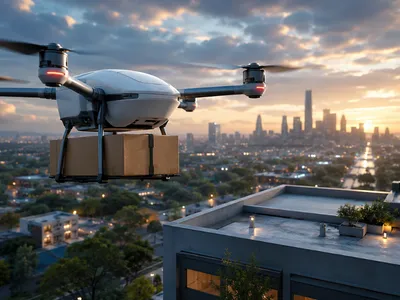
Autonomous mobile robots are increasingly integral to the operational backbone of modern hospitals, tasked with streamlining logistics and mitigating human error in routine but critical tasks. These systems primarily address material transport, such as the automated delivery of pharmaceuticals, laboratory samples, linens, and meals. By assuming these repetitive, high-traffic functions, they free clinical staff for patient-centered duties and reduce the risk of nosocomial infections by minimizing unnecessary human contact and movement.

Advanced fleet coordination software ensures efficient routing and scheduling of multiple robots, seamlessly integrating with elevator systems and automatic doors. These robots utilize a combination of LiDAR, computer vision, and pre-mapped environments for robust navigation in dynamic, crowded corridors. Their deployment directly impacts operational metrics by increasing delivery speed and reliability, which is particularly crucial for time-sensitive items like blood products or stat medications.

Another critical application is in sterilization and disinfection. Ultraviolet-C light emitting robots autonomously disinfect patient rooms and operating theaters after manual cleaning. These systems provide a consistent, measurable dose of UVC light, achieving a log reduction in pathogen load that manual methods cannot guarantee, thereby enhancing infection control protocols.

The implementation of logistical robots generates vast operational data, analyzed to optimize hospital workflows. The following list details key areas where robotic automation is currently transforming hospital operations.

  • Central Pharmacy to Nursing Unit Delivery: Secure, tracked transport of medications, including controlled substances.
  • Laboratory Sample Logistics: Automated, rapid transport of samples to core labs, improving turnaround times.
  • Inventory Management and Restocking: Robots that monitor and replenish supplies in centralized storage and point-of-use cabinets.
  • Waste and Soiled Linen Removal: Automated handling of regulated medical waste and soiled materials, reducing exposure risks.

The integration of robotic logistics creates a connected ecosystem within the hospital. The table below contrasts traditional and robot-augmented logistical models across several performance dimensions.

Performance Dimension Traditional Manual Logistics Robot-Augmented Logistics
Delivery Consistency Variable, subject to human prioritization and interruptions. Predictable, scheduled, and auditable 24/7 operation.
Staff Utilization Clinical staff diverted for transport tasks. Clinical focus restored; support staff manage robot fleet oversight.
Infection Control Risk Higher, due to increased human traffic and touchpoints. Reduced, by minimizing contact and deploying dedicated disinfection units.
Data Generation Limited, often manual tracking. Comprehensive digital trail for process analysis and continuous improvement.

Social and Assistive Companionship

Robotic systems designed for social interaction and long-term assistive support are evolving from simple task performers into complex relational agents. These platforms address critical gaps in care for aging populations and individuals with cognitive impairments or chronic conditions. By providing consistent companionship and reminders, they aim to mitigate social isolation and support independent living, which are significant determinants of health outcomes.

The efficacy of these robots hinges on advanced affective computing and natural language processing capabilities. They are equipped with multimodal sensors to interpret human emotional states through vocal tone, facial expression, and physiological signals. This allows the machine to adapt its interaction style, offering calming respnses to anxiety or engaging in reminiscence therapy for those with dementia. The goal is to establish a trust-based human-robot relationship that encourages sustained engagement.

Key application domains extend beyond elder care to include pediatric therapy and mental health. For children with autism spectrum disorder, robots provide a predictable, patient, and non-judgmental social partner for practicing communication and recognizing emotional cues. In mental health, they serve as accessible tools for delivering cognitive behavioral therapy techniques or monitoring mood fluctuations, providing data to human clinicians.
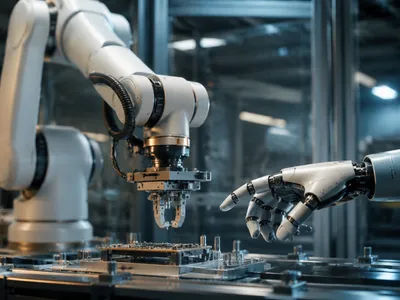

The core functionalities of socially assistive robots can be categorized into several interconnected domains, each contributing to holistic user support.

  • Cognitive Engagement: Facilitating games, storytelling, and memory exercises to stimulate mental activity.
  • Physical Activity Promotion: Encouraging and guiding users through tailored light exercise routines.
  • Health and Routine Compliance: Issuing medication reminders, monitoring vital signs, and alerting caregivers to anomalies.
  • Social Connectivity: Enabling video calls with family and friends through an intuitive robotic interface.

AI-Driven Diagnostics and Imaging Analysis

The integration of artificial intelligence with robotic imaging systems is creating a transformative synergy for diagnostic precision and interventional guidance. AI algorithms, particularly deep learning models, are now capable of analyzing medical images—from radiology and pathology to ophthalmology—with a speed and consistency that augments, and in some narrow tasks surpasses, human expert performance. This capability is being embedded directly into robotic imaging platforms, enabling real-time analytic feedback during procedures.

In medical imaging, robots provide ultra-stable positioning and automated scanning protocols for modalities like ultrasound. When combined with AI, these systems can autonomously identify standard anatomical planes, measure biomarkers, and flag regions of interest. For instance, an AI-guided robotic ultrasound system can independently sweep across an organ, reconstruct a 3D model, and highlight lesions, thereby standardizing examinations and reducing operator dependency.

This fusion is particularly potent in histopathology and cytology. Robotic slide scanners digitize tissue samples at high resolution, and AI algorithms then scour these images for malignant cells or specific molecular patterns indicated by staining. This not only accelerates diagnosis but also uncovers subtle morphological features invisible to the human eye, enabling more precise grading and subtyping of diseases. The continuous learning loop of AI models, fed by new data, ensures these systems evolve with medical knowledge.

The convergence extends to intraoperative imaging, where AI analysis of real-time endoscopic or microscopic video can delineate tumor boundaries or assess tissue perfusion. This provides surgeons with critical decision-support, transforming imaging from a passive viewing tool into an active guidance system. The marriage of robotic consistency with AI's analytical power is creating a new standard of objective, data-rich diagnostics.

A critical advancement is the development of predictive diagnostic networks. By correlating imaging phenotypes from robotic-AI systems with genomic data and clinical outcomes, these networks can forecast disease progression and treatment response. This moves diagnostics from a descriptive practice to a predictive science, informing personalized therapeutic strategies at the point of care.

Telepresence and Remote Intervention Systems

Robotic telepresence systems are fundamentally expanding the geographical reach of specialty healthcare, enabling expert intervention across vast distances. These platforms combine mobile robotic bases with high-definition audiovisual systems, allowing clinicians to conduct virtual rounds, consult on complex cases, and provide critical care in remote or underserved locations. The recent maturation of low-latency, high-bandwidth communication networks like 5G is a pivotal enabler, ensuring the real-time responsiveness required for meaningful clinical interaction.

The most advanced applications involve remote robotic intervention, where a specialist controls a distant robotic system to perform procedures. While telesurgery remains a high-stakes frontier requiring immense technical and regulatory assurance, telerehabilitation and tele-ultrasound are demonstrating practical viability. A specialist therapist can guide a patient through exercises via a robotic system, or a sonographer can remotely control a robotic probe to obtain diagnostic images from a patient in a rural clinic.

These systems address critical workforce maldistribution by creating a force multiplier effect for highly skilled professionals. A single neurosurgeon or stroke specialist can provide guidance to multiple remote sites during time-sensitive emergencies, such as thrombectomies. The robotic platform becomes the physical avatar of the remote expert, translating their movements and decisions into action at the point of need.

Technological evolution in this domain focuses on enhancing sensory immersion and operational robustness. Improving the fidelity of haptic feedback to the remote operator is a primary challenge, as the sense of touch is crucial for delicate manipulations. Concurrently, developing fail-safe communication protocols and local autonomy for the remote robot is essential to ensure patient safety in the event of signal degradation or loss.

The broader integration of telepresence robots into standard hospital workflow also streamlines internal operations, allowing infectious disease specialists to safely assess patients in isolation units or permitting off-site intensivists to participate in multi-disciplinary team meetings with a physical presence on the ward, thereby reducing delays in consultation and accelerating clinical decision-making pathways.

Ethical Frameworks and Societal Integration

The accelerating deployment of robotics in healthcare necessitates the parallel development of robust ethical frameworks to guide their development, regulation, and clinical integration. These frameworks must address profound questions of autonomy, accountability, and justice that arise when machines participate in care. A primary concern is the delineation of responsibility in cases of adverse outcomes involving robotic systems, challenging traditional notions of medical liability.

Data privacy and security become exponentially more critical as robots equipped with sensors continuously collect intimate health and behavioral data. The concept of data sovereignty—ensuring patients retain control over how their information is used and by whom—must be engineered into these systems from inception. Furthermore, the algorithms driving diagnostic or therapeutic decisions must be scrutinized for algorithmic bias that could perpetuate or exacerbate health disparities across different demographic groups.

The social acceptance of robotic care, particularly among vulnerable populations like the elderly, requires careful attention to human-robot interaction design to avoid feelings of objectification or isolation. Ethical design must prioritize augmenting the human aspects of care rather than replacing them, ensuring technology supports the patient-clinician relationship. Policymakers and engineers must also confront the economic implications, ensuring equitable access to avoid a two-tiered health system where advanced robotic care is only available to the privileged.

Establishing these guidelines demands interdisciplinary collaboration among ethicists, clinicians, engineers, legal scholars, and patient advocates. The successful integration of robotics into healthcare hinges not just on technical prowess, but on earning societal trust through transparent, equitable, and human-centered ethical practices.

Regulatory Pathways and Clinical Adoption

The transition of robotic systems from research prototypes to mainstream clinical tools is governed by evolving and complex regulatory landscapes. Agencies worldwide are developing new frameworks to evaluate the safety and efficacy of increasingly autonomous and AI-integrated medical devices. A central challenge lies in creating validation protocols for adaptive systems whose performance evolves through machine learning, diverging from traditional static medical device paradigms.

Demonstrating clinical utility and cost-effectiveness remains the principal hurdle for widespread adoption. Robust, multi-center randomized controlled trials are essential to move beyond proof-of-concept studies and generate the high-grade evidence needed for payer reimbursement. These trials must measure not only traditional clinical outcomes but also system-level impacts on workflow efficiency, staff burden, and long-term patient recovery metrics.

Successful adoption further depends on the creation of comprehensive training and credentialing pathways for clinical staff. Surgeons, nurses, and therapists require standardized education on the operation, limitations, and troubleshooting of robotic systems to ensure safe and effective use. This includes simulation-based training for rare adverse events and the development of a new sub-specialty of clinical engineers who can maintain and optimize these complex platforms within the hospital ecosystem.

The pace of technological innovation often outstrips the slower cycles of regulatory review and clinical trial completion, creating a tension between rapid iteration and the need for rigorous assessment. Breakthrough Device designations in some regions aim to expedite this process for transformative technologies, but they do not bypass the necessity for solid evidnce. Ultimately, the sustainable integration of robotics into healthcare demands a collaborative model where regulators, developers, and clinicians engage in early dialogue to align on evidence requirements, ensuring that promising innovations can navigate the pathway from bench to bedside without compromising safety or scientific rigor.