Green Chemistry Principles Lowering Environmental Risk
The foundational science enabling eco-friendly materials is green chemistry, a proactive framework designed to reduce or eliminate hazardous substances. Its twelve principles provide a systematic guide for designing chemical products and processes that minimize environmental impact and risk.
Key concepts like atom economy and inherent safety are central to this philosophy. Atom economy measures the efficiency of a synthesis, maximizing the incorporation of starting materials into the final product to minimize waste.
The emphasis shifts from managing pollution after it is created to preventing its generation at the molecular design stage. This principle-driven approach directly informs the development of sustainable feedstocks, benign synthetic pathways, and products designed for end-of-life degradation, forming the essential chemical basis for all advanced eco-friendly materials. Waste is not treated but prevented.
The Molecular Backbone of Bioplastics
Bioplastics represent a significant advancement, diverging from petrochemical polymers through their biological origin and often their biodegradability. Their properties are dictated by precise monomeric structure and polymer architecture. Polylactic acid (PLA), synthesized from fermented plant sugars, exhibits rigidity due to its stereochemistry.
Conversely, polyhydroxyalkanoates (PHAs) are polyesters accumulated by microorganisms as energy reserves. The length and side-chain composition of the hydroxyalkanoate monomer units grant PHAs a range of physical properties, from brittle to highly elastic.
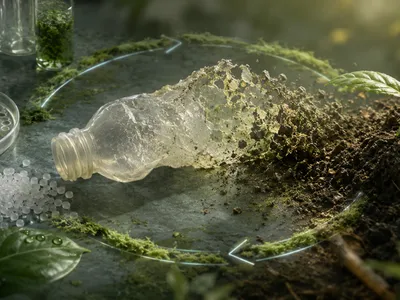
The biodegradability of these materials is not a vague characteristic but a specific chemical process. Enzymatic or hydrolytic cleavage targets susceptible bonds in the polymer backbone, such as ester linkages, breaking them down into smaller molecules that microorganisms can assimilate. This process depends on conditions like temperature, moisture, and microbial presence, highlighting that biodegradable is a context-dependent term.
The chemical pathways for producing these polymers are critical. PLA production involves ring-opening polymerization of lactide, a dimeric cyclic ester, which allows for precise molecular weight control. PHA biosynthesis occurs in microbial cells through enzymatic pathways that link acetyl-CoA derivatives. The following table contrasts the primary characteristics of these two major bioplastic families, illustrating how their distinct chemistries govern application suitability.
| Polymer | Primary Monomer Source | Key Chemical Feature | Typical Degradation Mechanism |
|---|---|---|---|
| Polylactic Acid (PLA) | Fermented plant starch (e.g., corn) | Aliphatic polyester; chiral center | Hydrolytic cleavage of ester bonds |
| Polyhydroxyalkanoates (PHA) | Microbial fermentation of sugars/lipids | Aliphatic polyester; variable side chains | Microbial enzymatic depolymerization |
Plant-Based Polymers Beyond Starch
The search for sustainable feedstocks extends far beyond starch to other abundant biopolymers like cellulose, hemicellulose, and lignin. These structural components of plant cell walls constitute the most prevalent organic polymers on Earth, offering a massive renewable resource.
Cellulose, a linear chain of β(1→4) linked D-glucose units, possesses high crystallinity and tensile strength due to extensive hydrogen bonding. However, its insolubility in most solvents challenges processing. Chemical derivatization, such as creating cellulose acetate or nitrocellulose, modifies these properties for specific applications like films or fibers.
Lignin is an amorphous, cross-linked polyphenolic network that grants rigidity and hydrophobicity to plants. Its complex, irregular structure makes it difficult to depolymerize controllably, but it serves as a promising source for aromatic chemicals and resin components.
The valorization of these polymers often requires breaking the recalcitrance of lignocellulosic biomass. Processes like enzymatic hydrolysis or chemical pulping separate cellulose fibers from the lignin matrix. Subsequent modifications can yield materials with tailored properties. Nature's structural polymers are being repurposed through chemistry. The following list outlines key non-starch plant polymers and their primary chemical attributes:
- Cellulose: Linear glucose polymer; high strength via hydrogen bonding; often used in derivatized forms (e.g., rayon, cellulose acetate).
- Lignin: Complex, amorphous polyphenolic network; source of renewable aromatics; used as a binder or in carbon fibers.
- Hemicellulose: Heterogeneous, branched polysaccharide; more easily hydrolyzed than cellulose; potential for bio-based sugars and films.
- Chitosan: Derived from chitin (crustacean shells); linear polysaccharide with amino groups; exhibits antimicrobial and film-forming properties.
How Can Chemistry Transform Waste into Resource?
Advanced chemical and enzymatic techniques are pivotal in transitioning from a linear waste economy to a circular one. These processes deconstruct post-consumer or industrial waste into valuable building blocks. Chemical recycling depolymerizes materials like PET or nylon back to their monomers, which can be repolymerized into virgin-quality plastics.
A more innovative concept is upcycling, where waste is converted into a new material of higher value or functionality. For example, chemical processes can transform mixed plastic waste into porous carbon materials for energy storge or convert waste cooking oils into precursors for high-performance polymers. This approach not only diverts waste from landfills but also reduces the demand for virgin fossil resources by creating closed-loop cycles.
| Waste Stream | Chemical Process | Resulting Resource | Key Challenge |
|---|---|---|---|
| Mixed Plastic Waste | Solvolysis (e.g., glycolysis, hydrolysis) | Recovered monomers (e.g., PTA, EG from PET) | Separation of polymer types and additives |
| Lignocellulosic Biomass | Catalytic depolymerization | Platform chemicals (e.g., levulinic acid, furans) | Selective bond cleavage in complex matrix |
| Carbon Dioxide (CO₂) | Electrochemical or catalytic reduction | C1 feedstocks (e.g., methanol, formate) | High energy input and catalyst selectivity |
The success of these transformations hinges on developing efficient catalysts and energy-efficient processes. Enzymatic recycling using engineered hydrolases or oxidoreductases offers a highly selective and mild-condition alternative for specific polymers like PET or polyurethanes. The primary pathways for waste valorization can be categorized as follows:
- Mechanical Recycling: Physical reprocessing; limited by polymer degradation and contamination.
- Chemical Recycling: Depolymerization to monomers or oligomers; enables virgin-quality output.
- Biological Recycling: Enzymatic or microbial breakdown; high specificity but often slow.
- Upcycling: Conversion into chemically distinct, higher-value materials (e.g., plastics to carbon nanotubes).
Advances in Sustainable Composite Materials
Modern composite materials are evolving by integrating renewable reinforcements and bio-based matrices to enhance performance while reducing environmental footprint. The interfacial chemistry between natural fibers, like flax or hemp, and a polymer matrix is critical for stress transfer and durability.
Surface treatments of natural fibers using silanes or alkali solutions improve adhesion by modifying surface energy and roughness. In the matrix, thermosetting resins derived from plant oils, such as epoxidized soybean oil, are curing via reactions with bio-based hardeners to form cross-linked networks.
The field is advancing towards nanocomposites, where bio-sourced nanofillers like cellulose nanocrystals (CNCs) or chitin nanowhiskers impart exceptional strength and barrier properties at low loadings due to their high aspect ratio and surface area. These nanomaterials interact with the matrix through hydrogen bonding and van der Waals forces, creating a percolating network that significantly enhances mechanical and thermal properties. The following table compares the characteristics of common sustainable reinforcements used in composite design.
| Reinforcement Type | Source | Key Advantage | Chemical Compatibility Challenge |
|---|---|---|---|
| Plant Fibers (Flax, Hemp) | Bast or stem fibers | Low density, high specific strength | Hydrophilicity and moisture absorption |
| Cellulose Nanocrystals (CNCs) | Acid hydrolysis of cellulose | High stiffness, optical transparency | Dispersion and compatibility in hydrophobic matrices |
| Bio-derived Carbon Fibers | Pyrolysis of lignin or PAN | High strength-to-weight ratio | Cost-effective stabilization and graphitization process |
Life cycle assessments of these composites reveal a complex trade-off between the embodied energy of bio-based components and the functional performance gains. Optimizing processing parameters like temperature and pressure is essential to prevent degradation of natural fibers and achieve optimal composite morphology, which directly dictates the final material's performance in applications from automotive panels to biodegradable packaging. The interface is where sustainability meets performance.