What Does the Epigenome Control Beyond DNA?
Beneath DNA, the epigenome dynamically regulates which genes are accessible in each cell. Chemical modifications to histones and DNA form a complex instruction manual of epigenetic marks that respond to internal and external stimuli, varying across tissues.
Lifestyle factors like sleep, stress, and exercise leave lasting cellular memory on chromatin, influencing future physiology. Unlike permanent mutations, these reversible modifications can be altered through behavior or drugs, providing opportunities for disease prevention and therapeutic interventions.
Decoding the Epigenome
Researchers now utilize high-throughput sequencing technologies to map DNA methylation patterns and chromatin accessibility with single-base resolution. These approaches reveal tissue-specific regulatory elements that were previously invisible to conventional genetic analysis.
A pivotal discovery involves the role of non‑coding RNAs in guiding chromatin-modifying complexes to precise genomic loci. This RNA‑directed targeting adds another layer of spatiotemporal control to gene expression. Such mechanisms explain how cells with identical DNA sequences adopt vastly different functional identities. Advanced imaging techniques now allow visualization of these interactions in living cells.
| Epigenetic Mechanism | Biological Effect | Health Relevance |
|---|---|---|
| DNA Methylation | Transcriptional silencing | Tumor suppressor inactivation |
| Histone Acetylation | Chromatin relaxation | Inflammatory gene expression |
| Non‑coding RNA | Post‑transcriptional regulation | Metabolic adaptation |
Integrating these molecular findings into clinical practice requires robust biomarkers that reflect dynamic epigenetic states. Liquid biopsies analyzing cell‑free DNA methylation are emerging as minimally invasive tools for early disease detection. Machine learning algorithms now synthesize multi‑omics data to understand how genetic markers predict health risks with increasing accuracy.
Environmental Imprints on DNA
Airborne particulate matter and industrial chemicals such as bisphenol A induce global DNA hypomethylation through reactive oxygen species. These epigenetic perturbations often persist long after exposure ceases.
Prenatal stress alters glucocorticoid receptor gene methylation in the hippocampus, shaping hypothalamic‑pituitary‑adrenal axis reactivity. Early life adversity leaves molecular scars that influence adult behavioral responses.
Cigarette smoke represents one of the most extensively studied environmental modifiers, with clear dose‑dependent effects on aryl hydrocarbon receptor pathway genes and tumor suppressor methylation in airway epithelium. Similar mechanisms have been documented for heavy metals like arsenic and cadmium, which interfere with methyltransferase enzyme activity and disrupt one‑carbon metabolism. The cumulative burden of these exposures contributes to a measurable epigenetic age acceleration that predicts all‑cause mortality.
Understanding these mechanisms opens avenues for intervention. Biomonitoring programs now integrate epigenetic markers to assess population‑level toxicant exposure. Moreover, emerging evidence suggests that nutritional compounds such as sulforaphane and curcumin can partially reverse pollutant‑induced epigenetic aberrations, offering a plausible strategy for mitigating environmental health risks.
| Environmental Agent | Epigenetic Effect | Associated Health Outcome |
|---|---|---|
| Particulate matter (PM2.5) | Altered miRNA expression | Respiratory inflammation |
| Arsenic | Global DNA hypomethylation | Cancer risk |
| Prenatal stress | NR3C1 hypermethylation | Stress vulnerability |
| Phthalates | Histone acetylation changes | Reproductive disorders |
How Does Nutrition Shape Epigenetics?
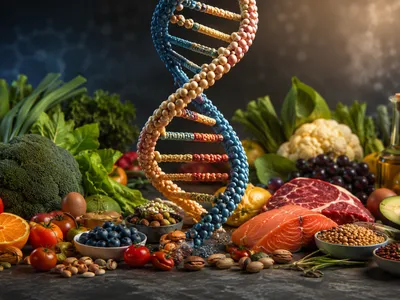
Dietary methyl donors such as folate, choline, and vitamin B12 support one‑carbon metabolism and directly affect DNA methyltransferase activity, influencing gene regulation.
Polyphenols and components of the Mediterranean diet, including omega‑3 fatty acids and resveratrol, modulate sirtuins and histone deacetylases, promoting chromatin remodeling, anti-inflammatory responses, and metabolic efficiency, establishing long-term protective epigenetic states.
Precision nutrition leverages individual epigenetic profiles to tailor dietary guidance. For example, people with certain MTHFR polymorphisms may require more folate to support methylation, advancing beyond generic recommendations toward personalized interventions and clarifying the question: Can your genes determine optimal diet?
Before examining specific dietary components, it is useful to consider the broader framework of how nutritional compounds interface with epigenetic machinery. The table below illustrates key dietary factors and their primary epigenetic targets.
- Folate DNA methylation
- Sulforaphane HDAC inhibition
- Curcumin Histone acetylation
- Epigallocatechin gallate DNMT inhibition
- Resveratrol Sirtuin activation
Can Epigenetic Changes Be Passed to Future Generations?
Epigenetic marks in germ cells can escape the typical reprogramming events that occur after fertilization. This phenomenon enables environmental exposures experienced by one generation to influence the physiology of subsequent generations.
Rodent models demonstrate that paternal stress or nutritional imbalance alters small non‑coding RNA profiles in sperm. These molecular changes correlate with metabolic and behavioral phenotypes in offspring.
Human studies face inherent challenges in disentangling inherited epigenetic marks from shared postnatal environments. Yet multigenerational cohorts, particularly those exposed to famine or industrial disasters, have provided compelling evidence of transgenerational effects that cannot be explained by genetic variation alone. Imprinted gene clusters and repetitive element methylation appear especially susceptible to such intergenerational transmission.
The underlying mechanisms involve coordinated alterations in DNA methylation, histone retention in sperm chromatin, and small RNA payloads that influence zygotic gene expression. These pathways converge on hypothalamic ‑ pituitary axes, reproductive function, and metabolic set points. Understanding the heritability of epigenetic states reframes concepts of disease risk, suggesting that preventive strategies may need to target not only individuals but also the preconception environment of future parents.
How is Epigenetics Transforming Personalized Medicine?
Epigenetic profiling is increasingly integrated into clinical oncology, where tumor methylation patterns guide treatment selection and predict therapeutic response. Methylation‑based liquid biopsies now complement traditional histopathology.
Pharmacoepigenetics reveals how methylation status at drug‑metabolizing enzyme genes alters pharmacokinetics and toxicity risk. Such insights enable dose adjustments that improve safety margins while maintaining efficacy.
Beyond oncology, epigenetic clocks quantifying biological age have emerged as powerful tools for assessing intervention efficacy in longevity trials. Multivariate risk scores that incorporate methylation data outperform models based solely on genetics or traditional biomarkers. As sequencing costs decline, the integration of whole‑genome methylation arrays into routine clinical workflows becomes economically feasible. Regulatory frameworks are evolving to accommodate these novel diagnostics, with several laboratories now offering Clinical Laboratory Improvement Amendments‑certified epigenetic tests. The convergence of epigenomics with wearable sensor data and electronic health records will likely define the next generation of truly personalized health management, where dynamic biological readouts continuously inform preventive strategies.