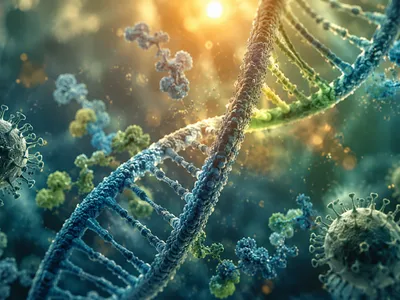
Genetic Variation and Individual Vaccine Responses
The human genome serves as the foundational instruction manual for all biological processes. Deciphering this code is the first critical step toward understanding individual variations in disease susceptibility and treatment response.
Each person carries a unique molecular blueprint defined by millions of genetic variants. These subtle differences, such as single nucleotide polymorphisms, influence how the immune system recognizes and reacts to pathogens.
The field of pharmacogenomics has long explored how genetic makeup affects drug metabolism. This knowledge is now being translated into vaccinology, where the goal is to tailor immune interventions based on an individual's genetic predispositions. The shift represents a move from a one-size-fits-all approach to a highly specific strategy.
Genomic Technologies and Personalized Vaccine Development
The emergence of fast and cost-effective next-generation sequencing technologies has transformed the field, enabling scientists to decode a pathogen’s genome alongside a host’s immune genes within days. This advancement makes it possible to pinpoint highly immunogenic epitopes most capable of triggering a strong immune reaction, while computational algorithms estmate which viral peptides are most likely to bind efficiently to an individual’s distinct immune receptors.
The process culminates in the design of a vaccine construct, often using messenger RNA or synthetic vectors. This platform offers unparalleled flexibility, enabling scientists to encode the selected genetic information and create a tailored vaccine candidate with remarkable speed.
| Technology | Role in Personalized Vaccines | Key Output |
|---|---|---|
| Next-Generation Sequencing | Rapidly decodes pathogen and host genomes | Identification of mutations and HLA haplotypes |
| Bioinformatics & AI | Predicts epitope binding and immunogenicity | Prioritized list of vaccine targets |
| Synthetic Biology | Constructs the genetic material for the vaccine | A custom mRNA vaccine construct |
This integrated workflow transforms raw genomic data into a physical, injectable vaccine. The speed and precision of this pipeline were demonstrated during the recent pandemic, setting the stage for broader application in oncology and emerging infectious diseases. It effectively compresses a decade of research into a few weeks.
The transition from pathogen sequencing to a bespoke vaccine is no longer theoretical. It is a reality made possible by the convergence of high-throughput biology and computational power, fundamentally altering the traditional vaccine development paradigm.
Why HLA Typing Matters
The human leukocyte antigen (HLA) complex represents the most polymorphic region of the human genome, encoding proteins that present peptide fragments to T-cells and thereby trigger the adaptive immune response. This remarkable genetic variability enables individuals to recognize a broad spectrum of pathogens, as a person’s specific HLA haplotype dictates which viral or bacterial epitopes are displayed to the immune system, ultimately shaping the intensity and direction of the response. Modern HLA typing has advanced beyond basic serotyping to high-resolution genotyping, provding a detailed genetic profile that allows vaccinologists to more precisely anticipate who will generate a strong response to a conventional vaccine and who may benefit from a personalized formulation.
The clinical implications are profound, particularly for immunocompromised populations or in the context of emerging viral variants. A vaccine designed for a broad population may fail in individuals with less common HLA alleles, creating critical gaps in herd immunity. Personalizing the vaccine based on the recipient's HLA profile directly addresses this vulnerability.
How Can Personalized Vaccines Become More Accessible?
Despite the scientific promise, the path to widespread personalized vaccination is obstructed by considerable logistical hurdles. The current infrastructure for vaccine manufacturing is optimized for massive, uniform batches, not for producing a multitude of unique, patient-specific formulations.
Regulatory frameworks, designed for traditional vaccines, struggle to keep pace with this paradigm shift. Agencies must develop new guidelines for validating and approving therapies that are, by definition, one-of-a-kind products.
The economic considerations are equally daunting. The cost of sequencing, bioinformatic analysis, and bespoke good manufacturing practice (GMP) production remains prohibitively high. Scaling these processes to make them accessible outside of wealthy nations is a primary concern for global health equity.
Beyond manufacturing and cost, significant biological obstacles persist. Tumors and pathogens exhibit remarkable heterogeneity, meaning that targeting a single genetic signature may be insufficient. The phenomenon of immune evasion, where cancer cells downregulate antigen presentation, can render a precisely tailored vaccine ineffective. Overcoming this requires the development of combination strategies that target multiple vulnerabilities simultaneously.
The following points encapsulate the primary barriers currently under intensive investigation:
-
Manufacturing ComplexityTransitioning from bulk production to decentralized, on-demand synthesis.
-
Regulatory AdaptationCreating approval pathways for personalized neoantigen vaccines.
-
Biological HeterogeneityAddressing clonal evolution and antigen escape in real-time.
Addressing these multifaceted challenges requires a concerted effort from academia, industry, and regulators. The solutions will likely involve novel business models and a reimagining of the clinical trial structure itself.
Vaccines for Cancer
The most promising application of personalized vaccinology lies in oncology. Personalized cancer vaccines are designed to target unique mutations, or neoantigens, expressed exclusively by a patient's tumor.
Unlike traditional preventative vaccines, these are therapeutic interventions for existing disease. By sequencing both healthy and tumor tissue, researchers can identify the clonal neoantigens driving cancer growth and incorporate them into a vaccine to stimulate a powerful T-cell response.
Early-phase clinical trials have demonstrated remarkable success in hard-to-treat cancers like melanoma and glioblastoma. When combined with immune checkpoint inhibitors, these personalized vaccines can effectively "teach" the immune system to recognize and destroy malignant cells while sparing healthy tissue. The challenge remains in the turnaround time, as the vaccine must be manufactured before the patient's disease progresses significantly.
The selection of appropriate neoantigens is a complex bioinformatic puzzle. Algorithms must prioritize mutations that are immunogenic and not subject to central tolerance. The ultimate goal is to create a durable immunological memory that can prevent relapse, transforming cancer into a manageable chronic condition. This approach leverages the patient's unique tumor signature to orchestrate a highly specific and potent attack.
Several distinct platforms are currently being evaluated for their efficacy in delivering these bespoke therapies:
- 💉 mRNA vaccines: Deliver genetic code for neoantigens directly to antigen-presenting cells.
- 🧬 Synthetic long peptides: Administer peptide fragments combined with an adjuvant to boost immune recognition.
- 🔬 Dendritic cell vaccines: Harvest patient's own dendritic cells, load them with neoantigens ex vivo, and reinfuse them.
- 🦠 Viral vectors: Use modified viruses to deliver genetic material encoding multiple tumor-specific antigens.