Comparing Virtual, Augmented, and Mixed Realities
The terms Virtual Reality (VR) and Augmented Reality (AR) are often conflated, yet they represent distinct points on a continuum of immersive technology. This spectrum ranges from fully synthetic environments to digitally augmented physical spaces.
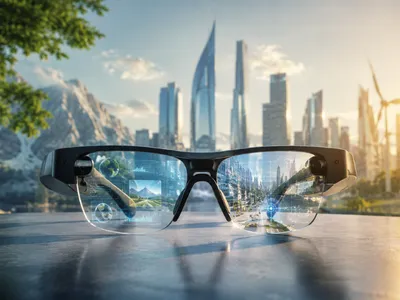
VR constructs a completely artificial sensory experience, requiring dedicated headsets to occlude the physical world. In contrast, AR overlays digital information onto the user's real-world view, typically via smartphones or transparent glasses. The core distinction lies in the level of immersion and the nature of user interaction with their surroundings. Mixed Reality (MR) exists as a hybrid point, where virtual objects are anchored to and interact with the real environment in real-time.
How Do These Technologies Reshape Modern Learning Methodologies?
Educational paradigms are shifting from passive reception to active, experiential learning. Immersive technologies facilitate this by providing safe, repeatable environments for practice and exploration.
Medical students, for instance, can perform complex surgical dissections in a risk-free virtual space. This hands-on practice builds procedural memory and spatial understanding far more effectively than textbook diagrams.
Furthermore, these tools democratize access to experiences that are otherwise costly, dangerous, or geographically inaccessible. A student can explore the Roman Colosseum in its historical context or conduct physics experiments in a zero-gravity simulation. The pedagogical strength lies in embodied cognition, where learning is tied to physical interaction within a contextualized scenario. This approach leads to higher knowledge retention and engagement compared to traditional methods.
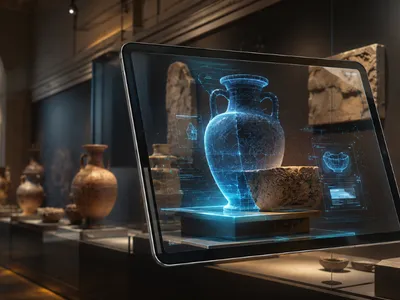
The integration of AR in classrooms transforms static materials into interactive 3D models. A biology textbook page can erupt with a beating heart model when viewed through a tablet, making abstract concepts tangible. This shift towards multimodal learning caters to diverse cognitive styles. The ultimate goal is to create a personalized and interactive educational journey. The data collected from these interactions also allows for adaptive learning pathways, tailoring difficulty and content in real-time based on student performance.
Revolutionizing Complex Procedures in Professional Practice
Beyond education, VR and AR are fundamentally altering workflows in high-stakes professional fields. These tools provide an unprecedented layer of precision and foresight.
In surgical suites, augmented reality overlays project critical patient data, such as vasculature or tumor margins, directly onto the surgeon's field of view. This reduces cognitive load and improves surgical accuracy by minimizing the need to shift attention to separate monitors.
Architects and engineers utilize immersive environments to walk through full-scale building prototypes before construction begins. This collaborative design validation process identifies spatial conflicts and ergonomic issues early, preventing costly modifications later. The ability to simulate environmental factors like lighting and acoustics further refines the final product, ensuring it meets both aesthetic and functional specifications. Such applications underscore a shift towards predictive practice, where potential failures are addressed in a virtual sandbox.
Industrial maintenance and repair have been transformed through AR-guided procedures. Technicians wearing smart glasses can see animated instructions overlaid on complex machinery, highlighting the exact component to service. This real-time guidance system not only speeds up tasks but also drastically reduces error rates, enhancing overall safety. For remote assistance, an expert can see what the on-site technician sees and annotate their live view, enabling knowledge transfer across continents. This blurs the line between physical expertise and digital intelligence. The cumulative effect is a more skilled, efficient, and connected global workforce capable of handling increasingly sphisticated technology.
Social Connection and the Ethics of Immersion
The promise of VR as a tool for social connection presents a profound paradox. It can bridge vast geographical distances, yet raises significant questions about the nature of our interactions.
Platforms offering persistent virtual worlds allow users to interact through embodied avatars, fostering a sense of co-presence that video calls cannot match. This has valuable applications for remote teams, family gatherings, and support groups, creating shared experiences in a common digital space.
However, the very immersion that makes these experiences compelling also introduces ethical risks. Prolonged use can lead to a phenomenon known as virtual dissociation, where users struggle to reconcile their online and offline identities. The persuasive power of fully immersive environments also raises concerns about manipulation, data privacy, and exposure to harmful content. The ethical framework for these spaces remains underdeveloped, necessitating a careful balance between innovation and user protection. The following list outlines core ethical dilemmas inherent in social VR:
- 🔐👁️ The ownership and privacy of biometric data collected by headsets (e.g., eye-tracking, emotional responses).
- 🛡️⚠️ The potential for hyper-realistic harassment and the challenges of moderation in immersive spaces.
- 🧠🎭 The psychological impact of identity alteration and avatar representation on self-perception.
- 🌐💻 The creation of digital inequality or "immersive divides" based on access to advanced hardware.
Establishing norms and governance for these shared virtual experiences is as crucial as developing the technology itself, requiring collaboration between technologists, ethicists, and policymakers to ensure these powerful tools enhance rather than diminish human social fabric.
The Commercial and Industrial Transformation
Consumer retail and industrial logistics are undergoing a fundamental shift driven by immersive interfaces. These technologies are closing the gap between digital browsing and physical experience.
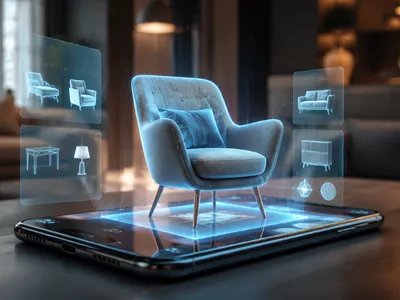
In e-commerce, virtual try-on applications for apparel, eyewear, and cosmetics leverage AR to reduce purchase uncertainty and return rates. Customers can visualize products within their personal space, leading to more confident buying decisions.
On the industrial floor, AR is integral to the smart factory paradigm. Warehouse pickers using AR glasses see optimized navigation paths and item iinformation, boosting picking accuracy and speed by over twenty-five percent. In design and prototyping, VR enables collaborative reviews of life-size 3D models by globally dispersed teams, compressing development cycles. This integration creates a cyber-physical system where digital data actively guides physical operations. The result is a seamless data-to-action pipeline. The convergence of IoT sensor data with AR visualization allows for predictive maintenance, where technicians see real-time performance metrics and anomaly alerts overlaid directly on equipment, preventing downtime before it occurs.