Ambient Computing and the Disappearing Interface
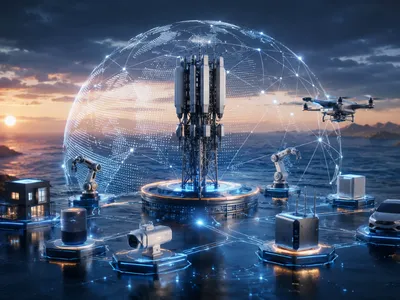
The term ambient computing describes a paradigm where computational capabilities are seamlessly woven into the fabric of everyday environments. This model envisions technology receding from the foreground, while human attention shaped by technology becomes less central to the interaction, becoming a calm and invisible assistant that anticipates needs rather than demanding direct interaction. It represents a fundamental shift from user-driven commands to a context-aware ecosystem.
This invisibility is not about the absence of technology, but rather its integration into the background of our lives. When a smart thermostat learns a family's schedule and adjusts the temperature before they arrive home, it performs a computational task without any conscious command. The desired outcome—comfort—is achieved, while the complex sensing and processing remain entirely unnoticed by the inhabitants. This proactive and anticipatory functionality distinguishes ambient intelligence from simple automated systems, requiring sophisticated sensor networks and machine learning algorithms to interpret human behaviour accurately. The ultimate goal is to create environments that are responsive yet non-intrusive, enhancing daily life by reducing the cognitive load associated with operating technology.
When Technology Becomes Part of the Environment
The trajectory toward ambient computing began with the personal computer and accelerated with the proliferation of smartphones. These devices, while powerful, still function as portals that require active engagement; users must look at screens, type commands, and swipe through applications. This interaction model, often described as a tool-centric approach, places the device as the intermediary between the human and the digital task.
The evolution towards genuine smart environments involves distributing intelligence across numerous interconnected objects within a physical space. Instead of a single device serving as a command centre, sensors, actuators, and processors are embedded into furniture, walls, appliances, and even clothing. This ecosystem, closely connected through APIs in modern digital ecosystems, allows for data collection from multiple points, enabling a holistic understanding of the environment and its occupants.
For instance, a room could adjust its lighting and acoustics not because a user selected a mode on a phone, but because it detects that a person has entered for a video conference and cross-references this with their calendar. This shift from a personal device-centric model to a decentralized, environment-centric one is the cornerstone of calm technology, where the computing resources fade into the surroundings to serve human objectives more naturally and intuitively.
Key Technological Enablers
The viability of ambient computing rests upon several converging technological domains. Among these, the proliferation of low-cost, low-power sensors and the simultaneous advancement in machine learning algorithms form the foundational pillars. These technologies allow physical spaces to capture raw data and transform it into actionable insights about human activity and environmental context.
Beyond sensing and intelligence, robust connectivity and miniaturized actuators are equally critical. High-bandwidth, low-latency networks such as 5G for IoT connectivity and advanced Wi-Fi protocols ensure that data from thousands of embedded devices can be processed in near real-time. This seamless orchestration of hardware and software layers enables the system to not only perceive but also to physically alter the environment, for instance, by adjusting a window's tint or redirecting airflow.
| Technology Layer | Core Components | Functional Role |
|---|---|---|
| Perception | MEMS sensors, computer vision, audio arrays | Capture raw data on occupancy, motion, ambient conditions |
| Reasoning | Edge AI, cloud-based machine learning, predictive models | Interpret data to infer context, intent, and anomalies |
| Actuation | Smart displays, motorized blinds, HVAC dampers | Execute physical changes to align environment with user needs |
The interplay between these layers creates a dynamic feedback loop essential for genuine ambient intelligence. When a sensor network detects that a room is unoccupied, the reasoning layer can confirm this pattern over time and instruct actuators to conserve energy by dimming lights or reducing ventilation. This closed-loop system, often referred to as a cyber-physical system, ensures that the environment remains responsive not just to explicit commands, but to subtle shifts in human presence and behaviour. The sophistication of these predictive analytics continues to evolve, moving from simple reactive rules to complex anticipatory actions that characterize truly intelligent spaces.
How Spaces Learn and Adapt to Us?
An ambient environment is not static; it must possess the capacity for incremental learning about its inhabitants. Through continuous exposure to recurring patterns—such as a weekly morning routine or preferred lighting levels for reading—the system constructs a nuanced model of occupant behaviour. This learning process transforms a generic smart space into a personalized and genuinely helpful one.
This adaptive capability unfolds across multiple stages, from basic data collection to the eventual automation of complex sequences. The environment initially operates in a passive observation mode, building a baseline understanding of typical activities. Over time, it begins to recognize correlations, such as the association between the time of day, the identity of the person entering a room, and the specific devices they typically interact with. The following stages illustrate how a space learns and evolves:
- Stage 1: Data Acquisition – Sensors log raw events like door openings, light switch activations, and voice commands without interpretation.
- Stage 2: Pattern Recognition – Machine learning algorithms cluster these events into meaningful sequences, identifying routines and preferences.
- Stage 3: Contextual Prediction – The system uses historical data to forecast the next likely action, such as preheating the oven when the user starts preparing dinner.
- Stage 4: Proactive Actuation – Automated adjustments occur seamlessly, with the environment adapting to the rhythms of daily life without requiring manual input.
Implementing this learning loop presents significant technical hurdles, particularly concerning data privacy and model accuracy. The system must differentiate between a genuine habitual pattern and a random, one-time deviation to avoid inappropriate automation. Advanced techniques such as reinforcement learning are being explored to allow the environment to test subtle adjustments and learn from the occupant's implicit feedback, such as a manual override of an automated setting. This continuous cycle of observation, prediction, and refinement is a key reason adaptive systems outperform static ones, allowing connected spaces to evolve from a collection of smart devices into truly adaptive and intelligent environments that feel intuitively responsive.
Designing Human-Centered Ambient Computing
Addressing the inherent tensions of ambient computing requires a fundamental commitment to human-centered design principles. This approach prioritizes human values, needs, and capabilities throughout the development process, ensuring that technology serves people rather than demanding their constant attention and adaptation.
Central to this philosophy is the concept of calm technology, which advocates for systems that move easily from the periphery to the center of attention and back. Information should be conveyed through ambient cues—subtle changes in light, sound, or haptic feedback—that inform without overwhelming. This design language respects cognitive bandwidth while addressing the competing demands of the attention economy by presenting only essential information at critical moments, allowing users to focus on meaningful activities.
Implementing meaningful user control represents another cornerstone of responsible ambient design. Interfaces must provide transparent insight into system reasoning, enabling occupants to understand why a particular action was taken and to override automated decisions effortlessly. This transparency builds trust and empowers users to calibrate the system's proactivity according to their preferences, whether they desire more assistance or greater autonomy.
Future research trajectories are increasingly focused on developing anticipatory systems with robust ethical frameworks embedded at the architectural level. This involves designing algorithms that can recognize and respect boundaries, such as knowing when to cease data collection during private moments or when to defer completely to human judgmnt. The following design principles guide this evolution toward more respectful and genuinely intelligent environments:
| Design Principle | Core Objective | Implementation Strategy |
|---|---|---|
| Peripheral Awareness | Present information without demanding focus | Use ambient displays, subtle audio cues, and minimal visual indicators |
| Transparent Reasoning | Make system logic understandable to users | Provide explainable AI interfaces and clear audit trails |
| User Empowerment | Ensure meaningful control over automation | Design simple override mechanisms and granular privacy controls |
| Contextual Integrity | Respect situational norms and expectations | Implement context-aware data sharing and dynamic consent models |
The successful realization of ambient computing ultimately depends on a multidisciplinary collaboration that integrates insights from computer science, cognitive psychology, ethics, and architecture. By prioritizing human flourishing over technological capability, designers can create environments that are not only intelligent but also wise—spaces that enhance our humanity rather than diminishing it. This vision of a calmer technological future remains an aspirational goal, yet one that becomes increasingly attainable through deliberate, value-sensitive innovation and continuous public dialogue about the kind of world we wish to inhabit.