Foundational Algorithmic Paradigms

Autonomous control systems are built upon core algorithmic paradigms that translate high-level mission objectives into precise, real-time actuator commands. These paradigms must reconcile conflicting demands for computational efficiency, robust stability guarantees, and adaptability to unstructured environments. The selection of a foundational paradigm fundamentally dictates a system's architectural philosophy and its capabilities.

Three primary paradigms dominate contemporary research and implementation. Proportional-Integral-Derivative (PID) control remains ubiquitous for its simplicity and effectiveness in linear, well-defined systems, though it struggles with significant non-linearities. In contrast, Model Predictive Control (MPC) employs a dynamic model to predict system behavior over a future horizon and solves an optimization problem at each step to determine the optimal control sequence. This approach explicitly handles constraints on inputs and states, making it exceptionally powerful for complex, constrained systems like autonomous vehicles navigating dynamic traffic.

For environments laden with ambiguity, fuzzy logic control provides a robust framework by using linguistic variables and rule-based inference to mimic human decision-making, offering tolerance to imprecise sensor data. A critical comparative analysis reveals distinct trade-offs: PID offers computational speed but limited sophistication, MPC provides optimal constraint handling at high computational cost, and fuzzy logic delivers robustness with less reliance on precise models. The paradigm choice is therefore not universal but is a critical design variable dictated by the operational domain's specific predictability and performance requirements.

The table below summarizes the key characteristics and operational domains of these foundational paradigms.

Paradigm Core Principle Key Strength Primary Limitation Typical Application Domain
PID Control Error minimization via proportional, integral, and derivative terms. Simplicity, stability, and proven reliability. Performance degrades with system non-linearities and model uncertainties. Industrial robotics, cruise control, altitude stabilization.
Model Predictive Control (MPC) Finite-horizon, constrained optimization using a dynamic model. Explicit constraint handling and anticipatory action. High computational load requires powerful hardware. Autonomous vehicle trajectory planning, process control.
Fuzzy Logic Rule-based inference using linguistic variables and degrees of truth. Robustness to noise and imprecise inputs; no exact model needed. Design of rule base and membership functions can be subjective. Climate control systems, consumer electronics, simple robotic navigation.

The implementation of these algorithms is governed by a layered software architecture that separates concerns. A common functional decomposition includes:

  • Perception Layer: Algorithms for sensor fusion, object detection, and state estimation, providing a coherent world model.
  • Decision & Planning Layer: High-level algorithms for mission planning, pathfinding, and behavioral reasoning (e.g., lane change decisions).
  • Control Layer: The low-level algorithms (PID, MPC, etc.) that execute the planned trajectory by generating throttle, brake, and steering commands.

Hierarchy of Vehicle Control

The operation of an autonomous vehicle is managed through a hierarchical control architecture, which decomposes the complex driving task into manageable, functionally specialized layers. This hierarchy ensures modularity, where each layer receives input from the one above and sends processed commands to the one below, culminating in physical actuator control. The integrity of data flow and timing across these layers is as critical as the performance of individual algorithms.

At the summit resides the Mission Planning layer, responsible for determining the coarse route from origin to destination using static map data. The subsequent Behavioral Layer interprets dynamic traffic conditions, adhering to rules of the road and making tactical decisions like when to overtake or yield. It outputs a discrete driving command, such as "change lane left" or "stop at intersection."

The Motion Planning layer then translates these discrete commands into a continuous, collision-free, and dynamically feasible trajectory—a time-parameterized path that the vehicle's kinematics can execute. Finally, the Feedback Control layer, employing the low-level paradigms like MPC, tracks this reference trajectory by computing the exact steering angle, acceleration, and braking inputs. This hierarchical decomposition effectively separates strategic reasoning from real-time reaction, allowing for different update rates and algorithmic complexities at each level.

Key performance metrics differ profoundly across these layers. While the planning layers prioritize logical correctness and global optimality, the feedback control layer is judged on precision, stability, and latency. The following table outlines the specific function, inputs, outputs, and critical metrics for each control layer in a standard autonomous vehicle stack.

Control Layer Primary Function Typical Inputs Output Critical Performance Metric
Mission Planning Global route calculation Digital map, destination, constraints (e.g., tolls). Sequence of road segments (a route). Route optimality (time, distance).
Behavioral Layer Tactical driving decision-making Perceived objects, traffic rules, route. Discrete maneuver command (e.g., "yield", "lane keep"). Decision safety and compliance.
Motion Planning Local trajectory generation Maneuver command, local map, predicted object paths. Smooth, feasible trajectory (path + speed profile). Collision avoidance, comfort, feasibility.
Feedback Control Precise trajectory tracking Reference trajectory, vehicle state. Actuator commands (steering, throttle, brake). Tracking error, stability, response latency.

A significant challenge in this hierarchy is ensuring consistent frame alignment and temporal synchronization between the localized world model from perception and the global coordinate system used for planning. Even a minor latency or misalignment can cause a perfectly planned trajectory to become unsafe, highlighting that system integration is a formidable engineering task equal in importance to algorithm design. The hierarchy's effectiveness is ultimately validated through metrics like the mean distance between interventions in real-world testing.

Navigating Uncertainty with Predictive Models

Real-world autonomy requires algorithms that anticipate and react to future states in inherently stochastic environments. Predictive models form the core of this capability, enabling systems to plan not just based on the present, but on a forecast of possible futures. These models transform raw sensor data and historical context into probabilistic forecasts that inform robust decision-making.

The predominant technique in this domain is Model Predictive Control (MPC), which solves a constrained optimization problem over a receding time horizon. At each control interval, the algorithm simulates multiple potential future trajectories based on a dynamic model of the system and its environment, selecting the optimal sequence of control inputs. A critical advancement is the shift from deterministic to stochastic MPC, which explicitly accounts for uncertainty in predictions by optimizing expected performance, thereby significantly enhancing robustness in traffic or around vulnerable road users.

For longer-term anticipation, such as predicting the intent of other agents, Bayesian networks and interactive multiple model (IMM) filters are extensively used. These frameworks maintain a probability distribution over a set of predefined behavioral models (e.g., lane-keeping, braking, turning) for each tracked object, updating beliefs in real-time with new observations. This allows the autonomous system to assign likelihoods to potential maneuvrs like a sudden cut-in. The integration of stochastic prediction with robust optimization represents the state-of-the-art in handling real-world uncertainty, moving beyond reactive responses to proactive planning.

The following table contrasts the key predictive modeling approaches used in autonomous systems, highlighting their respective applications and inherent challenges.

Predictive Model Underlying Principle Temporal Horizon Primary Challenge
Stochastic MPC Optimizes expected cost over a future horizon under uncertainty. Short to medium (seconds) Computational complexity of solving stochastic optimization in real-time.
Interactive Multiple Model (IMM) Filters Probabilistic weighting of multiple dynamic models for intent prediction. Medium (maneuver-level) Defining a comprehensive and non-overlapping set of behavioral models.
Deep Predictive Learning Uses deep neural networks to learn spatiotemporal patterns directly from data. Variable Requires massive datasets; "black-box" nature complicates safety verification.

Implementing these models necessitates a structured pipeline. The typical sequence for predictive algorithmic processing involves:

  • Uncertainty Quantification: Estimating sensor noise and modeling errors to define probabilistic bounds for predictions.
  • Multi-Hypothesis Prediction: Generating a diverse set of plausible future scenarios for the ego-vehicle and other agents.
  • Scenario Evaluation & Selection: Scoring each predicted scenario against safety, comfort, and progress metrics to choose the optimal control action.

Learning from Interaction

While traditional control relies on explicit programming and models, modern autonomous systems increasingly leverage machine learning to acquire skills through data-driven interaction. This paradigm shift enables handling of edge cases and complex patterns that are difficult to model analytically. Learning-based approaches can be broadly categorized by their level of integration with classical control architectures.

A prominent method is imitation learning (IL), where algorithms learn a policy by observing expert demonstrations, such as human drivers. However, pure IL suffers from covariate shift, where small errors compound as the agent drifts into states not seen in the training data. This is addressed by reinforcement learning (RL), where an agent learns optimal actions through trial-and-error, maximizing a reward signal defined by the designer. Deep RL has succeeded in complex simulated environments, but its sample inefficiency and safety challenges during exploration hinder direct real-world deployment.

Consequently, the most promising architectures are hybrid, combining the stability of classical control with the adaptability of learned models. A canonical example is using a neural network to predict the parameters of a Model Predictive Controller (MPC) in real-time, effectively learning the system dynamics or cost function from exprience. Another approach trains a deep perceptual model to output interpretable states (like object locations) that feed into a traditional planning stack, improving robustness in perception. The key research thrust is not replacing classical pipelines but augmenting them with learned components that are verifiable and whose failures are bounded.

Different learning paradigms offer distinct trade-offs between data efficiency, safety, and performance, as detailed below.

Learning Paradigm Core Mechanism Primary Advantage Critical Limitation for Autonomy
Imitation Learning (Behavioral Cloning) Supervised learning from expert state-action pairs. Can quickly learn complex behaviors from demonstration. Poor generalization to unseen states; cascading errors.
Reinforcement Learning Trial-and-error optimization of a reward function. Discovers novel, high-performing strategies. Extremely sample inefficient; unsafe exploration.
Hybrid Learning (e.g., RL + MPC) Learned models or policies guide traditional optimization. Combines adaptability with stability and constraint satisfaction. Increased architectural complexity; verification of learned components.

The deployment of learning in safety-critical systems introduces the paramount challenge of verification and validation. Unlike a PID controller with analyzable stability margins, a deep neural network's decision-making process is opaque. Current research focuses on techniques like formal verification for neural networks and robust adversarial training to certify performance within specified operational design domains. The ultimate goal is to develop provably safe learning-based controllers that can explain their decisions, a prerequisite for regulatory approval and public trust.

Sensor Fusion and Environmental Perception

Algorithms for perception form the critical bridge between raw sensor data and the actionable world model required for autonomous decision-making. This process, known as environmental perception, is fundamentally an estimation problem solved through sophisticated sensor fusion techniques. No single sensor provides sufficient reliability across all weather, lighting, and geometric conditions, necessitating a multi-modal approach.

The sensor suite of a modern autonomous system typically includes cameras for rich semantic understanding, LiDAR for precise 3D geometry, radar for robust velocity measurement and adverse weather operation, and ultrasonic sensors for close-range detection. Each modality has distinct failure modes: cameras struggle with low light, LiDAR with heavy precipitation, and radar with precise spatial resolution. The core algorithmic challenge is to combine these asynchronous, noisy, and sometimes contradictory data streams into a single, consistent, and confident representation of the environment.

Primary fusion architectures operate at different levels of abstraction. Early fusion combines raw sensor data at the feature level before object recognition, preserving maximum information but requiring tight sensor calibration and synchronization. Late fusion runs independent object detection on each sensor stream and merges the resulting lists, offering robustness to individual sensor failure but potentially losing correlated information. The dominant paradigm for state estimation is the Kalman filter and its non-linear extensions like the Extended Kalman Filter (EKF) and Unscented Kalman Filter (UKF), which recursively estimate the state of tracked objects by predicting and updating with new measurements. Advanced deep learning architectures now enable direct end-to-end fusion, learning optimal combination strategies from vast datasets, though these raise significant verification hurdles.

A major persistent challenge is perceptual aliasing, where different environmental states produce identical sensor readings, and the handling of dynamic occlusions. Perception algorithms must therefore maintain probabilistic representations and reason about uncertainty. The process can be understood through its sequential stages, which refine data into knowledge.

  • Data Pre-processing & Synchronization: Correcting for sensor biases, timestamp alignment, and coordinate transformation into a common frame.
  • Object Detection & Segmentation: Identifying and classifying distinct entities (vehicles, pedestrians) and free space, often using deep convolutional neural networks.
  • Multi-Object Tracking (MOT): Associating detections across time to form object trajectories, estimating velocity and intent, typically with variants of the Kalman filter and data association algorithms like the Hungarian algorithm.
  • Scene Understanding: Interpreting the spatial and semantic relationships between objects and static infrastructure to infer context (e.g., an approaching intersection, a pedestrian near a curb).

Cross-Domain Applications and Systemic Challenges

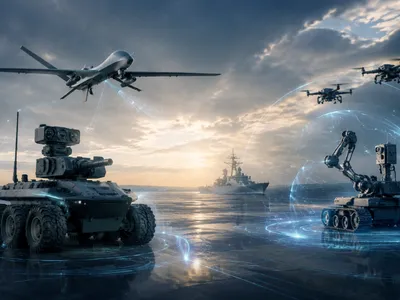
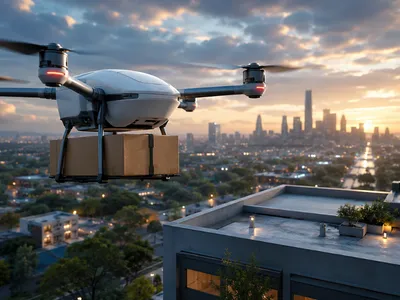
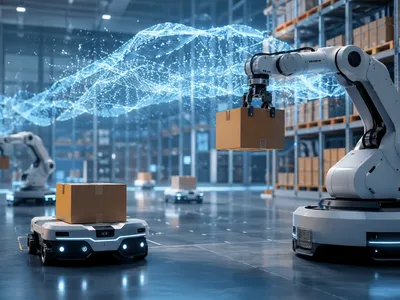
The principles of autonomous control algorithms find application far beyond passenger vehicles, each domain imposing unique constraints that shape algorithmic design. In aerial robotics, drones employ vision-based SLAM and robust flight controllers for inspection and delivery, prioritizing lightweight computation and resilience to strong winds. Maritime autonomy for surface vessels uses radar-centric fusion and path planning algorithms that account for complex hydrodynamics and international collision regulations. Industrial robotics in structured warehouses relies on precise localization and deterministic motion planning for material handling, often operating in controlled environments that simplify the perception challenge.

Agricultural robots leverage computer vision and specialized manipulation algorithms for targeted weed control and harvesting, requiring robustness to vast perceptual variation and non-geometric obstacles. These diverse applications demonstrate that the core algorithmic stack—perception, planning, control—is a flexible template, but its instantiation is deeply specialized. The performance requirements shift dramatically; latency tolerance is lower for a high-speed drone than for a slow-moving farm robot, while the consequence of a planning error is vastly different for a cargo ship versus a small indoor rover.

Scaling these systems presents profound systemic challenges that transcend individual algorithm performance. Verification and Validation (V&V) remains the foremost obstacle, as exhaustively testing a system designed for an open world is practically impossible. This has spurred research into formal methods and scenario-based testing to provide probabilistic guarantees of safety. The ethical and legal framework for algorithmic decision-making, particularly in unavoidable accident scenarios, is largely unresolved and intersects with difficult questions of liability and transparency. Furthermore, autonomous systems are high-value targets for cybersecurity threats, where adversarial attacks can manipulate sensor inputs or compromise control commands, necessitating robust intrusion detection and secure communication protocols at the hardware level.

Another critical challenge is system integration, where individually validated components interact in unpredictable ways, leading to emergent failures. Managing the computational load and energy consumption of these algorithms on embedded platforms is a constant engineering battle, often forcing trade-offs between algorithmic sophistication and real-time performance. Ultimately, the path to widespread deployment depends as much on solving these systemic engineering and ethical puzzles as on achieving incremental improvements in core algorithm accuracy. The long-term research vision points towards connected autonomy, where vehicles and infrastructre share perception and intent data, creating a cooperative ecosystem that surpasses the capabilities of any isolated agent. This transition will demand new classes of algorithms for distributed consensus and secure wireless coordination, marking the next frontier in the evolution of autonomous control systems.