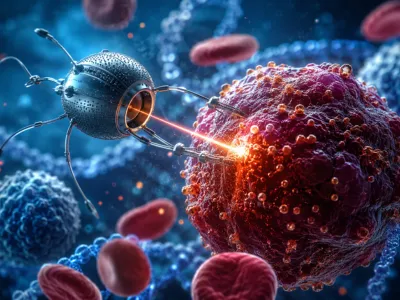
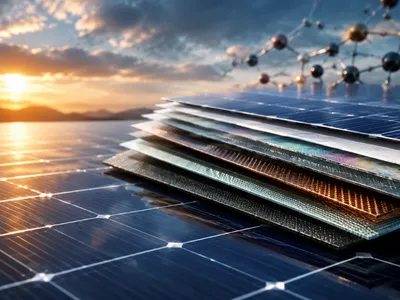
Functional Material Engineering represents a paradigm shift from traditional materials science, moving beyond the passive structural role of materials to an active, purpose-driven design philosophy. At its core, it is the disciplined conception, design, synthesis, and application of substances whose intrinsic properties are engineered to perform a specific, non-structural function. This function can be electrical, optical, magnetic, thermal, catalytic, or biological, making these materials the active enablers of modern technological innovation. The field operates at the intersection of solid-state physics, chemistry, nanotechnology, and electrical engineering, demanding a holistic understanding of structure-property-processing-performance relationships. Unlike conventional materials selected primarily for mechanical integrity, functional materials are architected from the atomic scale upwards to manifest desird phenomena, such as converting sunlight into electricity, changing conductivity in response to stimuli, or selectively catalyzing complex chemical reactions.
The distinction lies in the primacy of a targeted functionality. For instance, while aluminum's strength-to-weight ratio makes it a superb structural material, its engineering endpoint is load-bearing. In contrast, the engineering of a perovskite photovoltaic material focuses exclusively on its bandgap, charge carrier mobility, and photon absorption coefficients to maximize solar energy conversion efficiency. This targeted approach necessitates a deep dive into quantum mechanics, crystallography, and defect engineering to tailor electronic orbitals, phonon spectra, and spin states.
A critical conceptual framework in this domain is the notion of responsive or "smart" materials. These are advanced functional materials whose properties change in a predictable and controllable manner in response to external environmental triggers—such as temperature, pressure, electric or magnetic fields, pH, or light. This responsiveness is not a mere side effect but the meticulously engineered raison d'être of the material, enabling applications from self-healing polymers to shape-memory alloys in biomedical implants.
Core Engineering Principles
The engineering of functional materials is governed by several foundational principles. First is the Principle of Property-by-Design, which asserts that specific functionalities can be pre-determined through controlled manipulation of a material’s composition, microstructure, and morphology. This is a deliberate, often iterative process involving computational modeling and simulation (e.g., Density Functional Theory - DFT) to predict properties before synthesis. The second key principle is Hierarchical Structuring, recognizing that functionality emerges across multiple length scales—from atomic arrangement (crystal structure) and nanoscale phase separation to microscale grain boundaries and macroscopic device architecture.
A third, equally vital principle is Interfacial Engineering. The performance of functional materials in real devices is frequently dominated by interfaces—between different material layers, at electrode contacts, or at grain boundaries. Engineering these interfaces to minimize charge recombination, reduce interfacial resistance, or enhance catalytic activity is often more critical than optimizing the bulk material itself. For example, in lithium-ion batteries, the stability of the solid-electrolyte interphase (SEI) layer directly dictates cycle life and safety, making its engineering a paramount concern.
| Engineering Principle | Primary Focus | Typical Tools/Methods | Exemplar Material System |
|---|---|---|---|
| Property-by-Design | Predictive control of electronic, optical, or magnetic properties | DFT, Molecular Dynamics, Phase Field Modeling | Wide-bandgap semiconductors (e.g., GaN) |
| Hierarchical Structuring | Controlling morphology across nano-, micro-, and macro-scales | Self-assembly, Templated Growth, 3D Printing | Mesoporous catalysts & photonic crystals |
| Interfacial Engineering | Optimizing charge/energy transfer and stability at boundaries | Atomic Layer Deposition (ALD), Surface Functionalization | Perovskite solar cells, Heterostructure transistors |
Implementing these principles requires a robust methodology. The process is inherently cyclic, involving synthesis, characterization, analysis, and redesign. Advanced characterization techniques like electron microscopy, X-ray photoelectron spectroscopy (XPS), and scanning probe microscopy provide the essential feedback loop, allowing engineers to correlate observed macroscopic functionality with nanoscopic structural features.
- Multi-scale Modeling & Simulation: Utilizing computational tools from first-principles calculations to finite-element analysis to guide material design and reduce experimental trial-and-error.
- Precision Synthesis: Employing techniques like Molecular Beam Epitaxy (MBE) or Chemical Vapor Deposition (CVD) to achieve atomic-level control over composition and structure.
- Advanced Characterization: Applying in-situ and operando methods to observe material behavior under real operating conditions, not just in a static state.
- Integration & Device Fabrication: Transitioning from material discovery to functional device integration, addressing scalability and manufacturing challenges.
Key Material Classes
The landscape of functional materials is vast, categorized by their primary engineered response. Semiconductors form the bedrock of modern electronics and optoelectronics, where the precise control of bandgap—through doping, alloying, or low-dimensional structuring—enables devices from transistors to lasers. Wide-bandgap semiconductors like silicon carbide (SiC) and gallium nitride (GaN) are pivotal for high-power, high-frequency applications, showcasing how property tailoring addresses specific technological gaps. Moving beyond charge, magnetic materials are engineered for specific coercivity, saturation magnetization, and magnetoresistance properties. The development of rare-earth permanent magnets (e.g., Nd-Fe-B) and giant magnetoresistive (GMR) multilayers for data storage are triumphs of functional material design.
Optical and photonic materials are designed to control the flow of light. This class includes nonlinear optical crystals for frequency conversion, engineered metamaterials with negative refractive indices, and luminescent materials like phosphors and quantum dots. The functionality here stems from manipulating interactions between photons and the material's electronic structure. Similarly, electrical and ionic conductors extend beyond simple metals. This category encompasses transparent conducting oxides (TCOs) for displays, solid oxide fuel cell electrolytes with high ionic conductivity, and organic semiconductors for flexible electronics. Each requires meticulous defect chemistry control to optimize charge transport while maintaining other necessary properties like transparency or mechanical flexibility.
| Material Class | Primary Engineered Function | Key Performance Parameter | Application Example |
|---|---|---|---|
| Semiconductors (III-V, Perovskites) | Charge generation, transport, and recombination | Bandgap, Carrier Mobility, Lifetime | Photovoltaics, LEDs, Microprocessors |
| Advanced Magnetic Materials | Data storage, sensing, energy conversion | Coercivity, Remanence, Curie Temperature | Hard drives, MRI machines, Permanent Magnet Motors |
| Functional Ceramics & Oxides | Ionic conduction, dielectric response, catalysis | Ionic Conductivity, Dielectric Constant, Surface Acidity | Solid-State Batteries, Capacitors, Catalytic Converters |
| Soft & Polymeric Materials | Stimuli-responsive behavior, biocompatibility | Glass Transition Temp., Elastic Modulus, Degradation Rate | Drug Delivery Systems, Sensors, Actuators |
Another critical class is functional ceramics and oxides, prized for their thermal stability and diverse properties—ferroelectricity in lead zirconate titanate (PZT) for sensors, high-temperature superconductivity in cuprates, or ionic conductivity in yttria-stabilized zirconia (YSZ). The common thread is the deliberate introduction of specific point defects, such as oxygen vacancies or cation dopants, to induce the desired electrical or ionic behavior.
The rise of soft functional materials—including conductive polymers, hydrogels, and liquid crystals—has expanded the domain into flexible and biomedical realms. These materials often combine multiple functionalities, such as elasticity and electrical conductivity in stretchable electrodes, demonstrating the field's move towards multifunctional integration.
Finally, nanostructured and low-dimensional materials like graphene, transition metal dichalcogenides (TMDCs), and quantum dots represent a paradigm where quantum confinement and surface effects dominate the properties. Engineering in this regime involves precise control over layer number, edge states, and nanoparticle size to tune electronic band structure and optical emission wavelengths with atomic-level precision.
Synthesis & Fabrication
Translating theoretical design into a physical material demands a sophisticated arsenal of synthesis and fabrication techniques, chosen based on the required purity, dimensionality, and scalability. Bottom-up approaches aim to construct materials atom-by-atom or molecule-by-molecule. Chemical Vapor Deposition (CVD) is a workhorse for producing high-quality, large-area two-dimensional materials and thin films by decomposing precursor gases on a substrate. A more precise variant, Atomic Layer Deposition (ALD), utilizes sequential, self-limiting surface reactions to depost ultra-thin, conformal films with exact thickness control, essential for gate dielectrics and complex nanostructures.
For bulk nanocrystalline or porous materials, solution-phase methods like sol-gel processing and hydrothermal/solvothermal synthesis are predominant. These techniques allow for excellent compositional homogeneity and the creation of metastable phases at relatively low temperatures. The sol-gel route, for instance, is fundamental in producing transparent conducting oxides and high-purity ceramic precursors. Precision in reaction kinetics and thermodynamics is paramount to control particle size, morphology, and crystal phase, directly influencing the final functional performance.
Physical deposition techniques, such as Molecular Beam Epitaxy (MBE) and Pulsed Laser Deposition (PLD), offer unparalleled control in creating epitaxial thin films and complex heterostructures with sharp interfaces. MBE, conducted under ultra-high vacuum, allows for real-time monitoring of growth and the engineering of doping profiles with monolayer accuracy, making it indispensable for advanced semiconductor quantum wells and superlattices used in research and high-performance optoelectronics.
Beyond thin films, fabricating functional devices often requires top-down patterning and structuring. Photolithography, combined with dry etching techniques like Reactive Ion Etching (RIE), defines nanoscale features in semiconductor manufacturing. Additive manufacturing, or 3D printing, is emerging as a transformative tool for functional materials, enabling the creation of complex geometric architectures—such as piezoelectric sensors or battery electrodes with optimized tortuosity—that are impossible with traditional methods.
The choice of synthesis route is a critical engineering decision, as it dictates defect populations, interfacial quality, and ultimately, the reproducibility and scalability of the material's functionality. Each method presents a unique trade-off between control, throughput, and cost, guiding its application from fundamental research to industrial production.
Characterization & Analysis
The unequivocal correlation between a material's engineered structure and its manifested functionality is established through rigorous characterization and analysis. This phase is not merely observational but a fundamental diagnostic tool that guides the iterative design process. Microstructural analysis forms the cornerstone, with techniques like Scanning Electron Microscopy (SEM) and Transmission Electron Microscopy (TEM) providing direct visualization of grain boundaries, dislocations, and phase distributions down to atomic resolution. Coupled with Energy-Dispersive X-ray Spectroscopy (EDS), these methods yield vital compositional data, revealing segregation phenomena or dopant distribution that directly control electronic or mechanical properties. For functional materials, quantitative image analysis of micrographs is often required to statistically define critical parameters like particle size distribution or porosity, which govern phenomena from catalytic activity to ionic transport.
Probing the electronic and chemical state is paramount. X-ray Photoelectron Spectroscopy (XPS) delivers quantitative information on elemental composition, empirical formula, and the chemical state of surface atoms (oxidation state, bonding environment). This is critical for understanding interfacial reactions in batteries or catalytic surfaces. Similarly, X-ray Diffraction (XRD) and its advanced variants (e.g., grazing-incidence XRD) are indispensable for determining crystal structure, phase purity, lattice strain, and preferred orientation in thin films—factors that decisively influence ferroelectric, piezoelectric, and superconducting behaviors.
| Characterization Technique | Type of Information | Spatial Resolution / Probe Depth | Critical for Engineering |
|---|---|---|---|
| Scanning Probe Microscopy (AFM/STM) | Surface topography, electronic density of states, mechanical properties (modulus, adhesion) | Atomic (vertical), Nanometer (lateral) | Nanodevices, 2D materials, organic semiconductors |
| Photoluminescence (PL) / UV-Vis Spectroscopy | Optical bandgap, exciton binding energy, defect states, quantum yield | Bulk / Macro (spectrum averaged over spot size) | Photovoltaics, LEDs, laser gain media |
| Impedance Spectroscopy | Electrical conductivity, dielectric constant, interfacial resistance, relaxation times | Bulk (provides averaged circuit element parameters) | Ionic conductors, dielectrics, battery & fuel cell electrolytes |
| In-situ/Operando Techniques (e.g., TEM, XRD) | Real-time structural/chemical evolution under thermal, electrical, or mechanical stress | Varies (same as base technique) | Understanding degradation mechanisms, catalyst operation, phase transitions |
For optical and photonic materials, spectral analysis through photoluminescence (PL) and UV-Vis-NIR spectroscopy quantifies bandgap, absorption coefficients, and defect-related emission. The transition from ex-situ to in-situ and operando characterization represents a quantum leap in functional material engineering. Observing a battery electrode material as it cycles, a catalyst during reaction, or a memristor during switching provides unparalleled insight into dynamic degradation pathways and the true structure-function relationship under working conditions.
The data deluge from these techniques necessitates sophisticated computational analytics and modeling. Machine learning algorithms are increasingly deployed to identify hidden correlations within multidimensional characterization data, predicting optimal processing parameters or identifying signature microstructural features linked to peak performance. This transforms characterization from a descriptive to a predictive tool.
Thus, characterization is the critical feedback loop that validates the design hypotheses of functional material engineering. Without it, synthesis remains an empirical art, and property optimization is fundamentally blind. The integration of complementary techniques provides a holistic picture, linking atomic arrangement to macroscopic device performance.
Applications & Future Impact
The transformative power of functional material engineering is evidenced by its pervasive role in addressing grand societal challenges. In renewable energy and storage, engineered materials are the key performnce limiters and enablers. High-efficiency multi-junction III-V solar cells, perovskite-on-silicon tandems, and novel organic photovoltaics drive down the cost of solar electricity. Simultaneously, the evolution of lithium-ion batteries—from layered oxide cathodes to silicon-anodes and solid-state electrolytes—is fundamentally a story of functional material innovation. Beyond Li-ion, materials for green hydrogen production (electrolyzer catalysts) and use (fuel cell membranes, solid-state hydrogen storage) are under intense development, aiming to decarbonize hard-to-abate sectors.
The electronics and information technology sector is relentlessly paced by material advances. The shift from planar to FinFET and now to gate-all-around transistor architectures requires exquisite control over semiconductor epitaxy and dielectric interfaces. The pursuit of post-CMOS technologies hinges on materials like topological insulators, spintronic compounds, and resistive switching oxides for neuromorphic computing. In data storage, the progression from GMR to tunneling magnetoresistance (TMR) and now to potential skyrmion-based memories demonstrates how new physical phenomena in engineered materials redefine technological paradigms.
Healthcare and biomedicine present a frontier where functionality includes biocompatibility and bioactive response. Bioresorbable electronic implants for neural interfacing, stimulus-responsive drug delivery nanoparticles, and engineered tissue scaffolds with controlled pore architecture and surface chemistry are all products of functional material design. These materials blur the line between the synthetic and the biological, interfacing directly with physiological systems to monitor, repair, or enhance function.
Environmental remediation and sustainable manufacturing also benefit profoundly. Photocatalytic materials like TiO2 variants or metal-organic frameworks (MOFs) are engineered to break down pollutants or capture CO2. Membranes with precisely tuned pore sizes and surface functionalities enable energy-efficient desalination and gas separations, reducing the industrial carbon footprint.
- Materials for Quantum Technologies: Engineering defect centers in diamonds (NV centers), superconducting qubits, and topological materials with protected quantum states for computing, sensing, and secure communication.
- Bio-Inspired and Autonomous Materials: Developing systems that mimic biological processes (e.g., self-healing, adaptive growth) to create structures that can sense, respond, and adapt to their environment without external control.
- Accelerated Discovery via AI/ML: Integrating high-throughput computation, automated synthesis (robotics), and characterization with artificial intelligence to close the design loop, dramatically reducing development time from decades to years or months.
- Sustainability by Design: Embedding circular economy principles, focusing on abundant, non-toxic elements, designing for disassembly and recyclability, and developing low-energy synthesis pathways from the outset.
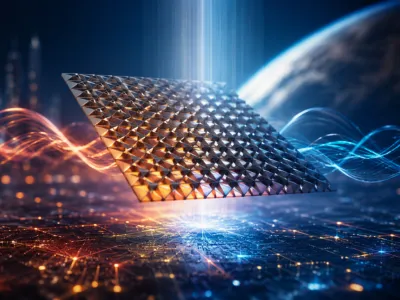
The future trajectory points towards increased complexity and multifunctionality. The next generation will not be single-purpose materials but integrated systems—materials that simultaneously harvest and store energy, sense and compute, or provide structural support while monitoring their own health. This requires a convergence of disciplines and a systems-level engineering approach. The ultimate impact of functional material engineering lies in its potential to provide the physical building blocks for solutions to energy scarcity, environmental degradation, and advanced healthcare, thereby shaping the technological and sustainable landscape of the 21st century.
Furthermore, the field must confront the challenges of scalability, cost, and environmental impact of its own processes. The translation from lab-scale wonder to manufacturable, reliable, and economically viable product is a formidable engineering hurdle in itself, often requiring the development of entirely new fabrication paradigms. Success in this endeavor will determine not just what is scientifically possible, but what is practically achievable for global benefit.