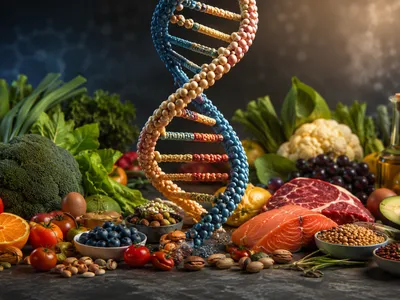
How Diet Modifies Your Epigenetic Profile?
While SNPs are crucial, contemporary nutrigenomics explores a far more intricate genomic landscape. This includes the study of copy number variations, insertions and deletions, and epigenetic modifications such as DNA methylation and histone acetylation. These mechanisms regulate gene expression without altering the underlying DNA sequence, providing a molecular link between long-term dietary habits and phenotypic health outcomes.
Dietary components like polyphenols, short-chain fatty acids, and micronutrients act as epigenetic modulators. They can inhibit enzymes like DNA methyltransferases or histone deacetylases, thereby activating or silencing entire sets of genes related to inflammation, oxidative stress, and cellular repair. This represents a paradigm shift from viewing food merely as fuel to understanding it as a potent information-bearing signal for the epigenome.
The following list details key non-SNP genomic factors now integrated into advanced personalized nutrition models:
- DNA Methylation Patterns: Dense methylation in gene promoter regions typically silences gene expression, influenced by folate, choline, and betaine intake.
- Histone Modifications: Acetylation or methylation of histone proteins alters chromatin structure and accessibility, modulated by metabolites like butyrate.
- Non-Coding RNA Profiles: MicroRNAs can bind to messenger RNA and inhibit translation, with diet affecting their synthesis and stability.
- Telomere Length Dynamics: A biomarker of cellular aging that can be influenced by oxidative stress and inflammation, both nutritionally modifiable.
Integrating these multi-layered omics data presents a significant computational challenge but is essential for a holistic view. Machine learning algorithms are increasingly employed to deconvolute this complexity, identifying patterns that predict an individual's optimal intake of macronutrients or specific bioactive compounds. The goal is to construct a dynamic nutritional phenotype that reflects the continuous interplay between the stable genome and the variable exposome.
The Gut Microbiome as a Genetically Modifiable Factor
The human gut microbiome represents a critical and dynamic interface between diet and host physiology. Its collective genome, or metagenome, encodes metabolic functions absent in the human host, making it a central player in personalized nutrition.
Microbial communities directly influence the metabolism of dietary compounds, the production of essential vitamins, and the integrity of the intestinal barrier. Their composition and function exhibit significant inter-individual variation, partly shaped by host genetics.
However, unlike the static human genome, the microbiome is profoundly malleable by dietary components. Prebiotic fibers, polyphenols, and fermented foods can selectively stimulate the growth of beneficial taxa, thereby modifying the functional genetic output of the microbial community. This establishes the microbiome as a primary therapeutic target for modulating gene-expression pathways related to inflammation, energy harvest, and neuroendocrine signaling.
The concept of microbiome-mediated personalization suggests that dietary recommendations can be optimized not only for the human genome but also for an individual's unique microbial ecosystem. Specific foods act as substrates for bacteria whose metabolic byproducts then signal to human cells. For instance, the production of butyrate from ddietary fiber by certain Firmicutes has epigenetic effects on colonocyte health and systemic inflammation. Therefore, a comprehensive nutritional approach must consider the bidirectional dialogue between host DNA and microbial genes, aiming to cultivate a microbiome whose functional capacity complements the individual's genetic predispositions towards health or disease.
The table below illustrates how targeted dietary components can modulate specific microbiome functions with downstream health implications.
| Dietary Component | Target Microbial Function | Potential Health Outcome |
|---|---|---|
| Resistant Starch | Butyrate Synthesis | Enhanced Gut Barrier Integrity, Reduced Systemic Inflammation |
| Galacto-oligosaccharides | Bifidobacteria Growth | Improved Immune Priming, Reduced Allergic Sensitization |
| Ellagitannins (from berries) | Urolithin Production | Enhanced Mitochondrial Function, Anti-aging Effects |
| Sulforaphane Precursors | Sulfide Metabolism Modulation | Protection against Mucosal Pathogens, Detoxification Support |
Can a DNA Test Truly Personalize Your Diet?
The commercial proliferation of direct-to-consumer genetic tests has made personalized nutrition accessible but also raised critical questions about its scientific validity and clinical utility. These tests often analyze a limited panel of SNPs associated with broad metabolic traits.
A significant challenge lies in distinguishing between probabilistic risk information and definitive, actionable dietary changes. Most genetic variants contribute only marginally to complex phenotypes like obesity or glucose intolerance, where diet and lifestyle play dominant roles. The current evidence base is strongest for monogenic disorders like lactose intolerance or celiac disease, where a single gene has a deterministic effect.
For polygenic conditions, the utility of genetic testing hinges on its integration with deeper phenotypic data. A genotype indicating reduced folate metabolism may only become clinically relevant when paired with low serum folate levels. Therefore, the most effective applications are not standalone genetic reports but those that combine DNA analysis with traditional biomarkers and lifestyle audits, creating a more complete picture of an individual's nutritional status. This integrated approach moves away from the one-size-fits-all fallacy towards a model of contextual genomic data interpretation.
Key limitations that must be acknowledged in consumer-facing nutrigenetic testing include:
- 🧬 The limited scope of tested variants, often overlooking rare mutations and structural genomic variations.
- 🔄 The dynamic nature of gene expression, which is not captured by a static DNA snapshot.
- ⚠️ The potential for psychological harm or unnecessary dietary restriction based on probabilistic risk data.
- 🌍 The varying clinical penetrance of genetic variants across different ethnic and ancestral populations.
Ethical Issues in Personalized Genetic Nutrition
The advancement of genetics-based nutrition introduces a complex array of ethical and practical considerations that must be addressed for responsible implementation.
Foremost among ethical concerns is the privacy of genetic data and its potential use by insurers or employers. The proprietary nature of interpretative algorithms used by testing companies also creates a "black box" problem, where dietary recommendations are generated without transparency.
On a practical level, significant socioeconomic disparities in access to these technologies risk exacerbating health inequalities. The high cost of comprehensive testing and ongoing nutritional coaching places personalized nutrition beyond the reach of many, potentially creating a new frontier of nutritional equity. Furthermore, the current lack of standardized regulatory frameworks for nutrigenetic tests means their analytical validity and clinical utility are not uniformly assessed, leading to a marketplce with variable quality. The field urgently requires interdisciplinary collaboration between geneticists, dietitians, ethicists, and policymakers to establish guidelines that protect consumers while fostering innovation. The ultimate goal must be the responsible translation of genetic science into equitable and effective public health strategies, ensuring that the promise of personalized nutrition does not become a privilege for the few but a tool for enhancing population health through more precise and effective personalized dietary advice.
The following table outlines primary challenges and necessary actions for the future development of the field.
| Domain | Current Challenge | Required Action |
|---|---|---|
| Regulation & Quality | Lack of standardization for test validity and utility claims. | Development of evidence-based guidelines and regulatory oversight for nutrigenetic products. |
| Data Privacy & Security | Risk of genetic data misuse and insufficient informed consent processes. | Implementation of robust data protection laws and clear, accessible consent protocols. |
| Access & Equity | High costs creating healthcare disparities. | Research into cost-effective delivery models and integration into public health frameworks. |
| Education & Literacy | Limited practitioner training in genomics and potential for consumer misinterpretation. | Enhanced professional curriculum development and reliable public science communication. |