The Quantum Toolkit for Measurement
Quantum sensors leverage the non-intuitive principles of quantum mechanics to achieve measurement precision far beyond the limits of classical devices. Their operation is fundamentally rooted in the controlled manipulation and measurement of quantum states, such as the spin of an electron or the energy level of an atom. This direct encoding of information onto quantum systems allows for unprecedented sensitivity.
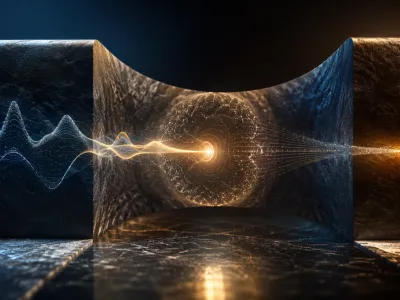
A core principle enabling this sensitivity is quantum superposition, where a system exists in multiple states simultaneously until measured. A sensor can probe a physical quantity by observing how it shifts the relative phase between these superimposed states. The concept of quantum coherence is critical here, representing the time over which these delicate superpositions persist without collapsing due to environmental noise.
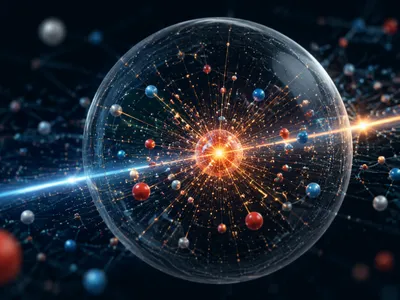
Another powerful resource is quantum entanglement, a strong correlation between particles that links their fates regardless of distance. When particles in a sensor are entangled, a measurement on one instantly provides information about the other, effectively amplifying the signal. This correlation can lead to measurements that surpass the standard quantum limit, approaching the ultimate Heisenberg limit where precision scales inversely with the number of particles used.
Quantum tunneling further provides a unique mechanism for sensing, particularly in scanning probe microscopes. Here, the probability of an electron tunneling through a classically forbidden barrier is exponentially sensitive to the distance between a sharp probe tip and a sample surface. By monitoring this tunneling current, variations at the atomic scale can be mapped with extraordinary resolution, revealing the topography and electronic properties of materials.
These quantum phenomena are not merely theoretical; they are engineered into physical platforms using lasers, microwave pulses, and cryogenic systems to initialize, control, and read out the sensor's quantum state. The overarching goal is to maintain coherence long enough for an external field or force to imprint a detectable signature on the quantum system, which is then decoded with high fidelity.
Linking Quantum States with Physical Signals
The practical operation of a quantum sensor involves a precise sequence of initializing a well-defined quantum state, allowing it to interact with the target field, and then performing a quantum measurement to extract information. Initialization often involves optical pumping or laser cooling to prepare atoms, ions, or solid-state defects into a specific ground state, effectively creating a blank slate. This prepared state is typically a coherent superposition, primed for interaction.
During the interrogation phase, the external parameter of interest—be it a magnetic field, acceleration, or time—couples to the sensor's quantum properties. For example, a magnetic field will cause the spin of an electron to precess at a frequency proportional to the field's strength. This interaction evolves the superposition state, accumulating a phase shift that is exquisitely sensitive to the target signal while ideally being insensitive to other confounding factors, a concept known as dynamical decoupling.
The final readout converts this fragile quantum phase into a measurable classical signal, such as a change in light intensity or electrical current. This is often the most challenging step, as the act of measurement itself can destroy quantum coherence. Advanced techniques like quantum non-demolition measurements are developed to circumvent this, allowing the same quantum state to be measured multiple times to boost signal-to-noise ratios. The following table contrasts key quantum state properties leveraged in different sensorr modalities, highlighting the transition from quantum information to a usable readout.
| Quantum System Property | Role in Sensing | Example Sensor Platform |
|---|---|---|
| Energy Level Splitting | Directly shifted by external fields; measured via spectroscopy. | Atomic vapors, NV centers |
| Wavefunction Phase | Accumulates during interaction; interferometrically measured. | Cold atom interferometers |
| Quantum Tunneling Rate | Exponentially sensitive to barrier width (e.g., distance). | Scanning Tunneling Microscope |
| Spin Coherence Time | Determines the maximum interrogation duration and sensitivity. | Diamond NV centers, Silicon vacancies |
The entire process is meticulously shielded from environmental decoherence, which is the primary enemy of quantum advantage. By strategically using sequences of control pulses, the sensor can be made selectively sensitive only to a specific frequency band of the target signal, effectively filtering out noise. This ability to implement quantum control protocols transforms a fragile quantum probe into a robust and highly capable measurement device, bridging the gap between the quantum and classical worlds.
Nitrogen-Vacancy Centers in Diamond
Among the most advanced solid-state quantum sensors is the nitrogen-vacancy (NV) center in diamond, a atomic-scale defect with remarkable optical and spin properties. This system consists of a nitrogen atom adjacent to a vacant lattice site in the diamond's carbon structure, trapping unpaired electrons whose spin states can be optically initialized, manipulated, and read out. The NV center's electronic spin is exquisitely sensitive to local magnetic fields, electric fields, temperature, and strain, making it a versatile nanoscale probe.
Operation begins by illuminating the diamond with green laser light, which initializes the NV center into a specific spin state and causes it to emit red photoluminescence. The intensity of this fluorescence depends on the spin state, which in turn is influenced by external parameters. By applying controlled microwave pulses, researchers can drive spin transitions and measure how the local environment alters the resonant frequency, a technique known as optically detected magnetic resonance (ODMR).
The NV center's long coherence times at room temperature are a key advantage, allowing for prolonged interrogation and high sensitivity. Advanced pulse sequences, such as Hahn echoes or dynamical decoupling, are used to extend these coherence times and filter out noise, making the sensor selectively sensitive to specific signal frequencies. This enables the detection of extremely weak magnetic fields, such as those generated by individual electron or nuclear spins in nearby molecules.
The atomic size and stability of the NV center allow it to be positioned at the tip of a scanning probe, enabling magnetic imaging with nanoscale spatial resolution. This capability is revolutionizing materials science and biology by allowing researchers to map magnetic domains in novel mmaterials or detect neural action potentials. Furthermore, the sensor's compatibility with ambient conditions avoids the need for extreme vacuum or cryogenic environments, significantly lowering the barrier for practical application in diverse fields. The primary advantages of NV centers are summarized in the following list.
- Room Temperature Operation Key Advantage
- Atomic-Scale Spatial Resolution Enables Nanoscopy
- Multimodal Sensitivity (Magnetic, Electric, Temperature) Versatile Platform
- Biocompatibility and Minimal Invasiveness Ideal for Biosensing
Cold Atom Interferometers Measuring Gravity and Inertia
Cold atom interferometers represent a pinnacle of precision for measuring inertial forces, utilizing the wave-like nature of atoms laser-cooled to near absolute zero. In these devices, ultra-cold atoms are launched or dropped, and their matter waves are split, redirected, and recombined using precisely timed laser pulses acting as atom beam splitters and mirrors.
The core principle relies on the Sagnac effect for matter waves: the two separated atomic wave packets accumulate a phase difference that depends on the acceleration or rotation experienced along their paths. When the waves recombine, this phase shift determines the probability of finding the atom in one of two output states, which is measured by detecting the atom population.
The extreme sensitivity stems from the atoms' high velocity stability and long interrogation times enabled by the microgravity environment of a drop tower or the sustained free fall in an atomic fountain. These sensors do not just measure gravity; they are exquisitely tuned to detect deviations in local gravitational acceleration, which can reveal subsurface density variations, monitor geological processes, or test fundamental physics. Their stability makes them primary candidates for redefining the standard kilogram and second with quantum properties.
Recent advances have pushed these systems out of the lab and into field-deployable units. Compact, robust laser systems and vacuum chambers now enable gravity surveys from moving vehicles for resource exploration or navigation systems that do not rely on satellite signals. The achieved sensitivity allows for the detection of minuscule gravitational gradients that betray hidden underground structures. The following list outlines the critical components required for a functioning cold atom interferometer, highlighting the engineering complexity behind the phenomenon.
- 🧪 Ultra-High Vacuum Chamber to Eliminate Atomic Collisions
- 🔬 Stabilized Laser System for Cooling, Trapping, and Interferometry
- ⏱️ Precision Timing Electronics for Pulse Sequences
- 🛡️ Vibration Isolation Platform to Shield Against Noise
- 💡 High-Efficiency Atom Detection via Fluorescence or Absorption
The interplay between quantum control and mechanical engineering in these devices is profound. By utilizing the wave-particle duality of atoms, cold atom interferometers transform fundamental quantum mechanics into a tool for mapping the Earth's subsurface and navigating with unprecedented autonomy. They stand as a powerful demonstration of how controlled quantum systems can outperform any classical technology for specific inertial measurements, with ongoing research focused on further miniaturization and noise suppression for broader adoption.
What Are the Practical Challenges and Limitations?
Despite their extraordinary potential, quantum sensors face significant practical hurdles that must be overcome for widespread deployment. A primary and universal challenge is decoherence, where the fragile quantum state loses its phase information by interacting with a noisy environment. This process limits the sensor's coherence time, which directly bounds the interrogation period and ultimate sensitivity. Manging decoherence requires sophisticated error suppression techniques and often cryogenic temperatures or exquisite isolation, increasing system complexity and cost.
The requirement for precise quantum state initialization and readout introduces another layer of technical difficulty. Most platforms depend on bulky peripheral systems, such as high-power lasers for optical pumping or complex microwave circuits for spin control. These components contradict goals for miniaturization and low power consumption, which are essential for mobile or implantable applications. Integrating control electronics and photonics into a compact, robust package remains a major engineering endeavor.
Scalability and manufacturability present further obstacles. Producing sensor arrays with uniform quantum properties, such as identical NV center characteristics across a diamond chip, is notoriously difficult. Variability between individual quantum probes can degrade overall performance and complicate calibration. Furthermore, the inherent sensitivity of these devices to desired signals also makes them susceptible to unwanted environmental drifts, such as temperature fluctuations or background electromagnetic interference, necessitating advanced compensation algorithms.
The following table summarizes these core technical challenges, their direct impacts on sensor performance, and the current strategies employed to mitigate them.
| Technical Challenge | Impact on Performance | Current Mitigation Strategies |
|---|---|---|
| Environmental Decoherence | Limits coherence time and sensitivity. | Dynamical decoupling sequences, cryogenics, material purification. |
| State Initialization & Readout Fidelity | Reduces signal contrast and signal-to-noise ratio. | Advanced optical schemes, quantum non-demolition measurements. |
| Sensor Miniaturization & Integration | Hinders field deployment and wearable applications. | Integrated photonics, CMOS compatibility, fiber-coupled designs. |
| Platform Uniformity & Scalability | Prevents the effective use of large-scale quantum arrays. | Improved material synthesis (e.g., isotopic purity diamond growth). |
Economic factors also constrain adoption, as the development and production of high-quality quantum materials and stable laser systems are currently expensive. The operational complexity of quantum control demands specialized expertise, creating a barrier to entry for end-users in applied fields. While progress in quantum technology is rapid, bridging the gap between laboratory proof-of-concept and a reliable, cost-effective, turnkey instrument is an ongoing process that defines the current state of the field.
- 🌪️ Environmental Noise: Requires sophisticated shielding and software correction, adding to system overhead.
- ⚡ Power Consumption: Lasers and cryogenic systems are energy-intensive, limiting battery-operated use.
- 📏 Limited Dynamic Range: Extreme sensitivity can saturate quickly, requiring multi-scale sensing approaches.
- 🎯 Calibration Drift: Quantum references may drift over time, needing periodic recalibration against a standard.