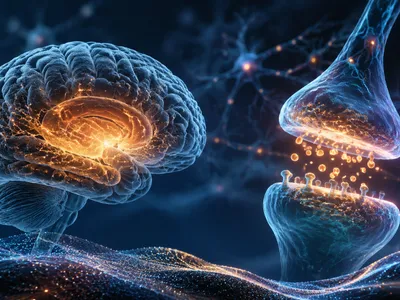
The Neural Orchestra of Attention
Human attention is not a monolithic faculty but a complex process orchestrated by specialized brain networks. The frontoparietal network acts as a central conductor, integrating signals and allocating cognitive resources based on task demands. This system dynamically coordinates activity between the prefrontal cortex and the intraparietal sulcus to maintain goal-directed focus. Its function is fundamental for filtering distractions and sustaining concentration over time.
Simultaneously, the ventral attention network, anchored in the temporoparietal junction and ventral frontal cortex, operates as a circuit breaker for salient environmental stimuli. This network remains vigilant for unexpected but potentially important events, enabling a rapid reorientation of focus. The constant interplay between these goal-oriented and stimulus-driven systems allows for adaptive behavior. Neuroscientific models now frame attention as the emergent property of this competitive yet integrated neural dialogue. The balance between these networks determines whether we maintain our train of thought or are pulled away by a novel sight or sound.
Advanced neuroimaging reveals that the thalamus, particularly its pulvinar nucleus, plays a crucial but underappreciated role as a sensory gateway and attentional filter. It modulates the flow of visual and auditory information to the cortex, amplifying relevant signals and suppressing noise. This subcortical structure effectively primes cortical areas to process prioritized inputs, acting before conscious awareness. Furthermore, oscillatory brain rhythms, especially in the alpha (8-12 Hz) and gamma (>30 Hz) bands, are critical mechanisms for attentional selection. Increased alpha power over visual cortex actively suppresses unattended spatial locations, while gamma synchrony binds features of an attended object together. This spectral fingerprint provides a real-time index of attentional engagement and selective processing.
The following table summarizes the key networks and their primary functions in attentional control:
| Network | Core Brain Regions | Primary Function in Attention |
|---|---|---|
| Frontoparietal Network | Dorsolateral Prefrontal Cortex, Intraparietal Sulcus | Top-down, goal-directed control and maintenance of focus |
| Ventral Attention Network | Temporoparietal Junction, Ventral Frontal Cortex | Bottom-up, stimulus-driven reorientation to salient events |
| Thalamic Filtering System | Pulvinar Nucleus, Reticular Nucleus | Sensory gating and pre-cortical amplification of relevant inputs |
Default Mode vs. Dorsal Attention Network
A pivotal discovery in cognitive neuroscience is the anticorrelated relationship between the default mode network (DMN) and the dorsal attention network (DAN). The DMN, involving the medial prefrontal cortex and posterior cingulate cortex, is most active during rest and internally-focused thought. During demanding external tasks, the DMN must be actively suppressed to allow the DAN to direct resources outward.
This competitive dynamic is more than a simple on-off switch. Efficient attentional performance depends on the speed and magnitude of this network switch. Individuals with greater functional connectivity within the DAN and stronger anticorrelation between the DAN and DMN exhibit superior attentional control. Lapses in attention, or mind-wandering, are neurally characterized by a ppremature or unintended resurgence of DMN activity.
The integrity of this seesaw relationship is a key biomarker for cognitive health. Its dysregulation is observed in several clinical conditions marked by attention deficits. The DMN is not an idle state but an active one for internal mentation, and its suppression is a positive cognitive act enabling focus.
The antagonistic dynamics between these major networks can be quantified through specific neuroimaging metrics:
| Neurocognitive State | Default Mode Network (DMN) Activity | Dorsal Attention Network (DAN) Activity | Behavioral Correlate |
|---|---|---|---|
| Focused External Attention | Suppressed | Highly Active | Successful task performance, minimal mind-wandering |
| Resting State / Mind-Wandering | Highly Active | Suppressed | Internal thought, planning, episodic memory recall |
| Attentional Lapse | Inappropriately Active | Weakened or Fluctuating | Task error, slow response, loss of task focus |
Neurochemical Modulators of Concentration
The brain's attentional state is finely tuned by a symphony of neuromodulators that alter neuronal excitability and communication. These chemicals shift entire networks between explorative, distracted states and focused, exploitative modes. Their balanced release is fundamental for cognitive stability and the ability to concentrate on demanding tasks for extended periods.
Norepinephrine, synthesized in the locus coeruleus, is crucial for regulating arousal and vigilance. It operates on an inverted-U curve, where both insufficient and excessive levels impair attention. Optimal release sharpens neuronal responsiveness to relevant stimuli and enhances signal-to-noise ratios across cortical networks, directly influencing perceptual sensitivity.
The dopaminergic system, particularly from the ventral tegmental area, underpins motivational salience and sustained effort. It reinforces engagement with tasks deemed valuable and gates information into working memory. Cholinergic projections from the basal forebrain are essential for perceptual acuity and cue detection. Acetylcholine directly enhances cortical plasticity, facilitating the neural adaptations required for learning during focused states.
Each neuromodulator contributes a distinct component to the overall attentional phenotype, as outlined below:
- ⚡ Norepinephrine: Governs alertness and vigilance; optimizes network gain for increased sensitivity to salient inputs.
- 🎯 Dopamine: Mediates motivational drive and reward-based signaling, sustaining goal-directed focus and effort.
- 👁️ Acetylcholine: Boosts perceptual sharpness and sensory signal detection; crucial for cue recognition and alerting responses.
- 🔄 Serotonin: Modulates behavioral flexibility and patience, influencing the balance between focused persistence and cognitive switching.
Prediction and Precision in Focus
Contemporary neuroscience frames attention through the lens of predictive coding. This theory posits the brain as a hierarchical prediction machine constantly generating models of the world. Attention is the process of allocating precision weighting to sensory data that carry the greatest value for reducing prediction error.
Precision represents the brain's estimated reliability or certainty of a sensory signal. By increasing the precision-weight on predictions from a specific source, such as a conversation in a noisy room, that input gains a competitive advantage in cortical processing. This mechanism formally explains how we select one stimulus over another at a computational level.
The anterior cingulate cortex is deeply implicated in estimating uncertainty and signaling when attention should be shifted due to unexpected outcomes. It monitors the conflict between predictions and sensory evidence, calibrating the precision weights assigned to different cognitive and perceptual streams.
This predictive framework elegantly unifies top-down and bottom-up attention. Top-down attention corresponds to boosting precision for sensory inputs that align with current goals and internal predictions. Bottom-up attention occurs when a stimulus with inherently high salience, like a loud crash, generates a high-precision prediction error that forcibly updates the brain's model.
The shift from a filter-based to a prediction-based model of attention has profound implications. It suggests the brain is not passively filtering noise but actively engaging with the world through a cycle of hypothesis, testing, and updating. Focus, therefore, is the state of confidently expecting a specific subset of sensory information and efficiently ignoring predictable, and thus less informative, inputs.
The table below contrasts key concepts in the traditional filter model with the modern predictive coding framework of attention:
| Neural Process | Traditional Filter Model | Predictive Coding Model |
|---|---|---|
| Core Mechanism | Selective gating or suppression of irrelevant sensory channels | Precision-weighted optimization of prediction error minimization |
| Role of Sensory Input | Bottom-up data stream that may be blocked or allowed | Evidence used to confirm or update internal generative models |
| Nature of 'Irrelevant' Stimuli | Unimportant noise to be removed | Highly predictable, low-precision data that requires little processing |
| Neuroanatomical Focus | Frontoparietal networks as a control bottleneck | Hierarchical cortical processing with precision estimated by neuromodulators |