Cosmic Dawn and the First Galaxies
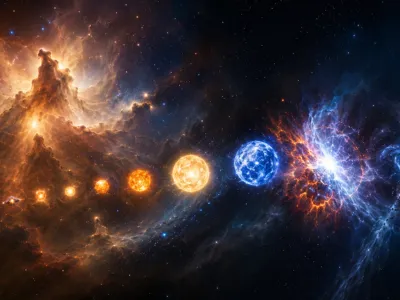
The epoch of cosmic dawn, when the first stars and galaxies ignited, remains one of the most pivotal frontiers in modern astrophysics. This era, spanning from approximately 50 to 500 million years after the Big Bang, marks the end of the cosmic dark ages.
Observational access to this epoch has been revolutionized by facilities like the James Webb Space Telescope (JWST). Its infrared capabilities allow it to detect light stretched from the ultraviolet and optical into the infrared by the expansion of the universe.
Theoretical models predict that the first stars, known as Population III stars, were likely massive, metal-free, and lived short, violent lives. Their supernovae seeded the interstellar medium with the first heavy elements, fundamentally altering subsequent star formation.
Early JWST observations have already identified candidate galaxies at redshifts beyond z=10, pushing our observational horizon ever closer to reionization. The light from these nascent systems provides clues about their mass, star-formation rate, and chemical composition.
The Gravitational Wave Revolution
The direct detection of gravitational waves by LIGO in 2015 inaugurated a new era of multi-messenger astrophysics. These ripples in spacetime, predicted by Einstein's general relativity, provide a completely novel way to observe the universe, complementary to electromagnetic radiation.
Gravitational wave astronomy probes the most energetic and violent events. The binary black hole and neutron star mergers observed so far offer unprecedented tests of strong-field gravity and have resolved the origin of heavy elements like gold and platinum through the associated kilonova emissions.
The future of this field lies in expanding the observational bandwidth. Space-based observatories like the planned Laser Interferometer Space Antenna (LISA) will detect low-frequency waves from supermassive black hole binaries, while pulsar timing arrays seek nanohertz signals from cosmic backgrounds.
The potential for discovery is vast, ranging from probing the equation of state of neutron stars to witnessing the cosmic symphony of supermassive black hole mergers throughout cosmic history. This new messenger forces us to rewrite textbooks on stellar evolution, compact object populations, and fundamental physics.
Challenges include improving detector sensitivity to access a larger volume of the universe, developing rapid real-time analysis pipelines for multi-messenger follow-up, and theoretically modeling the complex waveforms from pre-merger dynamics and post-merger remnants.
Exoplanet Atmospheres and the Search for Biosignatures
The characterization of exoplanetary atmospheres has evolved from a distant aspiration to a central pillar of observational astrophysics. This field seeks to understand the chemical composition, physical structure, and potential habitability of worlds orbiting other stars, moving beyond mere detection to detailed study.
Primary methods for atmospheric study include transmission spectroscopy during a planet's transit and emission spectroscopy during secondary eclipse. The JWST has become the preeminent tool for this work, its stable platform and infrared sensitivity allowing for unprecedented precision in spectral feature detection.
The concept of a biosignature is complex and context-dependent. While molecules like oxygen (O₂) and methane (CH₄) in thermodynamic disequilibrium are promising indicators, abiotic processes can also prodce them. Robust life detection will require a constellation of biosignatures, including surface reflectance signatures (e.g., the "red edge" of vegetation) and seasonal atmospheric variations.
| Target Type | Key Atmospheric Molecules | Primary Observational Challenge | Next-Generation Mission |
|---|---|---|---|
| Hot Jupiters | H₂O, CO, Na, K | Cloud/haze opacity | JWST (current) |
| Sub-Neptunes | H₂, H₂O, possible HCN | Bulk composition degeneracy | JWST, ARIEL |
| Terrestrial (M-dwarf) | CO₂, O₂, O₃, CH₄ | Stellar activity & flares | Habitable Worlds Observatory |
Recent studies of the TRAPPIST-1 system exemplify the challenges and promises. While initial data rule out cloud-free, hydrogen-dominated atmospheres for the inner planets, detecting the thin atmospheres of potentially habitable worlds like TRAPPIST-1e will require dozens of transit observations with JWST to build sufficient signal-to-noise, a monumental observational campaign currently underway.
- 🧬 Discriminating between biological and geochemical/photochemical atmospheric sources.
- ⭐ Understanding the impact of host star spectral type (especially M-dwarf UV flux) on atmospheric evolution.
- 🔬 Developing retrieval models that can robustly interpret low-resolution, noisy spectra.
- 🔭 The necessity of direct imaging spectroscopy for Earth-like planets around Sun-like stars.
The path forward is multidisciplinary, requiring tighter integration between observational data, atmospheric photochemical and climate models, and geophysical understanding of planetary evolution to avoid false positives and build a convincing case for life beyond Earth.
High-Energy Astrophysics and Multi-Messenger Observations
The high-energy universe, probed by X-rays and gamma rays, reveals matter in its most extreme states: near black holes, in supernova remnants, and within the relativistic jets of active galactic nuclei. The advent of multi-messenger astrophysics—correlating photons with neutrinos, cosmic rays, and gravitational waves—has fundamentally transformed this field.
Major facilities like the Chandra X-ray Observatory, XMM-Newton, and the Fermi Gamma-ray Space Telescope have cataloged millions of high-energy sources. The recent launch of IXPE (Imaging X-ray Polarimetry Explorer) added the crucial dimension of polarzation, probing magnetic field geometries in pulsar wind nebulae and accretion disks.
A landmark achievement was the association of a high-energy neutrino detected by IceCube with a flaring blazar, TXS 0506+056, in 2017. This event provided the first compelling evidence for blazars as sources of astrophysical neutrinos and, by extension, ultra-high-energy cosmic rays.
The theoretical challenge lies in modeling particle acceleration and emission processes in relativistic plasmas. Shock acceleration (Fermi mechanism) and magnetic reconnection are leading models, but the exact partition of energy between particles, magnetic fields, and radiation in jets and explosions remains a central unsolved problem in plasma astrophysics.
Future observatories like the Cherenkov Telescope Array (CTA) and the Athena X-ray telescope will provide orders-of-magnitude improvements in sensitivity and resolution, enabling detailed population studies and the routine detection of faint, distant transients, pushing our understanding of cosmic accelerators to new limits.