The Oceanic Thermostat's New Complexities
Recent research reveals the ocean's capacity to store excess heat is more complex and geographically varied than previously modeled. The traditional view of a uniformly mitigating ocean heat sink is being challenged by data showing intense regional imbalances.
Areas like the subtropical North Atlantic and the Southern Ocean are now recognized as critical hotspots for anthropogenic heat absorption. This uneven distribution directly influences atmospheric pressure systems and, consequently, continental weather patterns far from the source.
Mechanisms such as the formation of subtropical mode waters and deep convection processes are key drivers of this sequestration. Their sensitivity to surface warming and freshening poses significant questions about future efficacy.
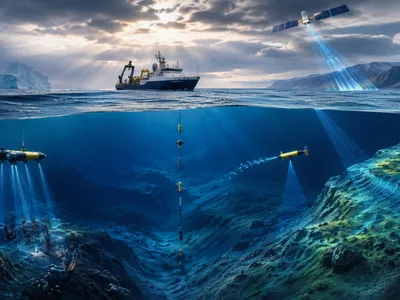
Advanced autonomous floats and high-resolution coupled models show that mesoscale eddies play a disproportionate role in vertical heat transport, a process largely absent in older climate projections. This eddy-mediated redistribution suggests potential for non-linear tipping points in ocean stratification and global heat budgets, where gradual forcing could trigger rapid changes in circulation patterns that have historically stabilized climate.
The following table summarizes key regions and mechanisms responsible for anomalous oceanic heat uptake identified in recent studies:
| Region | Primary Mechanism | Climate System Impact |
|---|---|---|
| Southern Ocean | Wind-driven upwelling & subduction | Modulates Southern Hemisphere jet stream |
| North Atlantic Subpolar Gyre | Deep water formation slowdown | Weakened meridional overturning circulation |
| Western Pacific Warm Pool | Vertical heat redistribution via eddies | Influences ENSO variability and intensity |
Decoding the Carbon Pump's Changing Efficiency
The biological carbon pump, a cornerstone of planetary carbon cycling, is undergoing measurable change due to anthropogenic pressures. Its efficiency in transporting organic matter to the deep sea is not a constant but a dynamic function of multiple interacting variables.
Surface warming strengthens ocean stratification, reducing nutrient supply to the sunlit layer and potentially limiting phytoplankton productivity. This physical change directly throttles the initial substrate for the entire marine carbon sequestration cascade.
Simultaneously, shifts in phytoplankton community structure towards smaller picoplankton species alter the quality and sinking velocity of particulate organic carbon. These smaller cells are more readily recycled in the surface layer, effectively shortening the carbon export pathway and keeping carbon closer to the atmosphere.
The intricate dance between the biological pump and the solubility pump is being recalibrated, with acidification impairing calcifying organisms and altering the mineral ballast crucial for fast sinking. Furthermore, the microbial carbon pump, which transforms labile organic matter into persistnt dissolved forms, presents a paradoxical yet critical buffer whose long-term capacity remains a major uncertainty in projecting future atmospheric CO2 levels. The net effect is a probable decline in the ocean's carbon sequestration efficiency per unit of warming.
Comparative analysis of carbon pump components highlights their differential vulnerabilities:
| Pump Component | Key Process | Primary Climate Threat |
|---|---|---|
| Biological (Gravitational) | Particle export & sinking | Stratification, community shift |
| Solubility | CO2 dissolution & circulation | Warming, circulation slowdown |
| Microbial | Production of recalcitrant DOC | Oxygen loss, temperature sensitivity |
Microbial Actors in a Climatic Drama
Oceanic microbial communities constitute a fundamental yet dynamic component of the Earth's climate machinery. Their metabolic processes mediate key biogeochemical fluxes that ultimately regulate atmospheric composition.
The microbial loop efficiently channels carbon and nutrients through the marine food web, influencing the strength of the biological pump. Shifts in temperature and pH directly alter these community structures and their functional gene expression.
Crucially, the production of recalcitrant dissolved organic carbon by marine bacteria represents a massive long-term carbon reservoir. Climate-driven changes in the diversity and metabolism of these microbes could destabilize this pool, potentially converting it from a sink to a source of atmospheric carbon. This microbial carbon pump operates with a complxity that rivals the physical circulation of the ocean itself, with viral lysis, nutrient stoichiometry, and enzyme kinetics determining the fate of gigatons of carbon annually. Microbial feedbacks may accelerate or dampen anthropogenic climate change.
How Deep Currents Shape Weather Patterns
The slow, grand movements of the abyssal ocean are intimately connected to atmospheric weather and extreme events. Deep currents act as the memory of the climate system, storing and later releasing heat and anomalies.
Variability in the meridional overturning circulation (MOC) influences hemispheric heat distribution on decadal timescales. A weakened MOC can lead to regional atmospheric cooling even during global warming, altering storm tracks.
Deep western boundary currents and underwater waves transport climatic signals across ocean basins. These signals can later upwell, modifying sea surface temperature (SST) gradients that drive atmospheric convection and pressure patterns.
The subsurface ocean heat content, accumulated by these currents, is a critical predictor for phenomena like marine heatwaves and tropical cyclone intensification. When anomalous sub-surface heat is brought to the surface by wind or current interactions, it can fuel extreme weather events with little warning. This subsurface memory challenges short-term atmospheric forecasts and redefines our understanding of predictability.
The interconnection between deep ocean anomalies and specific weather outcomes is illustrated below. Deep ocean dynamics are now a critical input for seasonal forecasting models.
| Deep Ocean Anomaly | Mechanism of Influence | Atmospheric Weather Impact |
|---|---|---|
| Subsurface Warm Blobs | Upwelling or storm-induced mixing | Intensification of tropical cyclones |
| Deep Salinity Intrusions | Altering stratification & mixed-layer depth | Modification of regional precipitation patterns |
| Abyssal Current Variability | Modifying MOC strength & heat delivery | Persistent mid-latitude blocking events |
Salinity Fronts as Climate Regulators
Ocean salinity patterns are increasingly recognized as powerful drivers of global climate, not merely passive tracers of the hydrological cycle. Sharp gradients known as salinity fronts generate significant subsurface density contrasts that steer major currents and influence their stability.
The intensification of the global water cycle, with wet regions becoming wetter and dry regions drier, is amplifying these frontal zones. This freshening in high latitudes and salinification in the subtropics directly modulates the formation of deep and intermediate waters.
The North Atlantic salinity anomaly has been closely linked to decadal variability in the meridional overturning circulation. A persistent freshwater cap can inhibit wintertime convection, reducing the ocean's ability to vent heat and carbon to the atmosphere and sequestering both in the subsurface for extended periods. Salinity acts as a primary control valve for ocean ventilation.
The feedback mechanisms initiated by shifting salinity fronts are complex; increased stratification from surface freshening can trap heat in a shallow layer, leading to amplified surface warming in that region, which in turn alters atmospheric pressure patterns and wind stress, further influencing evaporation and precipitation in a reinforcing loop that connects ocean physics directly to continental climate anomalies thousands of kilometers away.
Polar Amplification and Oceanic Feedbacks
The disproportionate warming of the Arctic, a phenomenon known as polar amplification, is fundamentally an ocean-mediated process. The retreat of reflective sea ice uncovers dark ocean waters, increasing absorbed solar radiation and triggering powerful local feedbacks.
This regional warming is not contained; it rewires broader climate dynamics by reducing the equator-to-pole temperature gradient. The weakened gradient alters the path and speed of the jet stream, increasing the probability of persistent blocking weather patterns that lead to extreme temperatures and precipitation events in mid-latitudes.
The massive influx of freshwater from melting ice sheets and glaciers into the North Atlantic threatens the stability of deep water formation sites. A potential tipping point in overturning circulation would have hemispheric and global climatic consequences, disrupting established heat and rainfall distributions. Furthermore, the warming of polar oceans is accelerating the destbilization of subsea permafrost and methane hydrates on continental shelves, presenting a potential but poorly quantified carbon-climate feedback that could extend beyond current projections. The polar oceans are thus both sentinels and agents of systemic climate change.
The interconnected feedback loops in the polar regions create a complex system where changes in one component rapidly influence others, making linear predictions challenging and underscoring the need for advanced, high-latitude focused observation systems to constrain future climate scenarios and understand the full scope of oceanic influence on our planet's warming trajectory.