The Engines of Deep Space
Future space exploration is heavily constrained by propulsion, as chemical rockets are nearing their practical limits due to high fuel demands and low efficiency. The next step is advanced propulsion systems, with nuclear thermal propulsion (NTP) offering a near-term improvement in thrust and performance. In parallel, electric propulsion systems like ion and Hall-effect thrusters are already widely used for efficient long-duration missions, despite their low thrust. Solar electric propulsion (SEP) further enhances this approach by enabling continuous, efficient acceleration over long periods, making it ideal for transporting cargo and infrastructure such as Mars-bound supplies or orbital depots.
Beyond these operational systems, research continues into more speculative or future-facing technologies, including fusion propulsion and propellantless propulsion concepts like solar sails. These systems use photon momentum or theoretical mechanisms to achieve movement without traditional fuel. Projects such as Breakthrough Starshot even propose laser-driven light sails to send gram-scale probes to interstellar speeds, potentially reaching nearby star systems within decades. While many of these ideas are not yet viable for crewed missions, they represent key steps toward expanding exploration capabilities and enabling both solar system-scale logistics and eventual interstellar scouting.
| Propulsion Type | Key Advantage | Current TRL | Potential Mission Use |
|---|---|---|---|
| Nuclear Thermal (NTP) | High thrust, doubles specific impulse vs. chemical | 5-6 (Ground testing) | Crewed missions to Mars |
| Solar Electric (SEP) | Extremely high efficiency, long-duration operation | 9 (Operational on probes) | Cargo, station-keeping, deep-space probes |
| Nuclear Electric (NEP) | Combines high power of nuclear with efficiency of electric | 3-4 | Outer planet robotic missions, heavy cargo |
In-Situ Resource Utilization
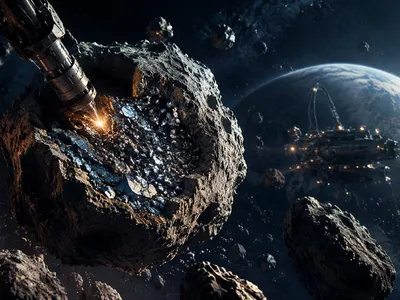
The economic viability of long-term presence on the Moon, Mars, and beyond depends critically on our ability to live off the land. In-Situ Resource Utilization (ISRU) is the practice of harvesting and processing local materials to create mission-critical consumables, thereby avoiding the astronomical cost of launching everything from Earth. The most pivotal target is water ice, believd to be trapped in permanently shadowed craters at the lunar poles and within the Martian regolith. Water is the oil of space exploration; it can be split into liquid oxygen and hydrogen for rocket propellant, used for life support, and even shielded against radiation.
Beyond water, the lunar regolith and Martian soil (regolith) offer a wealth of materials. Technologies are being developed to extract oxygen from metal oxides in the soil through processes like molten regolith electrolysis. The byproduct of this extraction is refined metals, such as iron, aluminum, and titanium, which could be used for additive manufacturing (3D printing) of tools, spare parts, and eventually habitation structures. Printing a habitat from local regolith, using solar or nuclear energy as a power source, would represent a monumental leap in self-sufficiency, drastically reducing the mass and complexity of pre-launched infrastructure.
The technological and operational challenges of ISRU are profound. Prospecting robots must first locate and characterize resources with high certainty. Then, heavy mining and processing equipment must be landed and operated autonomously or with minimal human oversight in harsh, dusty environments. The entire chemical processing chain must be reliable and efficient, as failures could jeopardize an entire mission that is dependent on locally produced propellant for the return journey. Successful ISRU transforms a destination from a campsite into a outpost, and eventually a settlement, by creating a closed-loop resource cycle.
| Resource | Source (Moon/Mars) | Primary Use | Development Stage |
|---|---|---|---|
| Water Ice (H₂O) | Polar craters (Moon), Subsurface regolith (Mars) | Propellant (LOX/LH₂), Life Support, Radiation Shielding | Prospecting & Prototype Processors |
| Oxygen (O₂) | Metal oxides in Regolith (Ilmenite, etc.) | Propellant oxidizer (LOX), Breathable air | Lab-scale demonstration achieved |
| Metals (Fe, Al, Ti) | Regolith minerals | Construction materials, Spare parts (via 3D printing) | Conceptual / Early R&D |
| Carbon Dioxide (CO₂) | Martian Atmosphere (96%) | Feedstock for methane (CH₄) fuel via Sabatier reaction | Prototype systems under test for Mars |
The timeline for ISRU implementation is aggressive. NASA's planned Artemis missions include experiments like the Polar Resources Ice-Mining Experiment (PRIME-1) to drill for ice on the Moon. The success of these early demonstrations will directly inform the design of larger, permanent installations. On Mars, the production of methane and oxygen from the thin atmospheric CO₂ and subsurface water is a cornerstone of proposed crewed mission architectures, notably SpaceX's Starship vision. The ability to refuel on Mars using locally sourced propellant is the key that unlocks the return journey and sustainable operations.
Long-Duration Human Factors
Human deep space missions, especially to Mars, face major physiological risks caused by long exposure to microgravity and galactic cosmic radiation (GCR). Microgravity leads to muscle loss, bone density reduction, cardiovascular weakening, and vision problems, while radiation can damage DNA and significantly increase long-term health risks such as cancer. Current shielding methods are limited, so research focuses on improved materials, water-based shielding, and pharmacological radioprotectants to reduce biological damage during extended missions.
Psychological challenges are equally critical, including isolation, confinement, and communication delays of up to 20 minutes with Earth, which eliminate real-time interaction. This demands highly autonomous crews and strong interpersonal dynamics. Advanced habitat design plays a key role by balancing privacy and shared spaces, supporting circadian rhythms, and using tools like virtual reality and AI companions to reduce stress, boredom, and mental fatigue during long-duration missions.
To mitigate these combined risks, mission planners are developing solutions such as artificial gravity through rotating spacecraft, optimized mission timing, and enhanced propulsion for shorter travel times. Crew selection now prioritizes psychological resilience and teamwork alongside technical expertise. Additionally, closed-loop life support systems and bioregenerative systems using plants or algae are essential for survival, while also providing psychological stability. Ultimately, mission success depends on both technological reliability and strong human adaptability under extreme conditions.
Orbital Infrastructure & Spaceports
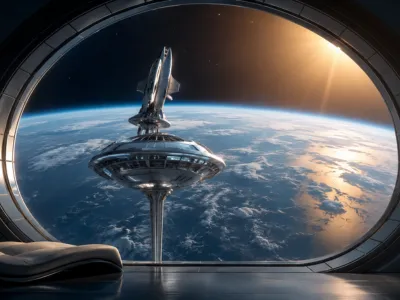
Future space logistics will shift from direct single-launch missions to a staged system built around orbital infrastructure that functions as interplanetary ports and fuel depots. Instead of carrying all fuel from Earth, spacecraft will assemble, refuel, and depart from platforms in Earth and lunar orbit, including stations like Gateway and commercial low Earth orbit hubs. A key component of this system is the propellant depot, which enables spacecraft to launch lightly from Earth, refuel in space, and then travel with far larger payloads, fundamentally improving efficiency and enabling sustainable deep-space missions.
Building this orbital ecosystem requires advanced capabilities such as in-space construction, autonomous docking, and cryogenic fuel storage. Robotic systems will assemble large structures like power arrays and satellites, while standardized docking and refueling protocols form an interplanetary shipping container system for spacecraft interoperability. This creates a specialized network of vehicles—cargo ships, crew transports, tankers, and tugs—working together in a coordinated space economy that supports long-term exploration and infrastructure expansion beyond Earth.
| Infrastructure Type | Primary Location | Key Function | Enabling Technology |
|---|---|---|---|
| Commercial LEO Stations | Low Earth Orbit (400-1000 km) | Research, Tourism, Microgravity Manufacturing, Staging | Reusable Crew/Cargo Vehicles, Life Support |
| Cislunar Gateway | Near-Rectilinear Halo Orbit (NRHO) around Moon | Lunar Access Point, Deep Space Lab, Communications Relay | Solar Electric Propulsion, High-Power Comms |
| Propellant Depots | Lagrange Points (EML1/2), LEO, Lunar Orbit | Orbital Refueling, Enabling Heavy Payloads to Deep Space | Cryogenic Fluid Management, Autonomous Rendezvous |
| Space Tugs / Orbital Transfer Vehicles | LEO to GEO, Cislunar Space | Satellite Delivery/Service, Debris Removal, Station Reboost | High-Efficiency (SEP/NEP) Propulsion |
Looking further ahead, the concept of a spaceport on the lunar surface gains traction. Using locally sourced materials for construction and propellant, a lunar base could launch missions into cislunar space and to other planets with far less energy than launching from Earth's deep gravity well. The Moon becomes a strategic waypoint and supply base. Similarly, the moons of Mars, Phobos and Deimos, have been proposed as potential staging posts and radiation-shielded habitats for controlling surface operations. This layered, networked infrastructure—from LEO stations to lunar gateways to Martian moons—creates a resilient and flexible transportation system for the solar system, turning single-destination missions into a continuous flow of traffic and commerce.
Interstellar Aspirations
Interstellar travel is far beyond current capabilities due to immense distances like the 4.3 light-years to Alpha Centauri and the strict speed limit of light, making human missions impossible without breakthroughs in fundamental physics or radically new spacecraft concepts. As a result, near-term efforts focus on robotic exploration, especially ultra-light probes such as those proposed by Breakthrough Starshot. These robotic interstellar probes could potentially travel at a fraction of light speed and return the first direct data from other star systems within a human lifetime.
For human missions, proposed ideas range from massive multi-generational “worldship” arks to highly speculative faster-than-light concepts like Alcubierre warp drives or wormholes, which require exotic physics such as negative energy density that remains unproven. More realistic but still extremely challenging options include fusion or antimatter propulsion, which could theoretically reach 10–20% of light speed. Even then, hazards such as interstellar dust and radiation make the interstellar medium itself becomes a navigational hazard, demanding advanced shielding and engineering solutions far beyond current technology.
Despite these obstacles, research into interstellar travel drives major advances in propulsion, energy systems, materials science, and artificial intelligence. It also encourages a long-term perspective on humanity’s future beyond the solar system. Even if crewed missions are centuries away, developing technologies like fusion propulsion, robotic probes, and deeper understanding of spacetime lays the foundation for future exploration. Ultimately, the pursuit of the stars acts as a catalyst for technological and scientific progress.
Ethical & Governance Frameworks
The rapid acceleration of space capabilities, both governmental and commercial, is outstripping the development of the necessary legal and ethical frameworks to guide this new frontier. The current cornerstone of space law, the 1967 Outer Space Treaty, establishes space as the "province of all mankind" and forbids national appropriation. However, it is ambiguously silent on critical modern issues like private property rights, resource extraction, environmental protection of celestial bodies, and liability in a crowded orbital environment. As missions transition from explration to exploitation, this legal vacuum poses a significant risk of conflict and unsustainable practices.
The issue of space resource utilization is particularly contentious. While the Artemis Accords, signed by a growing number of nations, promote the idea that resource extraction is permissible, other states argue it could lead to de facto appropriation. Clear rules are needed to prevent a "first come, first served" scramble that disadvantages emerging space nations. Furthermore, the ethical implications of altering other worlds—planetary protection—must be balanced with the need for human settlement. How do we avoid biological contamination of Mars while establishing a permanent presence? This requires international consensus on sterilization protocols and protected scientific zones.
Orbital space around Earth is a finite natural resource, and the proliferation of satellite mega-constellations for global internet is dramatically increasing congestion. The risk of cascading collisions, known as Kessler Syndrome, threatens to render valuable orbital shells unusable for generations. Effective governance must mandate end-of-life disposal, impose strict collision avoidance standards, and potentially establish traffic management systems akin to air traffic control for space. This is no longer a theoretical concern but an urgent operational necessity to preserve the space environment for future use. Without binding international regulations, the tragedy of the commons in orbit is a likely outcome.
- 🧫 Planetary Protection & Contamination: Establishing protocols to preserve the scientific integrity of other worlds (forward contamination) and protect Earth's biosphere from potential extraterrestrial materials (backward contamination).
- 🛰️ Space Debris Mitigation & Remediation: Creating legally binding standards for satellite design, disposal, and active debris removal to ensure long-term orbital sustainability.
- 🌕 Lunar & Martian Settlement Governance: Defining the legal status of habitats, the rights and responsibilities of settlers, and mechanisms for dispute resolution beyond Earth's jurisdiction.
- ⚖️ Equitable Access & Benefit-Sharing: Developing frameworks to ensure that the benefits of space exploration, including scientific data and economic gains, are shared broadly among all nations.
- 🚫 Militarization & Weaponization: Reinforcing and updating treaties to prevent an arms race in space and maintain the peaceful use of outer space.
The governance challenge extends to the far future and interstellar possibilities. If an interstellar probe or crewed mission were to discover life, even microbial, what ethical directives should guide our interaction? Who speaks for Earth? These questions necessitate a proactive, multidisciplinary dialogue involving scientists, ethicists, lawyers, and policymakers. The framework built today will set the precedent for centuries to come. It must be robust enough to ensure safety and equity, yet flexible enough to accommodate unforeseen technologies and discoveries. The sustainable and peaceful future of space travel depends as much on our wisdom in crafting these rules as on the rockets we build.