Mechanisms of Neural Rewiring
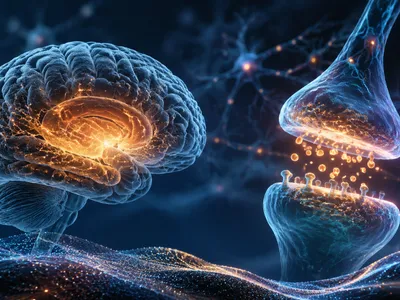
The brain's plastic capabilities are supported by a complex array of cellular and molecular mechanisms operating at different scales. At the synaptic level, Hebbian plasticity remains a core principle, where repeated co-activation of neurons strengthens the connections between them. This is often summarized as "cells that fire together, wire together," primarily through mechanisms like long-term potentiation (LTP) and long-term depression (LTD).
Beyond synaptic efficacy, structural plasticity involves the actual remodeling of neuronal arbors. Dendritic spines, the primary sites of excitatory synapses, can change their shape, size, and number within minutes. Adult neurogenesis, the birth of new neurons, occurs in specific niches like the hippocampal dentate gyrus, providing a substrate for new learning and memory integration.
These micro-scale changes are coordinated by a symphony of molecular signals. Neurotrophins such as Brain-Derived Neurotrophic Factor (BDNF) act as critical fertilizers for neural growth and synaptic strengthening. Immediate early genes are rapidly expressed following neural activity, initiating cascades that stabilize long-term plastic changes.
The following table categorizes the primary forms of neural plasticity, illustrating their distinct spatial scales and temporal dynamics.
| Type of Plasticity | Spatial Scale | Key Process | Typical Timeframe |
|---|---|---|---|
| Synaptic Plasticity | Microscopic (Synapse) | LTP, LTD, changes in receptor density | Milliseconds to days |
| Structural Plasticity | Cellular (Neuron) | Dendritic spine dynamics, axonal sprouting | Hours to weeks |
| Neurogenesis | Cellular (Neural Progenitor) | Birth, migration, and integration of new neurons | Weeks to months |
| Cortical Map Reorganization | Macroscopic (Network) | Shifting of functional representation areas | Days to years |
At the systems level, large-scale networks demonstrate profound adaptability. For instance, in individuals who are blind, the occipital cortex, typically dedicated to vision, can be recruited for enhanced tactile or auditory processing. This cross-modal reassignment highlights the competitive nature of brain territories, where functional real estate is allocated based on experiential demand. The principal cellular players and their roles in this rewiring process can be succinctly summarized.
- 🧠 Neurons: The primary functional units that modify their synaptic connections and, in limited regions, can be newly generated.
- 🧬 Glial Cells (Astrocytes & Microglia): Active participants that modulate synaptic plasticity, provide metabolic support, and prune unnecessary connections.
- 🩸 Vascular Endothelial Cells: Facilitate plasticity through angiogenesis, ensuring increased blood flow to active neural regions.
- 🧩 Extracellular Matrix: Provides the physical scaffold and chemical environment that permissively or restrictively guides neural reorganization.
How Does Experience Shape the Brain?
Every skill learned and every memory formed leaves a trace in the brain's physical architecture. This experience-dependent plasticity is the mechanism through which interaction with the environment refines neural circuits. Learning to play a musical instrument, for instance, leads to measurable expansion in the motor and auditory cortices, alongside strengthened connections between these regions.
Such enrichment contrasts sharply with the effects of sensory deprivation. Studies show that reduced input can lead to the weakening of connections and the loss of cortical territory for the deprived sense. This competitive dynamic ensures that neural resources are allocated efficiently, favoring ffrequently used pathways. The brain's map of the body, the somatosensory homunculus, is not fixed but continuously updated.
Intensive training, such as that undertaken by athletes or jugglers, induces significant increases in gray matter density in relevant brain areas. These structural changes are correlated with performance improvements and demonstrate that sustained, focused practice is a powerful driver of neuroplastic adaptation.
The table below contrasts the neural consequences of enriched versus deprived environments, highlighting the bidirectional nature of experience-dependent change.
| Type of Experience | Primary Neural Correlates | Functional Outcome |
|---|---|---|
| Enriched Learning (e.g., music, language) | Cortical expansion, increased synaptic density, white matter integrity | Enhanced perceptual and motor abilities, cognitive reserve |
| Sensory Deprivation (e.g., loss of vision, hearing) | Cortical map reorganization, cross-modal plasticity | Compensatory sharpening of remaining senses |
| Skill Acquisition (e.g., juggling, typing) | Increased gray matter volume in specific motor/sensory areas | Automation of complex tasks, improved efficiency |
Lifespan Plasticity and Critical Periods
Plasticity is a lifelong phenomenon, but its nature and intensity fluctuate across the human lifespan. Early development is characterized by exuberant plasticity, driven by an overproduction of synapses followed by a period of selective pruning. This process is guided by genetic programs and early sensory experience, carving efficient neural circuits from a dense, initial substrate.
Certain cognitive and sensory functions have critical periods—highly sensitive windows during which appropriate environmental input is essential for normal circuit development. The classic example is the development of binocular vision in the visual cortex, which requires coordinated input from both eyes during early childhood. The molecular brakes on plasticity, such as the maturation of inhibitory networks and the formation of perineuronal nets, help stabilize neural circuits after these sensitive periods.
Contrary to old dogma, the adult and aging brain retains a significant capacity for change, termed adult plasticity. However, this plasticity often requires greater effort, more repetition, or stronger motivation to engage. It may rely more on the modulation of existing connections than the large-scale structural overhaul seen in youth.
In aging, plasticity mechanisms can become less efficient or maladaptive. While learning remains possible, the rate of acquisition may slow. Some evidence suggests that the maintenance of cognitive function in healthy aging is linked to the preservation of plastic capacities, including the potential for compensatory reorganization where alternative neural networks are recruited to perform tasks.
The following timeline illustrates the shifting dominance of different plastic mechanisms and their associated triggers from childhood through to old age.
| Life Stage | Dominant Plasticity Mode | Key Triggers & Constraints |
|---|---|---|
| Early Childhood | Experience-Expectant / Critical Periods | Sensory input, genetic programs, synaptic pruning |
| Adolescence | Network Refinement & Specialization | Social experience, executive function development |
| Adulthood | Experience-Dependent / Learning-Induced | Skill acquisition, focused practice, environmental novelty |
| Older Age | Compensatory / Adaptive Reorganization | Cognitive training, maintenance of activity, brain injury response |
The brain's plastic potential is influenced by a complex interplay of intrinsic and extrinsic factors across the lifespan. Genetic predispositions set the baseline, but lifestyle choices have a profound moderating effect. Engaging in continuous learning, physical exercise, and maintaining rich social interactions are potent enhancers of plasticity. These activities promote the release of neurotrophic factors, reduce iinflammation, and provide the novel stimuli that challenge neural networks. Conversely, chronic stress, poor sleep, and sensory impoverishment can suppress plastic mechanisms and accelerate cognitive decline. The core principles governing lifespan plasticity can be distilled into several key points.
- 1. Plasticity is state-dependent, meaning the brain's readiness to change is modulated by arousal, attention, and reward signals.
- 2. The plasticity paradox lies in the need for both stability to retain identity and skills, and flexibility to learn new information.
- 3. Interventions are most effective when they are timed appropriately within sensitive windows or when they leverage the brain's residual capacity for change in adulthood.
- 4. Lifelong plasticity is not uniformly positive; it can also underlie maladaptive changes seen in chronic pain, tinnitus, and some psychiatric disorders.