Neurons and Electrical Dialect
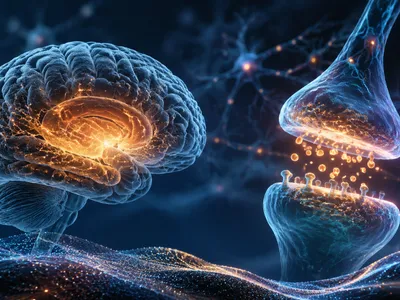
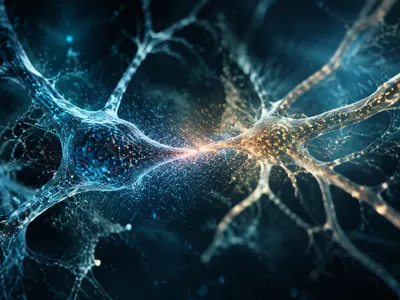
The foundational language of the brain is an electrochemical dialect spoken by billions of neurons. These specialized cells communicate through rapid changes in membrane potential, generating stereotypical electrical pulses known as action potentials or spikes.
This electrical signaling represents the primary neural code for information transfer within and between functional brain networks. The precise timing, rate, and synchronization of these spikes across populations of neurons are believed to encode sensory inputs, motor commands, and cognitive states.
- 💡 Action Potentials: All-or-none electrochemical pulses that form the basic unit of neural communication.
- 💡 Local Field Potentials (LFPs): Lower-frequency signals reflecting the summed synaptic activity of neuronal ensembles.
- 💡 Oscillations: Rhythmic patterns of activity (e.g., alpha, beta, gamma bands) linked to specific brain functions and states.
The intrinsic noise within these biological systems, alongside the sheer complexity of parallel signal streams, presents a fundamental challenge for interpretation. Brain signal processing aims to translate this cacophony of voltage fluctuations into a coherent understanding of underlying neurophysiological events and computational principles. The neuron's electrical dialect is both the raw data and the cipher for understanding brain function.
Capturing the Brain's Symphony
Acquiring neural data requires sophisticated neurotechnology, each method offering a unique trade-off between spatial resolution, temporal resolution, and invasiveness. The choice of modality dictates the nature of the signals available for subsequent processing and the questions that can be addressed.
Electroencephalography (EEG) records electrical activity from the scalp, providing excellent millisecond-scale temporal resolution ideal for studying fast neural dynamics and event-related potentials. However, its spatial resolution is poor due to signal blurring by the skull and scalp. Conversely, functional Magnetic Resonance Imaging (fMRI) measures the hemodynamic response, an indirect correlate of neural activity, with high spatial resolution but sluggish temporal response.
Intracranial methods, such as electrocorticography (ECoG) and stereotactic EEG (sEEG), place electrodes directly on or within the brain, capturing signals with high fidelity in both temporal and spatial domains. Single-unit and multi-unit recordings use microelectrodes to isolate the activity of individual or small groups of neurons, providing the most granular view of the neural code. Magnetoencephalography (MEG) detects the minute magnetic fields generated by neural currents, offering good temporal and better spatial resolution than EEG.
The characteristics of signals from these diverse modalities are summarized below.
| Modality | Spatial Resolution | Temporal Resolution | Invasiveness |
|---|---|---|---|
| Single-Unit Recording | Micron-scale (single neuron) | Millisecond (<1 ms) | High (invasive) |
| ECoG / sEEG | Millimeter (neural population) | Millisecond (1-5 ms) | High (invasive) |
| EEG | Centimeter (brain region) | Millisecond (1-5 ms) | Non-invasive |
| MEG | Millimeter to Centimeter | Millisecond (1-5 ms) | Non-invasive |
| fMRI | Millimeter (voxel) | Second-scale (~1-3 s) | Non-invasive |
Each recording technology captures a different vantage point on neural activity, necessitating tailored processing pipelines to extract meaningful biological information from the raw voltage or imaging data. The choice of acquisition tool fundamentally shapes the signal processing challenges and opportunities.
Which Neural Features Improve BCI Performance?
Following algorithmic processing, the distilled data must be transformed into informative, discriminative, and computationally efficient representations known as features. This stage, feature engineering, is arguably the most pivotal determinant of success in decoding neural activity and constructing viable brain-computer interfaces.
Effective features capture the essence of neural modulation related to a specific task or state while remaining robust to noise and non-stationarities. For motor imagery BCIs, the band power in sensorimotor rhythms (mu, 8-13 Hz; beta, 13-30 Hz) is a classic feature, quantified through variance estimation in specific frequency bands. In cognitive neuroscience, phase-amplitude coupling between low and high-frequency oscillations has emerged as a critical feature for investigating cross-frequency communication and hierarchical processing in cortical networks. Other sophisticated features include measures of functional connectivity, such as coherence or phase-locking value, which reflect the dynamic synchronization between distant brain regions.
- ⏱️ Temporal Features: Signal amplitude, latency of event-related potentials, or waveform morphology.
- 📊 Spectral Features: Power within defined frequency bands (delta, theta, alpha, beta, gamma).
- 🌊 Time-Frequency Features: Power dynamics captured through wavelet coefficients or spectrograms.
- 🔗 Connectivity Features: Metrics of statistical dependence or information flow between distinct neural sources.
The art of feature selection involves balancing discriminative power with generalizability, often employing statistical tests or machine learning wrappers to identify the most relevant feature subset and prevent overfitting. Superior feature engineering often outperforms mere algorithmic complexity in real-world applications.
Translating Signals into Action
The ultimate application of brain signal processing lies in creating closed-loop systems that interpret neural activity to drive external devices or modulate the nervous system itself.
Motor neuroprosthetics decode movement intention from cortical signals to control robotic limbs or computer cursors, employing decoders like Kalman filters or population vector algorithms that translate neural spiking patterns into kinematic parameters. Communication BCIs offer a vital pathway for individuals with locked-in syndrome, enabling letter selection via P300 event-related potentials or oscillatory modulation.
In the clinical realm, real-time signal processing is integral to responsive neurostimulation for epilepsy, where algorithms detect seizure onsets from intracranial EEG to deliver targeted electrical stimulation, aborting theictal event. Similarly, closed-loop deep brain stimulation for Parkinson's disease adjusts stimultion parameters based on sensed beta-band power, moving beyond fixed, continuous paradigms. These applications highlight the shift from passive monitoring to adaptive, intelligent neurotechnologies that interact directly with the brain's dynamic state.
This translational pipeline—from acquisition to decoding to actuation—creates a direct conduit between neural intention and tangible output, restoring lost function or augmenting human capabilities. The reliability of these systems hinges entirely on the robustness of the upstream signal processing chain, demanding millisecond-latency and high-fidelity performance in unconstrained environments. Brain signal processing thereby transitions from an observational science to a core engineering discipline for building interactive neurotechnology.