Mapping Neural Connectivity Across the Human Brain
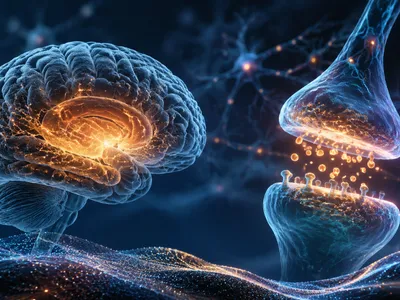
The human brain is not a monolithic entity but an intricate network of billions of neurons. Neural connectivity mapping seeks to comprehensively chart these biological wiring diagrams. It aims to move beyond static anatomical locations to understand the dynamic communication pathways that underpin all brain function.
This foundational concept posits that cognition emerges from network interactions. The brain's organization is characterized by a hierarchical structure with specific modules for localized processing. The ultimate goal is to create a complete connectome, a comprehensive map of neural connections within a brain.
Mapping Methodologies and Evolving Technologies
A diverse array of tools is required to map the brain's multi-scale architecture, from synaptic junctions to long-range tracts. Each technique offers a unique window into the brain's structural and functional organization. The choice of methodology depends on the desired resolution, scale, and whether the focus is on anatomy or activity.
- 🧠 Diffusion Magnetic Resonance Imaging (dMRI) reconstructs white matter pathways by tracking water molecule diffusion.
- 🧲 Functional MRI (fMRI) infers functional connectivity from correlated blood flow patterns across regions.
- ⚡ Electroencephalography (EEG) and Magnetoencephalography (MEG) provide millisecond-level temporal resolution of neural dynamics.
- 🔬 Histological techniques and electron microscopy offer synaptic-level detail but are invasive and post-mortem.
Recent advances in high-field MRI and optical imaging are pushing the boundaries of spatial resolution in vivo. Computational tractography algorithms have become more sophisticated, though they still face challenges in accurately resolving complex fiber crossings.
Multimodal integration is now the gold standard, combining data from several methods to create more accurate and comprehensive maps. This approach mitigates the individual limitations of any single technique, offering a richer, multi-faceted view of brain networks.
The following table summarizes the primary modalities used in modern connectomics, highlighting their key characteristics and trade-offs.
| Modality | Primary Measure | Scale | Key Advantage | Main Limitation |
|---|---|---|---|---|
| Diffusion MRI (dMRI) | White Matter Tracts | Macro (mm) | In vivo structural mapping | Indirect inference, limited resolution |
| Functional MRI (fMRI) | Blood Oxygenation | Macro (mm) | Whole-brain functional networks | Slow temporal response (seconds) |
| Electron Microscopy | Synaptic Connections | Micro (nm) | Ultra-high structural resolution | Invasive, ex vivo, tiny samples |
| Optical Imaging | Neural Activity | Meso (µm) | High spatiotemporal resolution | Limited depth, often invasive |
Each methodological leap brings us closer to a more complete understanding, yet also reveals the staggering complexity of the neural landscape. The field continues to evolve through both technological innovation and novel analytical frameworks.
The Connectome as a Dynamic Entity
Early connectome models risked portraying the brain as a static network. Contemporary research definitively rejects this notion, revealing the connectome as a profoundly dynamic system. Its architecture is continuously shaped and reshaped by experience, learning, and environmental input.
Neuroplasticity operates across multiple timescales, from rapid synaptic modulation to the slow growth of new connections. This malleability is the fundamental biological substrate for memory formation and behavioral adaptation. Functional connectvity, measured at rest or during tasks, exhibits moment-to-moment fluctuations that correlate with cognitive states.
Longitudinal studies track how neural pathways strengthen, weaken, or reroute over time. This dynamism is not merely reactive but also follows innate developmental programs. Critical periods in brain development are characterized by especially high levels of connective reorganization and pruning.
The brain's dynamic capacity is modulated by various factors including neurochemical signaling, sleep cycles, and even gut microbiome interactions. This ongoing reconfiguration means a single structural snapshot is insufficient; the connectome must be understood as a lifelong process of iterative rewiring. Connectivity is therefore a verb as much as a noun, representing an ongoing dialogue between structure and function.
Decoding Cognition and Disease
Connectivity mapping provides a powerful framework for linking specific network configurations to cognitive processes and behavioral outputs. Distinct patterns of functional integration and segregation are associated with executive function, memory retrieval, and social cognition. This moves neuroscience beyond simplistic localization models.
In clinical neuroscience, connectomics has revolutionized the understanding of neurological and psychiatric disorders. Conditions like Alzheimer's disease, schizophrenia, and autism spectrum disorder are increasingly framed as dysconnectivity syndromes. Abnormalities are often found in the strength and topology of connections rather than in isolated brain regions.
The search for reliable biomarkers leverages machine learning to identify unique connectomic fingerprints of disease. These network-based biomarkers hold promise for earlier diagnosis, before overt symptoms appear. They also offer a more granular view of disease subtypes, moving towards personalized medicine.
A key analytical shift involves examining the collective properties of entire networks. Metrics like global efficiency (how quickly information travels) and modularity (how segregated into communities a network is) are quantified. Disorders often manifest as a shift in these global topological metrics, indicating a fundamental disruption in network economy.
The following table outlines how major neurological and psychiatric conditions manifest as specific alterations in large-scale brain network organization, highlighting the shift from a focal lesion model to a network dysfunction paradigm. This perspective underscores that clinical symptoms arise from distributed network failures rather than damage to single nodes.
| Disorder | Key Network(s) Affected | Primary Connectivity Alteration | Clinical Correlation |
|---|---|---|---|
| Alzheimer's Disease | Default Mode Network (DMN) | Progressive disintegration and reduced long-range connectivity | Memory loss, disorientation |
| Schizophrenia | Fronto-temporal, Salience Network | Reduced segregation (blurred boundaries) and disrupted hub integrity | Psychosis, cognitive deficits |
| Autism Spectrum Disorder | Whole-brain, Social Brain Networks | Local over-connectivity with long-range under-connectivity | Social challenges, repetitive behaviors |
| Major Depressive Disorder | Default Mode, Cognitive Control Networks | Hyperconnectivity within DMN, reduced anti-correlation with control networks | Rumination, impaired executive function |
Therapeutic interventions, including transcranial magnetic stimulation and targeted cognitive therapies, are now being guided by connectomic maps to modulate specific dysfunctional circuits. This network-centric approach provides a mechanstic explanation for symptoms and a direct target for intervention, representing a paradigm shift in both understanding and treating brain disorders. The diseased brain is often a mis-wired brain, and repair requires correcting the network's faulty wiring diagram.