The Fundamental Nature of Quantum Noise
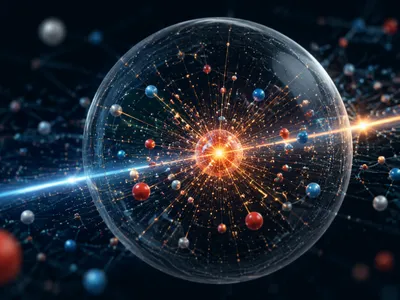
Quantum noise represents the fundamental and unavoidable disturbances that disrupt the state of a quantum system, imposing the primary barrier to practical quantum computation and sensing. Its origins are deeply rooted in the principles of quantum mechanics itself, distinguishing it from classical technical noise through its profoundly non-deterministic character. This intrinsic randomness arises from the quantum vacuum fluctuations and the Heisenberg uncertainty principle, which sets a fundamental limit on the simultaneous knowledge of conjugate variables like position and momentum.
Experimental platforms encounter noise from multiple, often interacting, channels. Environmental decoherence is the dominant source, where a quantum system loses its information to the surrounding bath through processes like photon emission or lattice vibrations. Control imperfections in microwave pulses or laser beams introduce coherent errors, while material defects in substrates and Josephson junctions generate spatially complex noise landscapes. The spectral density of this noise, typically following power-law distributions like 1/f, dictates its temporal correlation and mitigation complexity.
A critical framework for understanding noise impact is the Bloch-Redfield formalism and Lindblad master equation, which mathematically describe open quantum system dynamics. These models treat the environment as a Markovian or non-Markovian bath, allowing physicists to quantify decoherence rates—the T1 (energy relaxation) and T2 (phase decoherence) times. The intricate interplay between different noise sources often leads to complex error mechanisms that are not simply additive, requiring sophisticated characterization tools like noise spectroscopy to map their spectral features accurately for targeted suppression strategies.
The characterization of noise is not merely an experimental challenge but a theoretical prerequisite for designing robust quantum protocols. Techniques such as dynamical decoupling sequences and randomized benchmarking are employed to probe the noise spectrum. This detailed understanding reveals that quantum noise is not a monolithic entity but a superposition of effects with distinct origins, frequencies, and coupling strengths to the quantum degree of freedom, necessitating a layered approach to its reduction.
Quantum Coherence and Its Fragility
The preservation of quantum coherence is the central challenge in quantum information science, as it enables the superposition and entanglement that provide a computational advantage. Coherence refers to the stability of the phase relationships between different quantum states in a superposition. Its fragility stems from the system's inevitable interaction with its environment, a process termed decoherence, which transforms pure quantum states into statistical mixtures and erases quantum information.
Decoherence pathways are manifold and system-dependent. For superconducting qubits, dielectric loss and quasiparticle poisoning are key concerns; for trapped ions, magnetic field fluctuations and background gas collisions dominate; in semiconductor spin qubits, nuclear spin baths create a formidable noise source. Each platform exhibits unique noise susceptibilities, but the universal consequence is the exponential decay of off-diagonal elements in the system's density matrix. The timescale for this decay, the coherence time, is the primary metric for a quantum system's quality.
Engineers and theorists combat this fragility through both passive and active measures. Passive protection involves intelligent qubit design, such as developing transmon qubits with reduced charge noise sensitivity or designing clock states in atomic systems that are first-order insensitive to field fluctuations. Active techniques involve real-time feedback and error correction, which actively detect and reverse the effects of noise. The overarching goal is to extend coherence times sufficiently to allow for the execution of complex quantum algorithms, making the fight against decoherence synonymous with progress in the field.
The pursuit of longer coherence times has led to the discovery of operational sweet spots, where the qubit frequency becomes locally flat with respect to a specific noise parameter. Operating at these bias points can dramatically reduce dephasing. Furthermore, the concept of decoherence-free subspaces and noiseless subsystems utilizes symmetry principles to encode information in states that are inherently immune to certain collective noise processes. These strategies highlight the deep connection between understanding coherence loss and developing intrinsic hardware resilience.
Practical Strategies for Noise Mitigation
A multi-layered architectural approach is essential for suppressing quantum noise, integrating methods from the physical qubit level to the algorithmic layer. Initial strategies focus on improving the qubit's intrinsic coherence through advances in materials science and nanofabrication, directly attacking the sources of environmental coupling. Beyond these hardware-centric improvements, a suite of active stabilization techniques operates in real-time to correct for fluctuating control parameters and slow environmental drift, forming a critical first line of defense.
Effective noise mitigation requires precise knowledge of the dominant error mechanisms. The following table categorizes primary noise sources alongside their corresponding first-order mitigation techniques, illustrating the targeted nature of modern quantum engineering.
| Noise Source | Physical Origin | Primary Mitigation Strategy |
|---|---|---|
| Dephasing (T₂) | Low-frequency magnetic/charge flux noise | Dynamical decoupling, Spin echo, Sweet-spot operation |
| Energy Relaxation (T₁) | Spontaneous emission; capacitive loss | Purcell filtering; high-purity materials; qubit design optimization |
| Control Amplitude Noise | Imperfect pulse generation & delivery | Closed-loop feedback; DRAG pulses; optimal control (GRAPE) |
| Cross-Talk | Unwanted inter-qubit coupling | Frequency allocation; custom coupling architectures; grounded couplers |
At the control pulse level, advanced waveform engineering techniques like Derivative Removal by Adiabatic Gate (DRAG) pulses correct for leakage errors and finite bandwidth effects. Similarly, optimal control algorithms such as Gradient Ascent Pulse Engineering (GRAPE) numerically desiign pulses that are maximally robust against specific known noise spectra. These software-defined control methods effectively transform a fragile quantum operation into a resilient one without modifying the underlying hardware, showcasing the power of quantum control theory.
The hardware-software co-design philosophy is paramount. Implementing these strategies often involves a careful trade-off between speed, fidelity, and complexity. For instance, a longer, more complex pulse shape may yield higher fidelity but exposes the qubit to decoherence for a greater duration. The most successful mitigation protocols are therefore those developed with a deep understanding of the specific processor's noise profile, which is obtained through rigorous and continuous characterization cycles. Key active stabilization protocols include:
- Real-time frequency tracking: Continuously calibrating qubit frequencies against a drifting environmental reference.
- Active reset protocols: Rapidly cooling qubits to their ground state using measurement and conditional feedback.
- Parametric pumping: Suppressing specific noise modes by injecting out-of-phase signals to cancel their effect.
- Dynamic voltage leveling: Adjusting control line voltages to compensate for slow drift in attenuator performance.
The Role of Quantum Error Correction
Quantum Error Correction represents the foundational theoretical framework for achieving fault-tolerant quantum computation, moving beyond mitigation to provide active protection. QEC encodes a single piece of logical quantum information—a logical qubit—across a collection of multiple, error-prone physical qubits. This redundancy allows for the continuous detection and correction of errors without collapsing the delicate quantum state, provided errors occur at a rate below a specific threshold. The fundamental operation involves measuring error syndromes through ancillary qubits to diagnose errors while preserving the logical information.
The surface code has emerged as the leading QEC architecture due to its relatively high error threshold and compatibility with planar qubit connectivity. Its operations are based on measuring the joint parity of groups of physical qubits, which reveals the presence of bit-flip or phase-flip errors without indicating the exact state of the data qubits. The power of this topological code lies in its ability to treat errors as strings; only errors that form a chain connecting two boundaries of the lattice cause a logical failure, making it highly robust against sparse, local noise.
Implementing QEC introduces its own set of practical challenges. The syndrome extraction circuits themselves are prone to errors, and the measurement of ancilla qubits must be both fast and high-fidelity to provide useful feedback. Moreover, the process of decoding the syndrome measurements into the most probable error chain—a computationally complex task—must be performed in real-time by a classical co-processor.
The resource overhead, measured in the number of physical qubits required per logical qubit, is substantial, often cited in the thousands for meaningful algorithmic applications, defining the major engineering hurdle for scalable quantum computing.
| QEC Code | Key Innovation | Error Threshold | Physical Qubits per Logical Qubit (approx.) |
|---|---|---|---|
| Surface Code | Topological protection; planar connectivity | ~1% | 100 - 1000s |
| Color Code | Transversal Clifford gates; single-shot correction | Lower (~0.1%) | Higher than surface code |
| Bosonic Codes (Cat/Bin) | Encodes in harmonic oscillator; inherent noise bias | Higher for specific noise | 1 oscillator (but requires high-quality hardware) |
Dynamical Decoupling Techniques
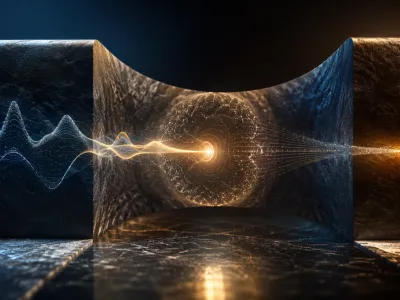
Dynamical decoupling (DD) is a powerful and widely adopted method for suppressing decoherence by applying a sequence of precise control pulses to a qubit. These sequences function as a coherence-preserving filter, effectively averaging out the low-frequency environmental noise that causes dephasing. The simplest example, the Hahn echo, uses a single π-pulse to reverse the sign of static inhomogeneities and recover lost phase information, extending the observable coherence time.
Advanced DD sequences, such as the Carr-Purcell-Meiboom-Gill (CPMG) and Uhrig dynamical decoupling (UDD), generalize this concept. They employ carefully timed sequences of pulses to spectrally shape the filter function of the qubit, making it insensitive to noise across specific frequency bands. The UDD sequence, in particular, is provably optimal for suppressing dephasing from a generic bosonic bath when the pulse intervals are chosen according to a specific mathematical prescription, offering superior performance for non-Markovian noise environments.
The practical implementation of DD requires careful consideration of pulse imperfections. Finite-width pulses and errors in their rotation angles can themselves become a source of error, limiting the gains from longer, more complex sequences. Consequently, robust sequences like the XY4 and its family have been developed, which cycle through different axes of rotation to compensate for these systematic control inaccuracies. This self-compensating property makes them indispensable tools in experimental quantum science, allowing for effective coherence protection even with imperfect hardware.
Dynamical decoupling is not limited to single-qubit phase preservation. It finds critical application in protecting entangled states and quantum memories, and forms the foundational layer for more complex quantum error correction protocols. The choice of sequence is dictated by the known noise spectral density, the available control fidelity, and the specific quantum task at hand. The table below compares key characteristics of prominent DD families.
| Sequence | Design Principle | Noise Suppression Band | Robustness to Pulse Errors |
|---|---|---|---|
| Hahn / Spin Echo | Single refocusing pulse | Static / quasi-static | Low |
| Carr-Purcell-Meiboom-Gill (CPMG) | Periodic, equidistant π-pulses | Narrow band around inverse spacing | Moderate |
| Uhrig Dynamical Decoupling (UDD) | Non-equidistant, optimal timing | Broadband, higher frequencies | Low |
| XY4 / KDD | Cyclic permutation of rotation axes | Broadband, general dephasing | Very High |
Software-Based Error Mitigation
Software-based error mitigation (EM) encompasses a class of post-processing techniques that improve the accuracy of quantum computation results without requiring additional physical qubits for full error correction. These methods operate under the assumption of a characterizable error model, using classical computation to invert or linearize the effects of noise on measured outputs. Unlike fault tolerance, EM does not promise the suppression of errors during the computation itself but provides a cost-effective path to more accurate results on near-term, noisy devices.
A canonical example is Zero-Noise Extrapolation (ZNE), which deliberately scales the noise strength in a circuit—often by stretching gate times or inserting identity operations—and then extrapolates the measured expectation values back to the zero-noise limit. This technique leverages the often predictable functional dependence of an error on a controllable parmeter, though its success hinges on accurate noise amplification and the absence of non-linear error cascades. Similarly, Probabilistic Error Cancellation (PEC) represents ideal quantum operations as linear combinations of noisy, implementable operations, then uses classical post-processing to cancel out the expected bias.
Another powerful approach is Measurement Error Mitigation, which constructs a confusion matrix to characterize the misassignment probabilities of computational basis states during readout. By inverting this matrix, one can statistically correct the counts from a quantum processor's shots. Closely related is the use of symmetry verification, where the results of a quantum circuit are post-selected based on known symmetries of the target problem, such as total particle number in quantum chemistry, discarding outcomes that violate these laws due to hardware errors.
These software techniques are inherently scalable only to a point, as the required characterization overhead can grow exponentially with circuit size or qubit count for general error models. Their true power lies in hybrid quantum-classical algorithms like the Variational Quantum Eigensolver (VQE), where they can significantly boost the quality of results obtained from shallow-depth circuits. By trading classical computational overhead for quantum resource demands, error mitigation forms a crucial bridge between the NISQ era and the future of fault-tolerant quantum computing.
Material Science and Noise Suppression
The pursuit of quieter quantum hardware is fundamentally a materials science challenge, targeting the microscopic origins of noise. Innovations in substrate materials, such as high-resistivity silicon or sapphire, aim to minimize dielectric loss by reducing the density of two-level systems (TLS) that interact with qubits. Similarly, advances in superconducting film deposition and surface treatment techniques directly suppress quasiparticle generation and mitigate the effects of magnetic vortices, which are major sources of energy relaxation and flux noise in superconducting circuits.
Material interfaces represent the most critical and problematic regions, where defects, trapped charges, and amorphous oxides create complex noise landscapes. Atomic-scale precision in fabrication, including the use of epitaxial aluminum on silicon and molecular beam epitaxy for compound semiconductors, is essential for creating cleaner interfaces.
The development of three-dimensional transmon qubits with trench capacitors and the use of low-loss dielectrics like silicon nitride are examples of how geometric and material design co-evolve to reduce participation ratios of lossy elements, thereby enhancing coherence times through intrinsic design.
A deeper understanding of noise at the atomic level is driving the exploration of novel material platforms. Superconducting qubits fabricated from tantalum have demonstrated record coherence times due to their higher-quality native oxide and reduced surface loss. In spin qubit platforms, the use of isotopically purified silicon-28 eliminates the magnetic noise from nuclear spins, creating a magnetically quiet vacuum. These efforts highlight a paradigm shift from accepting material imperfections to engineering them out at the source, a necessary step for moving beyond incremental improvements.
The following list summarizes key material-level noise sources and the corresponding engineering solutions currently under investigation in state-of-the-art laboratories. This ongoing research underscores the interdisciplinary nature of the field, requiring collaboration between quantum physicists, materials scientists, and nanofabrication engineers to systematically identify and eliminate microscopic decoherence channels.
-
Mitigation: Crystalline substrates, surface passivation, and geometry design to reduce electric field overlap.Two-Level System (TLS) DefectsAmorphous oxides and interface defects causing dielectric loss.
-
Mitigation: Ultra-high vacuum annealing, chemical etching, and magnetic shielding.Magnetic ImpuritiesUnpaired electron spins in materials and on surfaces causing flux and spin dephasing.
-
Mitigation: Semiconductor-dielectric heterostructures, offset charge insensitive qubit designs (e.g., transmon).Charge FluctuationsMobile charges in substrates and oxides causing potential fluctuations for sensitive qubits.
Future Pathways and Ultimate Limits
The trajectory of quantum noise reduction points toward increasingly integrated and autonomous error management systems. Future quantum processors will likely feature real-time adaptive control powered by machine learning algorithms that continuously diagnose and compensate for non-stationary noise. This closed-loop optimization, running on dedicated classical co-processors, could dynamically adjust qubit parameters, recalibrate gates, and select optimal error mitigation strategies in response to changing environmental conditions.
A major frontier is the development of hardware-efficient error correction codes tailored to the specific noise biases of a physical platform. Asymmetric codes that exploit the fact that phase errors are more common than bit-flip errors in some systems can rreduce the resource overhead for fault tolerance. Concurrently, the exploration of novel qubit encodings, such as Schrödinger cat qubits in parametrically driven nonlinear oscillators, offers a route to building inherent protection against certain error types directly into the quantum hardware, blurring the line between hardware and software resilience.
Fundamentally, the quest for noise reduction confronts thermodynamic and quantum mechanical limits. The quantum speed limit and energy-time uncertainty relations impose constraints on how quickly and with what energy expenditure error correction can be performed. Furthermore, the unavoidable coupling to a thermal environment at finite temperature sets a baseline for energy relaxation rates. Research into autonomous quantum error correction, which uses engineered dissipation to pump entropy out of the system without measurement, seeks to address these limits by designing systems that self-correct, much like a classical refrigerator maintains a low temperature.
The ultimate vision is a seamless, multi-scale architecture where material innovations suppress noise at its source, optimized control sequences filter out remaining environmental coupling, and efficient quantum error correction protocols provide a final layer of fault-tolerant protection. Achieving this will require co-design across every level of the stack, from atomic-scale materials growth to large-scale system integration. The final metric of success will be the demonstration of a logical qubit whose coherence and gate fidelity surpass those of its best physical constituents, marking the crossing of the fault-tolerance threshold and unlocking the full potential of quantum computation.