The Dynamic Architecture of the Brain
Brain plasticity, or neuroplasticity, constitutes the fundamental mechanism by which our neural circuitry reorganizes itself. This capacity for structural and functional change is not a peripheral phenomenon but the very substrate of learning and memory formation.
The traditional view of a hard-wired adult brain has been conclusively overturned by contemporary research. We now understand the nervous system as a dynamic organ, perpetually refining its connections in response to internal and external stimuli. This remodeling occurs at multiple scales, from the molecular adjustment of synaptic strength to the macroscopic cortical remapping observed in rehabilitation.
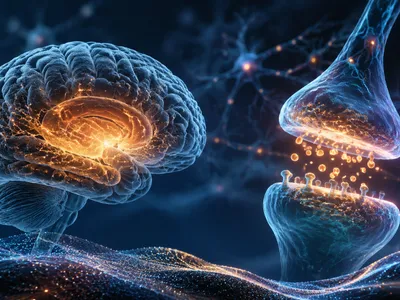
A primary site of this adaptive change is the synapse, where communication between neurons occurs. The efficiency of synaptic transmission is modulated through processes like long-term potentiation (LTP) and long-term depression (LTD). These processes strengthen or weaken synaptic connections, respectively, forming the cellular basis for encoding experience. The brain's architectural dynamism is therefore directly tied to behavioral adaptation and skill acquisition.
The following table outlines the core mechanisms and their functional roles in neuroplastic change, providing a framework for understanding its complexity.
| Mechanism | Scale of Action | Primary Role in Learning |
|---|---|---|
| Synaptic Plasticity | Cellular / Molecular | Modifies connection strength between individual neurons to encode information. |
| Structural Plasticity | Cellular / Circuit | Involves the growth of new dendrites, spines, or axons to form novel neural pathways. |
| Cortical Reorganization | Network / Systems | Reassigns functional areas of the cortex, evident in recovery from injury or expert skill development. |
Critical Periods and Lifelong Adaptation
Early development is characterized by critical periods, windows of heightened plasticity where specific neural systems are exquisitely tuned by experience. During these phases, synaptic pruning and consolidation are exceptionally active, shaping the brain's foundational architecture. The visual and auditory systems, for instance, require precise environmental input to develop normally.
While plasticity peaks in childhood, the adult brain retains a significant capacity for change, termed experience-dependent plasticity. This lifelong adaptability is more regulated and focal than in early development. It underpins our ability to learn new languages, master instruments, or navigate cognitive training regimens. The transition from critical periods to mature plasticity involves a shift in the balance between excitatory and inhibitory neurotransmission and changes in the extracellular matrix.
Factors modulating plasticity across the lifespan include neuromodulators like acetylcholine and dopamine, which signal salience and reward. Key molecular brakes on adult plasticity, such as myelin-associated inhibitors, have been identified. Understanding these regulators is crucial for developing interventions to reopen or enhance plasticity when beneficial.
Molecular Engines of Synaptic Change
The persistent modification of synaptic strength is driven by a precise cascade of molecular events. These events translate transient neural activity into durable changes in connection efficacy.
Central to this process is the NMDA receptor, a coincidence detector that requires both presynaptic glutamate release and postsynaptic depolarization to become fully activated. Its opening permits calcium ion influx, a critical second messenger that triggers downstream signaling ppathways. This calcium signal initiates the synthesis and insertion of AMPA receptors into the postsynaptic density, thereby enhancing synaptic transmission strength during LTP.
Gene expression and new protein synthesis are indispensable for the late, stable phases of plasticity. Activity-dependent transcription factors like CREB orchestrate the production of proteins that reinforce synaptic growth and stabilize new neural configurations.
Conversely, the weakening of connections via LTD involves distinct phosphatase activity and the internalization of AMPA receptors. The dynamic interplay between kinase and phosphatase enzymes maintains synaptic weight within a functional range, preventing runaway excitation or silencing. This molecular machinery is not autonomous; it is powerfully modulated by neurotrophins, such as brain-derived neurotrophic factor (BDNF), which promote synaptic survival and maturation.
The table below summarizes key molecular players and their primary functions in mediating synaptic plasticity, highlighting the intricate biochemical network involved.
| Molecular Component | Type | Function in Plasticity |
|---|---|---|
| NMDA Receptor | Ion Channel Receptor | Senses coincident activity; allows Ca2+ influx to initiate plasticity cascades. |
| CaMKII | Kinase Enzyme | A key calcium target; phosphorylates substrates to enhance synaptic transmission. |
| BDNF | Neurotrophin | Supports long-term potentiation, neuronal growth, and synaptic consolidation. |
| Arc Protein | Immediate-Early Gene Product | Critical for AMPA receptor trafficking and synapse-specific remodeling. |
The efficacy of these molecular engines is not fixed but is itself subject to modulation. Key regulatory influences that gate plasticity include the following categories, which determine whether an experience will lead to lasting neural change.
- Neuromodulatory State Dopamine, Acetylcholine
- Inhibitory Network Tone GABAergic Signaling
- Extracellular Matrix Perineuronal Nets
Enhancing Plasticity for Optimal Learning
Contemporary research seeks to safely harness the brain's plastic potential for accelerated learning and rehabilitation. Proven behavioral methods include aerobic exercise, which upregulates BDNF to stimulate neurogenesis, and targeted cognitive training designed to drive specific synaptic changes. Additionally, technological interventions like transcranial direct current stimulation (tDCS) aim to modulate cortical excitability, lowering the threshold for change. Pharmacological research explores nootropic agents that can temporarily dampen inhibitory signals or enhance neuromodulator systems, seeking to create a permissive biochemical environment for lasting plasticity.
A key governing principle is metaplasticity, where the brain's prior activity history influences its current capacity for change, necessitating precise timing in interventions to avoid triggering counterproductive homeostatic responses. Significant individual variability, shaped by genetics, age, and baseline cognitive reserve, underscores the need for personalized strategies. The future points toward synergistic multimodal protocols that combine behavioral training with adjuvant neurostimulation or pharmacological support.
The ethical implications of enhancing neuroplasticity in healthy individuals require careful scrutiny. The ultimate translational goal remains to develop safe, targeted interventions for neurodevelopmental disorders, age-related decline, and neurological recovery, turning mechanistic insight into therapeutic benefit.