The Oceanic Thermostat
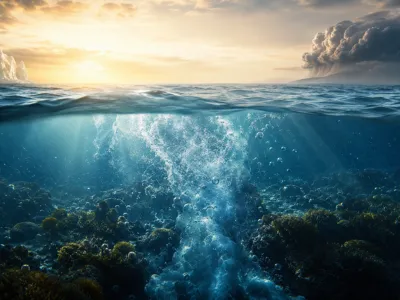
Thermal inertia, while modulating surface warming rates, results in profound oceanic heat accumulation that alters stratification and circulation patterns. The stored energy is not inert; it fuels more intense tropical cyclones, disrupts established marine ecosystems, and commits the planet to centuries of sea-level rise through thermal expansion. Understanding the precise mechanisms of this uptake—governed by complex air-sea interactions, mixed-layer dynamics, and meridional overturning circulation—is paramount for refining climate sensitivity estimates and projecting future warming trajectories with greater accuracy, moving beyond simplistic atmospheric models.
A Conveyor Belt in Peril
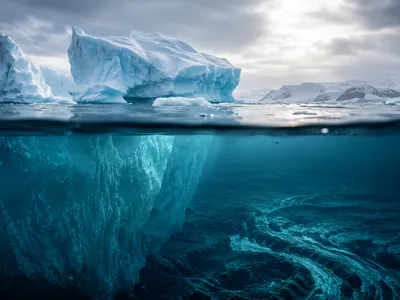
The mechanisms driving this slowdown involve enhanced freshwater input from Greenland's ice sheet melt and increased high-latitude precipitation, which reduces seawater density and inhibits the sinking crucial for the conveyor's drive. A potntial circulation collapse, a low-probability but high-impact tipping point, would reconfigure global weather patterns, threatening food and water security. Oceanographic research, through deep-sea moorings, satellite altimetry, and paleo-proxy reconstructions, provides the only viable means to assess this risk, offering critical data to constrain models that predict the resilience or vulnerability of this essential system.
The Blue Carbon Sink
Oceanic ecosystems are dynamic and crucial regulators of atmospheric carbon. Beyond mere carbon storage, blue carbon ecosystems like mangroves, seagrasses, and salt marshes sequester carbon at rates up to four times greater than terrestrial forests per unit area. Their sequestration efficiency stems from anoxic sediments that drastically slow organic matter decomposition, leading to millennial-scale carbon burial.
- 🌿 Vegetated Coastal Ecosystems: Account for approximately 50% of carbon burial in ocean sediments despite covering less than 2% of sea area.
- 🌊 Pelagic Carbon Pump: Phytoplankton photosynthesis transforms dissolved CO₂ into organic carbon, a portion of which sinks to the deep sea as "marine snow."
- 🐚 Carbonate Counter Pump: Shell-forming organisms create calcium carbonate, a process that releases CO₂ and introduces a complex, climate-sensitive feedback to the carbon cycle.
The vulnerability of these sinks to warming, acidification, and coastal development underscores a critical climate-ocean nexus. Quantifying their present and future flux requires interdisciplinary oceanography, combining biogeochemical modeling, remote sensing of primary productivity, and in-situ sediment core analysis to constrain a key uncertainty in the global carbon budget.
How Do Ocean Currents Influence Sea Level Changes?
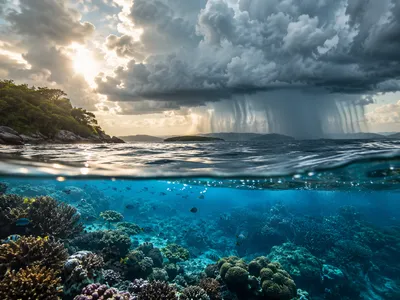
The dynamic sea-level change, caused by shifting currents and wind patterns, creates strong regional variability, with some areas experiencing rise rates twice the global mean. Furthermore, glacio-ocean interactions dominate future projections. Warm ocean currents are eroding the grounding lines of polar ice sheets from below, a process far more efficient than atmospheric melting. This marine ice sheet instability could commit the world to meters of sea-level rise over centuries, regardless of emission pathways. Accurate prediction hinges on coupling high-resolution ocean models, which simulate sub-ice-shelf cavity circulation, with ice-sheet dynamics—a frontier area where oceanographic data is the limiting factor for confidence in projections.
Satellite Eyes and Robotic Depths
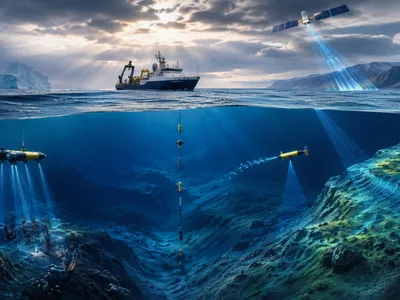
This integrated system is fundamental for initializing predictive models and detecting anthropogenic signals. Satellite altimetry provides global, high-precision measurements of sea surface height, revealing dynamic topography linked to currents and heat content, while radiometers quantify sea surface temperature and salinity with broad sptial coverage. Complementing this, a fleet of autonomous profiling floats (e.g., Argo) and gliders collects in-situ data on temperature, salinity, and biogeochemistry down to 2000 meters, capturing the ocean's interior state. The integration of these data streams through advanced assimilation techniques is what transforms raw observations into a coherent picture of oceanic heat uptake, circulation anomalies, and biogeochemical fluxes, thereby reducing critical uncertainties in climate projections and enabling near-real-time monitoring of Earth's vital signs.