The Unparalleled Laboratory
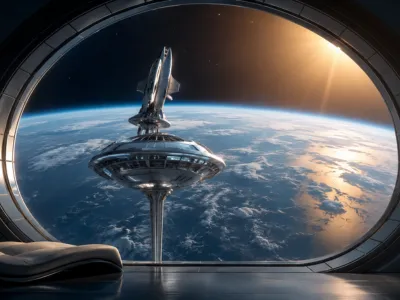
Space provides a unique environment that cannot be replicated on Earth, serving as a fundamental laboratory for scientific inquiry. The conditions of microgravity, extreme vacuum, and intense radiation enable experiments that probe the very laws of nature.
These experiments often lead to the discovery of emergent phenomena and exotic states of matter that remain hidden under Earth’s gravitational and atmospheric influence. The ability to observe cosmic events and particles directly, without the filter of our planet's protective layers, offers a pristine view of the universe's workings. This vantage point is critical for testing the universality of physical laws and for exploring the boundaries of known science. The following table contrasts key research domains accessible in space versus their terrestrial counterparts, highlighting the irreplaceable nature of orbital platforms.
| Research Domain | Terrestrial Limitations | Space-Based Advantages |
|---|---|---|
| Fluid Physics & Combustion | Convection masks diffusion; buoyancy-driven flows dominate. | Pure diffusion studies; spherical flame propagation; novel material synthesis. |
| Fundamental Physics | Gravity limits measurement precision and coherence times. | Extended free-fall enables tests of equivalence principle and quantum mechanics. |
| Materials Science | Density-driven sedimentation and convection cause inhomogeneities. | Production of ultra-pure alloys, perfect semiconductor crystals, and advanced glasses. |
How Does Space Challenge Our Understanding of Physics?
The extreme environments encountered in space act as rigorous proving grounds for established physical theories. Observations of high-energy astrophysical sources and the precise measurement of cosmic parameters consistently test the limits of models like the Standard Model of particle physics and General Relativity. Discrepancies between theoretical predictions and orbital experimental data are not failures but invaluable drivers for theoretical refinement.
For instance, the behavior of ultra-cold atoms in microgravity allows for the creation of longer-lived Bose-Einstein condensates, probing quantum phenomena at macroscopic scales. Similarly, the precise orbital measurement of the gravitational constant or the search for hypothesized dark matter particles relies on the quiet, stable environment of space. Each measurement, from the faint whispers of gravitational waves to the anisotropy of the cosmic microwave background, either confirms our models or points toward new physics, such as modified gravity or extra dimensions. The constant tension between prediction and observation is the engine of theoretical advancement in fundamental physics.
Planetary Science and Cosmic Evolution
Comparative planetology transforms our solar system into a dynamic archive of cosmic history. By analyzing the divergent evolutionary paths of Venus, Mars, and Earth, scientists reconstruct the processes that shape terrestrial worlds.
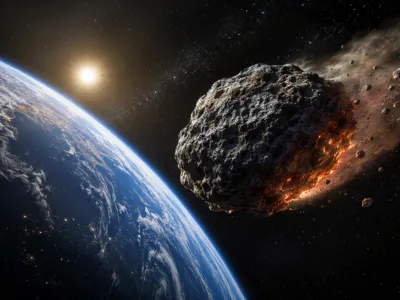
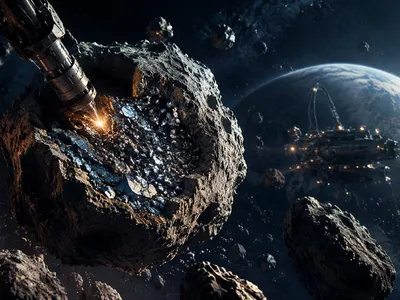
Missions to asteroids and comets provide direct access to primordial material from the solar system's formation. The study of these celestial bodies offers critical data points for models of planetary accretion and the delivery of volatiles, including water, to the inner planets.
Each planetary body acts as a natural experiment, revealing outcomes under different initial conditions and external influences. The persistent investigation of Martian geology, for instance, has unveiled evidence of ancient hydrological cycles, challenging previous assumptions about the planet's climatic history and its potential for habitability. This comparative approach is essential for cconstructing a coherent narrative of our own planet's past and future, while also informing the search for extrasolar planetary systems.
The following table summarizes key insights gained from recent robotic exploration, highlighting the role of specific mission types in advancing planetary science. These findings are not isolated facts but interconnected pieces of a grand puzzle detailing cosmic evolution.
| Target Body | Mission Type | Primary Scientific Insight |
|---|---|---|
| Mars | Rover & Orbiter | Complex ancient geochemistry suggesting persistent liquid water and dynamic climate shifts. |
| Asteroids | Sample Return | Direct evidence of pristine organic molecules and aqueous alteration in the early solar system. |
| Gas Giant Moons | Orbital Flyby | Detection of subsurface oceans and active cryovolcanism, redefining habitable zones. |
The synthesis of data from across the solar system has led to several foundational shifts in our understanding. These shifts are best encapsulated by a few core principles now guiding research in cosmic evolution.
- ⭐ Planetary formation is a non-linear process heavily influenced by late-stage bombardment and orbital migration.
- ⭐ Atmospheric evolution is driven by a complex interplay between geology, stellar radiation, and magnetic field dynamics.
- ⭐ The concept of habitability extends far beyond the traditional circumstellar zone to include icy moons with internal tidal heating.
A Catalyst for Cross-Disciplinary Innovation
Space exploration demands solutions to problems with no earthly precedent. This necessity spawns innovation that permeates countless terrestrial fields.
The development of miniaturized, radiation-hardened electronics for satellites directly enabled modern medical imaging devices. Similarly, advances in remote sensing instrumentation now provide critical data for agriculture and climate science.
The pursuit of closed-loop life support systems for long-duration missions drives breakthroughs in water purification and air revitalization technologies with profound Earth-based applications.
These technological spin-offs are not accidental byproducts but the result of directed fundamental research under extreme constraints. The challenge of sustaining human life in space, for example, has accelerated studies in plant biology, microbiology, and material science, leading to novel approaches for controlled environment agriculture and bioregenerative systems. The stringent requirements for mission success create a unique innovation pipeline where high-risk, high-reward research receives sustained investment.
The interdisciplinary nature of space missions is their defining feature. An astrophysics observatory may require advances in cryogenics, precision optics, and data transmission algorithms, fostering collaboration between physicists, engineers, and computer scientists. This convergence breaks down traditional academic silos and creates a fertile ground for disruptive technologies. The following list highlights key areas where space-driven innovation has had a transformative societal impact, demonstrating that the quest to explore the cosmos yields tangible benefits for life on Earth.
| Materials Engineering | Lightweight composites and memory alloys developed for spacecraft. | Aerospace to Automotive |
| Computer Science | Fault-tolerant computing and image analysis software for planetary rovers. | Robotics & AI |
| Environmental Science | Global atmospheric monitoring systems and pollution tracking sensors. | Climate Policy |
Observing Earth from the Cosmic Vantage Point
Satellites in orbit provide a unique, synoptic platform for studying Earth as a complete, dynamic system. This global perspective is unattainable through any network of ground-based sensors.
They enable continuous, simultaneous measurement of atmospheric, oceanic, and terrestrial phenomena across the entire planet.
Dedicated Earth science missions yield critical data on large-scale environmental processes. These spacecraft monitor climate variables, track weather patterns, and measure changes in land use, providing an objective, long-term record free from national borders. For example, missions like the Surface Water and Ocean Topography (SWOT) satellite meticulously map global waterr levels, while others like EMIT pinpoint the sources and composition of atmospheric mineral dust. This data is indispensable for developing accurate climate models, forecasting severe weather, and managing natural resources. The comprehensive view from space reveals interconnected systems, such as how deforestation in one continent can affect atmospheric circulation and rainfall patterns in another.