The Integrative Lens of Zoology
Zoology provides the essential integrative framework for deciphering animal behavior, moving beyond mere observation to a mechanistic and evolutionary understanding. This discipline synthesizes knowledge from morphology, physiology, genetics, and ecology to construct a holistic view of why animals act as they do. It transforms isolated facts into a coherent narrative about life's strategies.
The core strength of this approach lies in its rejection of singular explanation. A zoologist examining foraging behavior must consider anatomical adaptations for feeding, the metabolic physiology governing energy needs, and the ecological context of food availability and predation risk. This multi-level analysis prevents reductionist fallacies and reveals how behaviors are optimized within environmental constraints. Similarly, understanding migration requires integrating celestial navigation, endocrine control of fat deposition, and the biophysics of endurance locomotion. Only zoology's broad mandate allows for the seamless weaving of these disparate threads, demonstrating that behavior is never an isolated trait but a dynamic interface between the organism and its world.
Decoding the Language of Behavior
Observable actions constitute a complex language that zoology teaches us to translate. This involves meticulous cataloging and quantification of postures, movements, vocalizations, and chemical signals to establish an ethogram—the foundational lexicon for any behavioral study.
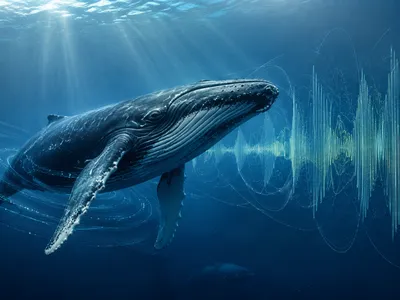
Modern tools like bioacoustic analysis, high-resolution GPS tracking, and machine learning for video analysis allow researchers to decode patterns imperceptible to the human eye. This quantitative shift moves the field from anecdotal description to predictive science, where sequences of behavior can be modeled and their adaptive significance tested. Researchers can now dissect the intricate syntax of a bird's song or the nuanced gesturl communication within a primate troop with unprecedented precision.
The table below categorizes primary modalities of animal communication, highlighting the sensory channels involved and their typical functions.
| Modality | Sensory Channel | Example Function |
|---|---|---|
| Visual | Sight | Courtship displays, threat postures |
| Acoustic | Hearing | Territorial calls, alarm signals |
| Chemical | Olfaction/Taste | Trail marking, pheromonal attraction |
| Tactile | Touch | Social bonding, grooming |
| Electroreception | Electrical fields | Navigation, prey detection (in some fish) |
Understanding the Genetic Basis of Animal Behavior
Behavior emerges from a hierarchical interplay between innate programming and environmental shaping. At its most fundamental level, genetic blueprints establish neural circuits and hormonal pathways that predispose certain action patterns.
Epigenetic mechanisms, however, demonstrate how experiences can alter gene expression, creating lasting behavioral phenotypes without changing the DNA sequence itself. This plasticity is crucial for adaptation in variable environments, allowing individuals to fine-tune their behavior based on early life conditions.
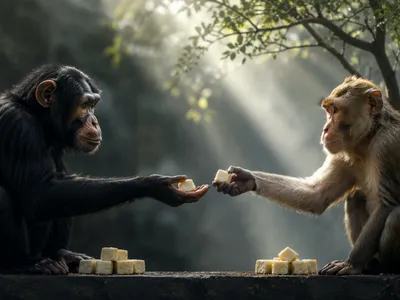
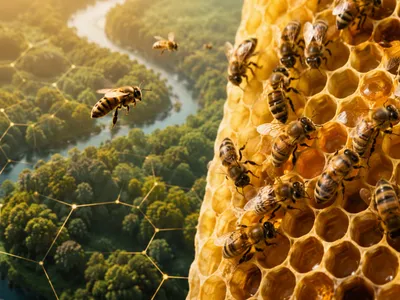
The transition from individual to collective behavior represents a pinnacle of zoological inquiry. Eusocial insects like ants and bees exhibit sophisticated division of labor, communication, and collective decision-making that transcend the capabilities of any single individual. These complex societies evolve through kin selection, where helping closely related individuals enhances the propagation of shared genes. Zoology unravels how simple behavioral rules, followed by many individuals, generate intricate and adaptive colony-level structures, from temperature-regulated nests to optimized foraging networks. The study of social mammals further reveals the cognitive and emotional foundations of cooperation, altruism, and social learning.
What Drives Behavioral Change?
Behavior is not static but a dynamic trait responsive to internal states and external cues. Motivational models, such as the concept of drives, explain how internal physiological needs like hunger or thirst create a behavioral bias towards specific goal-directed actions.
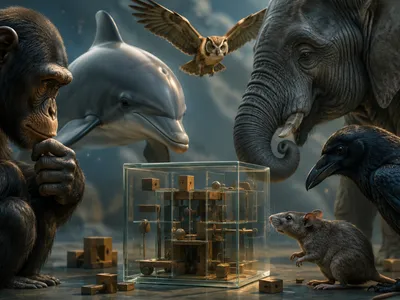
Environmental stimuli and learning then modulate these drives. Associative learning, including classical and operant conditioning, allows animals to predict outcomes and adjust their behavior for reward or to avoid punishment. Cognitive processes like spatial memory and problem-solving enable more flexible and innovative responses to novel challenges, moving behavior beyond simple stimulus-response loops. The integration of motivation, learning, and cognition is central to behavioral plasticity.
Conservation Through Behavioral Insights
Applied zoology leverages behavioral knowledge to address critical conservation challenges. Understanding species-specific needs, movement ecology, and social structures is no longer a luxury but a prerequisite for effective wildlife management and habitat preservation.
Analyzing dispersal patterns helps design wildlife corridors that facilitate genetic exchange between fragmented populations. Knowledge of mating systems and parental care is vital for the success of captive breeding and reintroduction programs, ensuring animals possess the necessary skills ffor survival. Behavioral cues often serve as early warning indicators of ecosystem distress, signaling pollution, climate change impacts, or human disturbance long before population declines become irreversible.
The following table illustrates practical applications of behavioral studies in conservation, linking specific behavioral insights to targeted management actions that enhance species survival and ecosystem integrity in the face of anthropogenic pressures.
| Behavioral Insight | Conservation Application |
|---|---|
| Migratory routes and stopover sites | Protection of critical habitats along flyways |
| Anti-predator responses to novel threats | Mitigation of human-wildlife conflict |
| Foraging specialization and diet | Restoration of key food resources |
| Acoustic communication and noise pollution | Regulation of anthropogenic noise in sensitive areas |