The Wisdom of Crowds
Contemporary zoology has profoundly shifted its understanding of group behavior, moving from viewing animal aggregations as simple herds to analyzing them as decentralized cognitive networks. This perspective reveals that complex group decisions often emerge from local interactions between individuals following simple rules.
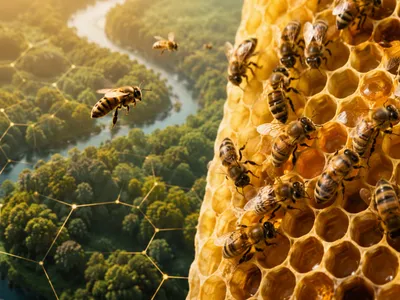
The mechanism of collective intelligence is evident in scenarios such as bird flocking, fish schooling, and insect swarm migration. Individual agents, whether starlings or ants, operate with limited information, yet their self-organization leads to robust, adaptive group outcomes that surpass the capabilities of any single member. This represents a form of distributed problem-solving central to species survival.
Research into these dynamics often utilizes computational modeling alongside field observation. The following table categorizes key examples of swarm intelligence and their primary adaptive functions observed in nature.
| Taxonomic Group | Collective Behavior | Primary Adaptive Function |
|---|---|---|
| Social Insects (e.g., Bees, Ants) | Colony-level foraging & nest site selection | Optimizing resource acquisition and habitat safety |
| Fish (e.g., Minnows, Tuna) | Coordinated schooling maneuvers | Predator confusion and hydrodynamic efficiency |
| Birds (e.g., Starlings, Pigeons) | Murmuration and collective navigation | Information sharing about routes and threats |
The robustness of such systems lies in their redundancy; the loss of a few individuals does not catastrophically compromise the group's decision-making capacity. These principles of collective computation are now informing advances in robotics and artificial intelligence.
Communication Beyond Vocalization
Many species rely on chemical cues like pheromones to convey information about reproductive status, territory, or alarm. In aquatic environments, electrocommunication in weakly electric fish and nuanced bioluminescent displays in deep-sea creatures form complex dialog. These silent channels create a continuous, often clandestine, information network.
The integration of multiple sensory modalities—such as a threat display combining visual posture, auditory hissing, and chemical secretion—enhances signal fidelity and reduces ambiguity. This multimodal signaling is cognitively demanding, requiring receivers to synthesize disparate inputs, and is linked to more complex neural processing pathways. The table below outlines primary non-vocal modalities and their roles.
| Communication Modality | Exemplar Species | Social Function |
|---|---|---|
| Chemical (Pheromones) | Ants, Moths, Mammals | Trail marking, mating readiness, kin recognition |
| Visual (Color, Gesture) | Cephalopods, Primates, Birds | Courtship, aggression, deception, status signaling |
| Tactile (Vibration, Grooming) | Social insects, Elephants, Primates | Social bonding, colony cohesion, alarm signals |
| Electrical | Weakly Electric Fish | Species recognition, dominance, spatial orientation |
Studying these systems requires specialized technology, from high-speed cameras capturing subtle gestures to gas chromatography for analyzing chemical profiles. The evolutionary drivers for such diversity often involve environmental constraints; in dense forests or dark waters, visual or chemical signals may trump auditory ones. Furthermore, the ritualization of intention movements into symbolic gestures provides a fascinating window into the potential origins of more abstract communication. Key examples of complex gestural communication are found in several clades.
- 🦍 The intricate, learned gestural repertoires of great apes, used for reconciliation, play, and instruction.
- 🐝 The symbolic "waggle dance" of honeybees, which encodes vector information about resource location.
- 🦑 Cuttlefish skin pattern sequences that change dynamically during agonistic encounters, signaling intent.
Complex Primate Politics
Primate social landscapes are arenas of sophisticated political maneuvering, where individuals employ strategies akin to human statecraft. This involves the formation and dissolution of strategic alliances, calculated acts of reciprocity, and sometimes brutal enforcement of social hierarchies. Such dynamics are not static but are continuously negotiated.
The concept of Machiavellian intelligence posits that the evolutionary pressure to navigate these complex social webs was a primary driver for advanced cognitive development in primates. Deception, third-party affiliation, and tactical deception are routinely observed, requiring an individual to model the knowledge, desires, and relationships of others—a foundational aspect of theory of mind.
High-ranking individuals, particularly alpha males in chimpanzee communities, do not maintain power through brute force alone but through managing coalitional support and occasionally mediating conflicts to gain broader group favor. This delicate balance of power means dominance is often more reltional than absolute, with subordinates sometimes forming counter-alliances to constrain a leader's aggression or overthrow them, demonstrating a nuanced, fluid political structure.
How Animal Brains Drive Social Structure in Wildlife?
The architecture of animal society is fundamentally a cognitive construct, built upon individual capacities for memory, future planning, and social evaluation. Social complexity is now understood to co-evolve with brain regions like the neocortex in mammals, enabling the processing of intricate relationship maps.
Cognitive abilities such as individual recognition, long-term social memory, and an understanding of third-party relationships are prerequisites for stable, differentiated societies. These capacities allow animals to track past interactions, form expectations, and engage in contingent cooperation, which is the glue of long-term alliances. The neural substrates for these functions, including mirror neuron systems and specialized regions for face or voice processing, are increasingly mapped across diverse taxa.
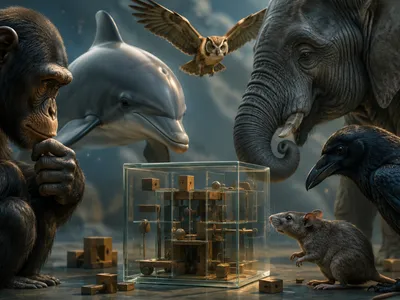
Experiments demonstrate that species like corvids and primates can plan for future social needs, not just immediate physiological ones, while emotional contagion and empathy provide an affective underpinning for prosocial behaviors. Advanced cognition transforms social living from a mere aggregation into a predictable, learnable environment.
This cognitive toolkit varies across species, leading to a spectrum of societal structures. The following list outlines key cognitive traits and their direct impact on the formation of specific social organizations, illustrating the direct link between mental capacity and group complexity.
- 🧠 Episodic-like memory: Enables tracking of reciprocal altruism and cheating across time, foundational for cooperative breeding systems.
- 👁️ Theory of mind: Permits attribute mental states to others, essential for tactical deception and complex political alliances in primates.
- 🔗 Causal reasoning: Allows prediction of social outcomes from specific actions, critical for tool-cooperation seen in dolphins and some birds.
- ❤️ Emotional regulation: Facilitates conflict inhibition and delayed gratification, necessary for maintaining cohesion in large, multi-male/multi-female groups.
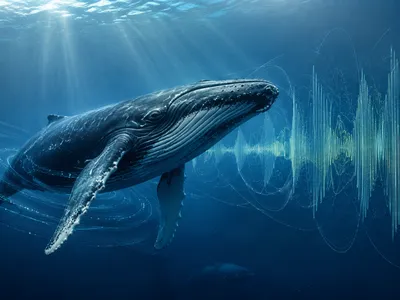
The intersection of cognitive neuroscience and behavioral ecology is thus pivotal, revealing that the societies animals build are direct reflections of their internal mental worlds. This perspctive argues against a simple environmental determinism, positioning cognition as an active, shaping force in social evolution. The emergence of culture—socially learned behaviors transmitted across generations—in species from whales to great apes stands as the ultimate testament to this cognitive foundation, creating traditions that shape foraging techniques, communication dialects, and even social norms independently of genetic change.