How Does Food Become Energy and Cellular Building Blocks?
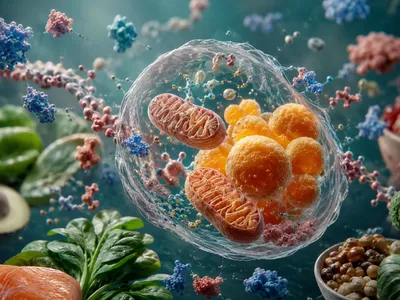
The biochemical processing of food transcends mere calorie counting, involving a complex sequence of catabolic and anabolic reactions that convert dietary intake into cellular components and energy. Macronutrients are deconstructed into their monomeric units through specific hydrolytic processes, initiating metabolic pathways that are tightly regulated by hormonal signals and allosteric effectors.
Proteins are hydrolyzed into amino acids, which then enter the liver's urea cycle or are used for de novo protein synthesis, while carbohydrates are broken down into monosaccharides like glucose to fuel glycolysis and the citric acid cycle. Lipid digestion involves bile salt emulsification and pancreatic lipase action, freeing fatty acids for beta-oxidation or membrane phospholipid construction, demonstrating how diet directly influences cellular architecture.
Micronutrients serve as essential cofactors and coenzymes for these metabolic enzymes; for instance, the mineral zinc is a structural component of over 300 enzymes, including carbonic anhydrase and alcohol dehydrogenase. The bioavailability of these nutrients, modulated by food matrix interactions and individual genetic polymorphisms in transporter proteins, critically determines the efficiency of these foundational biochemical networks.
The following table categorizes primary macronutrients and their key post-absorptive fates within intermediary metabolism.
| Macronutrient | Primary Digestive Products | Core Metabolic Pathways | Principal Cellular Outputs |
|---|---|---|---|
| Proteins | Amino Acids, Di-/Tri-peptides | Urea Cycle, Gluconeogenesis | Enzymes, Structural Proteins, NTPs |
| Carbohydrates | Glucose, Fructose, Galactose | Glycolysis, Pentose Phosphate Pathway | ATP, NADPH, Ribose-5-Phosphate |
| Lipids (Triglycerides) | Monoglycerides, Free Fatty Acids | Beta-Oxidation, Lipogenesis | Acetyl-CoA, Membrane Components, Signaling Molecules |
Enzymes The Invisible Workforce in Home and Industry
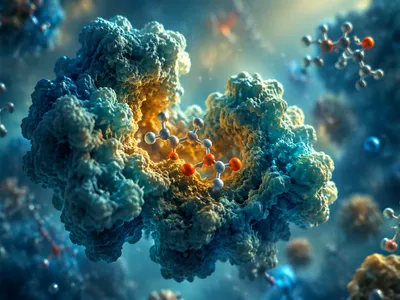
Enzymes are biological catalysts that accelerate chemical reactions by several orders of magnitude through precise transition-state stabilization, a principle exploited extensively in household and industrial contexts. Their specificity arises from the unique three-dimensional geometry of the active site, which binds substrates through iinduced fit, a concept extending far beyond textbook diagrams into daily applications.
In the home, protease enzymes in laundry detergents hydrolyze peptide bonds in protein-based stains like blood or grass, while amylases target starchy residues. These enzymes are engineered for stability under alkaline conditions and cooler water temperatures, showcasing how enzyme kinetics and denaturation profiles are pragmatically manipulated.
Industrial biotechnology employs immobilized enzymes in continuous flow reactors for producing everything from high-fructose corn syrup using glucose isomerase to antibiotics via penicillin acylase. The optimization of reaction conditions—pH, temperature, and substrate concentration—is critical for maximizing yield and enzyme longevity in these processes.
The biochemical rationale for common enzymatic applications is outlined below.
- 🧀 Food Processing: Rennet (chymosin) in cheese manufacturing cleaves kappa-casein to precipitate milk curds. Pectinases clarify fruit juices by degrading cell wall pectin.
- 🍞 Baking: Fungal amylases convert starch to fermentable sugars for yeast, while proteases modify gluten strength to control dough elasticity and texture.
- ⛽ Biofuels: Cellulase and hemicellulase enzyme cocktails break down lignocellulosic biomass into simple sugars for subsequent fermentation into ethanol.
- 🧬 Molecular Diagnostics: DNA polymerases from extremophiles (Taq polymerase) enable the polymerase chain reaction (PCR), fundamental to modern genetic testing and forensics.
Neurotransmitters and Mood
The biochemical underpinnings of emotion and cognition are governed by complex neurochemical signaling, where neurotransmitters act as crucial chemical messengers at synaptic junctions. Their synthesis, release, reuptake, and degradation are dynamic processes that directly influence psychological states, with imbalances frequently correlated with mood disorders. This intricate system exemplifies how cellular biochemistry manifests in macroscopic human experience.
Serotonin, synthesized from the essential amino acid tryptophan via the rate-limiting enzyme tryptophan hydroxylase, modulates mood, appetite, and sleep. Its levels are influenced by dietary precursor availability and the activity of the serotonin transporter (SERT), a target for many antidepressants. Similarly, dopamine pathways, originating from tyrosine hydroxylation, mediate reward, motivation, and motor control.
The monoamine hypothesis has evolved to acknowledge downstream effects on neurotrophic factors like BDNF and intracellular second messenger systems. Chronic stress can elevate cortisol, which alters neurotransmitter receptor expression and hippocampal plasticity. Interventions, including SSRIs, function by blocking presynaptic reuptke pumps, increasing synaptic neurotransmitter concentration and initiating adaptive neuronal changes over weeks, demonstrating that acute chemical alteration is only the first step in a longer biochemical cascade toward homeostasis.
Biochemical Foundations of Personal Care Products
Modern personal care formulations are sophisticated applications of colloid and surface chemistry, designed to interact with the skin and hair at a molecular level. The stratum corneum, the skin's outermost layer, functions as a lipid-rich barrier, and product efficacy hinges on penetrating or reinforcing this structure without causing irritation or disruption.
Surfactants, amphiphilic molecules with hydrophilic heads and hydrophobic tails, are the workhorses of cleansing products. They lower water's surface tension, emulsifying oils and suspending dirt for removal. The critical micelle concentration (CMC) is a key parameter determining cleansing efficiency, while the hydrophilic-lipophilic balance (HLB) dictates a surfactant's suitability for creams versus shampoos.
Moisturizers operate through a combination of occlusive, humectant, and emollient mechanisms. Occlusives like petrolatum form a hydrophobic film to reduce transepidermal water loss. Humectants such as glycerin and hyaluronic acid, a glycosaminoglycan, bind water via hydrogen bonding. Emollients like squalene fill intercellular spaces in the stratum corneum, smoothing the skin surface. The following list details key ingredient classes and their biochemical roles.
- 🧴 Alpha-Hydroxy Acids (AHAs): Glycolic and lactic acid act as chemical exfoliants by disrupting corneosome desmosomal attachments in the stratum corneum, promoting cell turnover and reducing hyperkeratinization.
- ☀️ Sunscreen Actives: Organic filters like avobenzone absorb high-energy UV photons, converting them to harmless heat through photoisomerization. Inorganic filters like zinc oxide reflect and scatter radiation.
- 🛡️ Antioxidants: Vitamins C (ascorbic acid) and E (tocopherol) scavenge reactive oxygen species (ROS) generated by UV exposure, preventing oxidative damage to lipids, proteins, and DNA within dermal cells.
- 💧 Ceramides: These endogenous sphingolipids are essential for the lamellar structure of the skin barrier. Topical application of synthetic ceramides can replenish deficits associated with dryness and conditions like eczema.