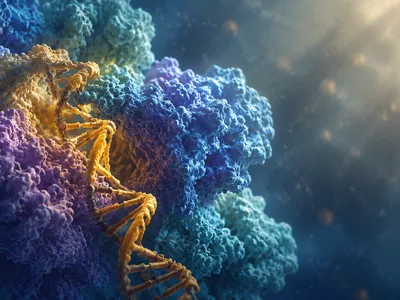
Proteins as Therapeutic Engineers
Contemporary biochemistry exploits proteins as versatile therapeutic engineers. These molecular machines are redesigned to perform precise functions within the human body.
Proteolysis-targeting chimeras exemplify this engineering, directing the ubiquitin-proteasome system to degrade specific proteins. This strategy is effective against previously undruggable targets.
The computational approach of de novo protein design generates entirely novel amino acid sequences that fold into stable, functional structures. Machine learning models predict how these sequences will behave, enabling the creation of proteins with custom binding sites or enzymatic activities.
Directed evolution remains a complementary and powerful tool for optimizing protein function through iterative cycles of mutation and selection. It has been instrumental in enhancing the affinity of therapeutic antibodies. The convergence of rational design and evolutionary techniques accelerates therapeutic development.
How RNA Modifications Regulate Cellular Functions?
Epitranscriptomics studies chemical modifications on RNA molecules. These modifications dynamically regulate gene expression without altering the DNA sequence.
N6-methyladenosine (m6A) is the most prevalent mRNA modification. It influences RNA stability, translation, and splicing processes in cells.
The installation and removal of m6A are catalyzed by writer and eraser enzymes, respectively. RNA methyltransferases like METTL3/METTL14 complexes add the mark, while ALKBH5 proteins can remove it. Dysregulation of these enzymes is linked to various cancers and developmental disorders.
Reader proteins, such as the YTHDF family, recognize m6A marks and recruit effector complexes to determine RNA fate. This epitranscriptomic layer provides a rapid response mechanism to cellular stimuli. Targeting this regulatory axis offers novel therapeutic strategies for diseases like leukemia.
Key techniques driving epitranscriptomics research include:
- MeRIP-seq (Methylated RNA Immunoprecipitation Sequencing) for transcriptome-wide m6A mapping.
- SCARLET for single-site resolution analysis of modifications.
- Photocrosslinking-based methods to study RNA-protein interactions in vivo.
Can Metabolic Reprogramming Expose Cancer Vulnerabilities?
Modern biochemistry reframes diseases as manifestations of metabolic reprogramming. This perspective identifies novel intervention points by targeting the altered biochemical fluxes within cells.
Cancer cells exhibit the Warburg effect, a preference for glycolysis even under oxygen-rich conditions. This metabolic shift supports rapid biomass production and creates a unique biochemical vulnerability.
The discovery of oncometabolites, such as 2-hydroxyglutarate in certain gliomas, directly links metabolic enzyme mutations to epigenetic dysregulation and tumorigenesis. Inhibiting the mutant isocitrate dehydrogenase enzyme has emerged as a successful targeted therapy, demonstrating that metabolic enzymes are druggable targets. This approach validates metabolism as a central pillar in oncology.
The table below contrasts key metabolic hallmarks in normal versus cancerous cells, highlighting specific therapeutic targets.
| Metabolic Process | Normal Cell Phenotype | Cancer Cell Aberration | Therapeutic Target Example |
|---|---|---|---|
| Glucose Metabolism | Oxidative Phosphorylation | Aerobic Glycolysis (Warburg Effect) | Hexokinase II inhibitors |
| Glutamine Metabolism | Nitrogen source for biosynthesis | Essential carbon and nitrogen source | Glutaminase inhibitors |
| Lipid Synthesis | Regulated, demand-driven | Constitutively activated | Fatty acid synthase (FASN) inhibitors |
| Mitochondrial Function | Intact TCA cycle, ATP production | TCA cycle disruption, ROS signaling | Electron transport chain complex I inhibitors |
How Microfluidics Accelerates Industrial Enzyme Engineering?
Industrial biocatalysis is evolving towards synthesizing complex, non-natural molecules. This requires moving beyond the enzyme's native catalytic repertoire.
A major frontier is enzyme promiscuity engineering. Researchers deliberately exploit an enzyme's side activity toward a non-native substrate, then optimize it through directed evolution.
The integration of artificial abiotic cofactors expands the chemical space accessible to biocatalysts. These synthetic molecules can mediate redox reactions or facilitate bond formations not found in nature, effectively creating artificial metalloenzymes with novel functions. This hybrid approach merges the precision of enzymes with the versatility of synthetic chemistry.
A significant technical leap is the development of ultrahigh-throughput screening platforms. Microfluidic droplet systems compartmentalize single enzyme variants with substrate, allowing the screening of millions of candidates in a single day based on fluorescent or growth-coupled outputs, dramatically accelerating the discovery cycle for industrial biocatalysts and paving the way for more sustainable chemical manufacturing processes.
Decoding Cellular Conversations with Spatial Omics
Spatial omics technologies map biomolecules within their native tissue context. They reveal how cellular organization influences function.
Techniques like spatial transcriptomics capture gene expression data while preserving location. This allows researchers to identify molecular neighborhoods.
The integration of multiplexed protein imaging with transcriptomics provides a multi-omic view of tissue architecture. This approach can pinpoint signaling pathways active in specific cell communities, such as those in the tumor microenvironment. This contextual data is transformative for understanding complex diseases.
A comparative analysis of leading spatial omics platforms highlights their distinct capabilities and optimal applications. The choice of technology depends on resolution, multiplexing capacity, and the type of analyte measured, which directly impacts the biological questions that can be addressed. The following table summarizes key parameters for three major platforms, guiding experimental design in fields like neuroscience and oncology.
| Platform | Analyte | Spatial Resolution | Multiplexing Capacity | Primary Application |
|---|---|---|---|---|
| Visium (10x Genomics) | mRNA | 55 µm | Whole transcriptome | Gene expression mapping in tissue sections |
| CODEX | Protein | ~1 µm | 40+ markers | High-plex protein imaging in intact tissues |
| MERSCOPE | mRNA | Subcellular (~100 nm) | 1000+ genes | Single-cell and subcellular transcriptomics |
Machine Learning Predicts Molecular Function
Machine learning algorithms decode complex patterns from vast biochemical datasets. They predict molecular behavior with increasing accuracy.
Deep neural networks now routinely predict protein three-dimensional structures from amino acid sequences. This capability was a longstanding challenge in biochemistry.
For drug discovery, models are trained to predict binding affinities between small molecules and target proteins. These in silico screens accelerate lead compound identification.
A significant advancement is the use of generative models to design novel drug-like molecules or optimized enzyme sequences. These models learn the underlying distribution of known functional molecules and propose new candidates with desired properties. This shifts the paradigm from screening to designing therapeutics.
The successful application of machine learning in biochemistry relies on several critical, interlocking components. High-quality, curated datasets form the foundation, while appropriate model architectures capture the complexity of molecular interactions. Robust validation aagainst experimental data ensures predictions translate to the real world. The following list outlines the essential pillars supporting this computational revolution.
- Large-scale, annotated datasets: Public repositories like the Protein Data Bank and ChEMBL provide the structured data necessary for training.
- Geometric deep learning: Graph neural networks and other architectures that inherently model molecular structures and relationships.
- Active learning cycles: Iterative frameworks where model predictions guide new experiments, which then refine the model. This creates a virtuous cycle of discovery.
- Explainable AI (XAI): Methods to interpret model decisions, moving beyond "black box" predictions to gain mechanistic insights.