Deep Time Detectives
Geologists operate as forensic scientists of Earth's distant past, deciphering events that occurred long before human record-keeping. They rely on the fundamental principle of uniformitarianism, which posits that present geological processes are the key to understanding the past.
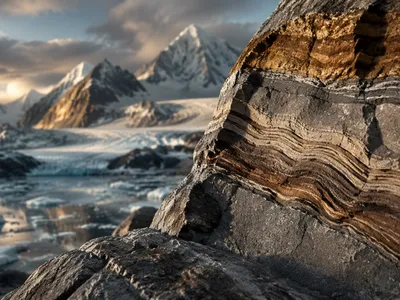
This interpretative work begins with meticulous field observation, where the geometry and relationships between rock units are mapped. The concept of superposition in sedimentary sequences provides a relative timeline, placing older layers beneath younger ones.
Cross-cutting relationships offer further chronological clues, as a fault or igneous intrusion must be younger than the rock it disrupts. These relative dating methods construct a sequential narrative without providing absolute ages, forming the essential first step in any geological investigation. The real transformation in this detective work came with the advent of radiometric techniques, allowing detectives of deep time to assign numerical ages to mineral crystals with remarkable precision.
Key principles used to reconstruct geological history include the following foundational concepts.
- Original Horizontality: Sediments are originally deposited in horizontal layers.
- Lateral Continuity: Layers extend laterally until they thin out or meet a barrier.
- Faunal Succession: Fossil assemblages succeed each other in a definite, recognizable order.
Mineral Messengers of Planetary Change
Minerals are not static entities but dynamic recorders of environmental conditions during their formation. Their composition, crystal structure, and inclusion trails preserve snapshots of pressure, temperature, and fluid chemistry. Certain minerals, known as index minerals, are stable only within specific pressure-temperature windows, making them reliable metamorphic grade indicators.
The study of metamorphic petrology hinges on interpreting these mineralogical changes to reconstruct tectonic events like continental collisions. For instance, the presence of coesite, a high-pressure polymorph of quartz, within a continental rock is definitive evidence of its deep subduction and subsequent exhumation. Similarly, the sequential appearance of minrals like chlorite, biotite, garnet, and sillimanite in a rock sequence charts a path of increasing metamorphic intensity. These silent messengers thus narrate stories of mountain building and crustal thickening.
The table below outlines key mineral systems and the specific planetary processes they help to constrain, demonstrating their role as diagnostic tools.
| Mineral or Mineral System | Process Recorded | Key Information Provided |
|---|---|---|
| Zircon (ZrSiO₄) | Magmatism, Crustal Evolution | U-Pb crystallization age, trace element signatures, Hf isotope ratios for crustal provenance. |
| Coesite / Stishovite | High-Pressure Metamorphism | Evidence of ultra-high pressure conditions (>2.5 GPa), indicative of subduction to mantle depths. |
| Magnetite (Fe₃O₄) | Paleomagnetism | Records Earth's past magnetic field orientation and polarity, critical for plate reconstructions. |
| Evaporites (e.g., Halite, Gypsum) | Paleoclimate / Paleohydrology | Indicate arid conditions, closed basin hydrology, and past seawater composition. |
What Do Isotopes Reveal?
Isotopic systems serve as precise geochemical chronometers and thermometers, unlocking quantitative data about Earth's history. The decay of radiogenic isotopes within minerals provides absolute ages for rocks and geological events.
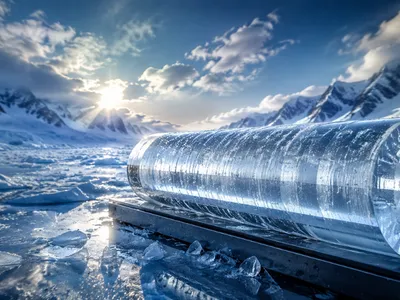
Stable isotope ratios, particularly of oxygen and carbon, act as sensitive proxies for past temperatures and biogeochemical cycles. Marine carbonate shells record the oxygen-18 to oxygen-16 ratio of ancient seawater.
Analyzing these ratios in deep-sea cores allows scientists to reconstruct detailed paleoclimate records, effectively reading ancient weather reports from microscopic fossils. This geochemical toolkit transforms rocks into high-fidelity archives of environmental change.
Sedimentary Archives and Climate Chronicles
Sedimentary basins accumulate continuous records of Earth's surface processes, preserving physical, chemical, and biological signals.
These strata contain a suite of climate proxies, such as grain size, mineralogy, and organic geochemistry, which respond predictably to environmental conditions. For example, finely laminated varves in lake sediments provide annual resolution, chronicling seasonal changes over millennia.
The following table categorizes major types of sedimentary climate proxies and the specific environmental parameters they help to decipher.
| Proxy Type | Example Material | Environmental Parameter |
|---|---|---|
| Physical | Grain size, clay mineralogy | Transport energy, source weathering intensity |
| Chemical | Carbonate δ¹⁸O, Mg/Ca ratios | Seawater temperature, ice volume |
| Biological | Pollen, foraminifera assemblages | Vegetation type, sea surface temperature |
| Biogeochemical | Alkenones, TEX₈₆ | Past sea surface temperature |
Ocean sediments offer particularly long and continuous sequences, with microfossil assemblages and isotopic signatures spanning millions of years. These marine archives are crucial for constructing gglobal climate models that test predictions about future change, linking deep-time analogs to modern anthropogenic warming.
Key insights derived from sedimentary climate archives include the following fundamental discoveries.
- 🌍 The identification of Milankovitch cycles in sediment records confirmed orbital forcing as a primary driver of Ice Age glaciations.
- 🔥 Sedimentary evidence proved the occurrence of hyperthermal events, rapid global warming episodes linked to massive carbon release.
- 🌊 Records of oceanic anoxia reveal the expansion of oxygen-minimum zones during past warm periods, offering a critical ancient analog.
The Unseen Biosphere Beneath Our Feet
A profound geological revolution has uncovered a vast, living world within Earth's crust, the deep biosphere. This subterranean realm hosts microbial communities that exist independently of solar energy, thriving in pore spaces and fractures down to several kilometers.
These endolithic organisms derive energy from chemosynthesis, utilizing hydrogen, methane, or sulfur compounds generated from water-rock interactions. Their metabolic processes, operating on geological timescales, significantly influence subsurface geochemistry by catalyzing mineral precipitation and dissolution.
This deep life challenges our definitions of planetary habitability and suggests that biogeochemical cycles extend far deeper than previously imagined. The exploration of this hidden ecosystem relies on sophisticated drilling campaigns and stringent contamination controls to retrieve authentic samples from great depths.
The primary energy sources that fuel life in this dark, pressurized environment are varied and fundamentally different from surface ecosystems.
- Radiolysis: Water split by radiation from radioactive minerals produces hydrogen and oxidants.
- Serpentinization: A hydration reaction of ultramafic rock that releases hydrogen and methane.
- Acetogenesis: The microbial production of acetate from hydrogen and carbon dioxide.
- Anaerobic Methane Oxidation: A key process often coupled with sulfate reduction.
Reading Catastrophes in the Rock Record
Earth's history is punctuated by abrupt, high-magnitude events that have left indelible signatures in strata worldwide. The forensic identification of these events relies on discovering diagnostic markers that cannot be explained by normal sedimentary processes. The Cretaceous-Paleogene (K-Pg) boundary layer provides the archetypal example, with its global enrichment in iridium, a platinum-group element abundant in asteroids but rare in Earth's crust.
Beyond extraterrestrial impacts, the rock record chronicles immense volcanic cataclysms. Large Igneous Provinces (LIPs), representing colossal outpourings of basaltic lava over short intervals, are temporally correlated with several major extinction events. The geochemical fingerprint of these eruptions includes distinctive mercury anomalies in sedimentary archives, a proxy for massive volatile release. The synchrony between LIP emplacement and biospheric collapse is a central focus of Earth system crisis research.
Catastrophic sedimentary deposits, such as tsunami-generated megaripples or chaotic seismic shock beds, provide direct physical evidence of the energetic aftermath. These layers often contain a mix of shallow and deep-water material, indicating extraordinary transport mechanisms that scrambled normal depositional systems. Identifying such events requires separating them from similar deposits formed by purely terrestrial processes like major storms.
The following list summarizes key geological markers that serve as evidence for different types of catastrophic events in Earth's history.
- Iridium Anomaly & Shocked Quartz: Diagnostic indicators of a hypervelocity extraterrestrial impact.
- Global Mercury Anomalies: Strongly correlated with the emplacement of Large Igneous Provinces and volcanic degassing.
- Widespread Turbidite Deposits: Can indicate seismic shaking over a broad region from a megaquake.
- Rapid Carbon Isotope Excursions: Signal massive, abrupt releases of greenhouse gases into the ocean-atmosphere system.