Drilling Deep: A Look Back
The pursuit of ice core drilling began in the mid‑20th century, when glaciologists first extracted shallow firn cores from alpine glaciers. Early efforts primarily focused on annual layer counting, yet these rudimentary tubes of ice held the seed for a revolutionary climate archive.
By the 1990s, international collaborations like the Greenland Ice Core Project (GRIP) had refined deep‑drilling technology, retrieving continuous records spanning hundreds of millennia. These advances transformed paleoclimatology, allowing scientists to move beyond anecdotal evidence toward quantitative reconstructions of atmospheric composition, demonstrating how geology reveals earths history over deep time.
Tiny Bubbles, Big Stories
Within each ice core, fossil air bubbles preserve discrete samples of ancient atmospheres, effectively acting as time capsules. The physical closure of these bubbles occurs at firn depths between 50 and 120 meters, where the weight of overlying snow seals off direct exchange with the surface. Noble gas ratios in these closed bubbles provide crucial constraints on firn‑diffusion models, enabling precise dating of the trapped air relative to the surrounding ice matrix. This subtle age difference, known as Δage, is fundamental to aligning greenhouse gas fluctuations with abrupt climatic shifts recorded in the ice itself.
Analytical techniques such as laser absorption spectrometry and gas chromatography now allow researchers to measure trace gases like methane and nitrous oxide at sub‑annual resolution. Such high‑resolution data have revealed that rapid warming events during the last glacial period were accompanied by synchronous pulses of methane, suggesting a tight coupling between tropical wetland emissions and high‑latitude temperature changes. The following table summarizes key atmospheric constituents routinely extracted from these microscopic bubbles and their primary climate implications.
| Gas / Property | Climate Significance |
|---|---|
| CO₂ (carbon dioxide) | Primary long‑term radiative forcer; correlates with glacial‑interglacial cycles |
| CH₄ (methane) | Responds to hydrological changes; abrupt events mark rapid climatic reorganizations |
| δ¹⁸O of O₂ | Global ice volume proxy; tracks changes in marine biosphere productivity |
| N₂O (nitrous oxide) | Indicates terrestrial nitrogen cycling shifts during climatic transitions |
Beyond major greenhouse gases, the stable isotopic composition of the trapped air adds another layer of climatic information. For instance, the δ¹⁵N of N₂ records gravitational settling within the firn column, yielding constraints on past accumulation rates and surface temperature gradients. Collectively, these molecular remnants transform a simple cylinder of ice into a high‑fidelity atmospheric observatory that complements what can rocks tell us about ancient climates across eras spanning 800,000 years and beyond.
Decoding the Climate Thermometer
Stable water isotopes, specifically δ¹⁸O and δD, are central to ice core paleothermometry. Their temperature-dependent fractionation during moisture transport and condensation allows precise reconstruction of past surface temperatures.
Deuterium excess (d‑excess) provides additional insight into evaporation conditions at the moisture source. Combined with borehole temperature profiles, these isotopic measurements offer quantitative estimates of glacial-interglacial temperature changes, showing that polar warming often exceeded global averages, effectively turning ice layers into high-resolution climate archives spanning hundreds of thousands of years.
What Lies Beneath: Past Events
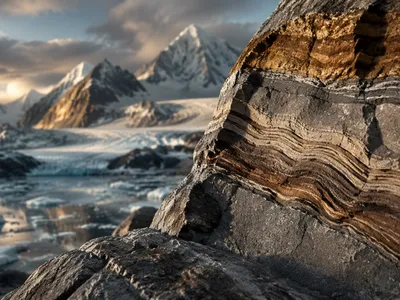
Beneath the visual stratigraphy, ice cores chronicle a series of abrupt climatic events that reshaped the Northern Hemisphere during the last glacial period. Dansgaard‑Oeschger events represent rapid warming episodes of up to 15°C in Greenland, occurring on decadal timescales.
These oscillations are often coupled with Heinrich events, massive iceberg discharge episodes from the Laurentide ice sheet that disrupted ocean circulation and triggered widespread cooling. The bipolar seesaw hypothesis elegantly explains the antiphased temperature response between the Arctic and Antarctic during these millennial‑scale shifts.
To systematically identify and correlate such events, paleoclimatologists rely on a suite of proxy indicators. The table below outlines the primary signatures used to pinpoint past abrupt transitions within ice core stratigraphy.
| Proxy Indicator | Event Signature | Typical Timescale |
|---|---|---|
| δ¹⁸O (ice) | Rapid positive shift | Decades |
| Dust concentration | Abrupt increase (cold phases) | Centuries |
| Methane (CH₄) | Concurrent rise with warming | Sub‑decadal |
| Sea salt sodium (ssNa⁺) | Peaks during Heinrich events | Millennial |
Integrating these multiple proxies reveals that climate instability was not a rare exception but a persistent characteristic of the last glacial state. The synchronicity between Greenland temperature spikes and abrupt methane rises underscores a rapid atmospheric teleconnection that linked high‑latitude warming to tropical hydrological cycles.
Tracing Human Impact Through Isotopes
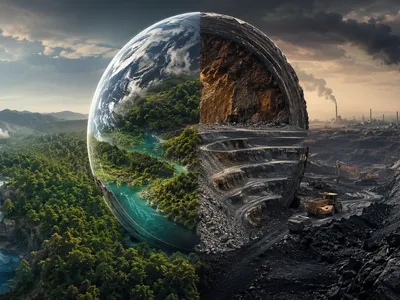
The isotopic composition of ice cores not only chronicles natural climate variability but also records the unmistakable signature of human industrial activity. Anthropogenic emissions have left a discernible imprint on atmospheric chemistry since the mid‑19th century.
High‑resolution measurements of δ¹³C‑CO₂ reveal a progressive decline beginning with the Industrial Revolution, directly reflecting the combustion of isotopically light fossil fuels. Simultaneously, black carbon concentrations from high‑latitude ice cores show a sharp rise coinciding with industrial expansion and, more recently, distinct regulation‑driven declines in specific regions. The rise of synthetic nitrogen fixation is captured through increasing δ¹⁵N in nitrate deposits, linking agricultural intensification to global nitrogen cycle disruption. Together, these molecular fingerprints transform ice cores into an unassailable record of the Anthropocene, providing a quantitative baseline against which human impact is measured.
The Delicate Archive Under Threat
The very ice that preserves Earth’s climatic memory is now vanishing at unprecedented rates. Accelerated surface melting on Greenland and mountain glaciers threatens to erase the uppermost, most recent climatic record before it can be extracted.
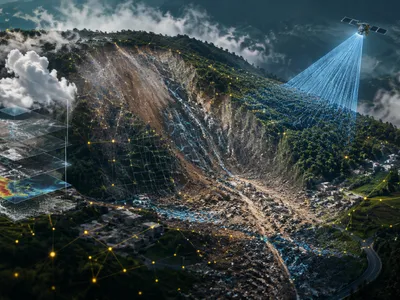
Drilling operations face logistical constraints as warming destabilizes ice sheets and alters borehole integrity. Permafrost degradation around drilling camps further complicates long‑term infrastructure, mirroring some of the terrain instability challenges found in the science behind predicting landslides.
Beyond physical loss, the scientific community confronts the ethical imperative to retrieve and archive cores from endangered sites before they disappear entirely. International initiatives like the Ice Memory Foundation aim to secure a “sanctuary” of ice cores in Antarctica, preserving these irreplaceable archives for future generations of scientists equipped with analytical techniques not yet imagined. The window for capturing pristine records from alpine glaciers and polar margins is closing rapidly, elevating the urgency of targeted drilling campaigns.