The Imperfect Fossil Record
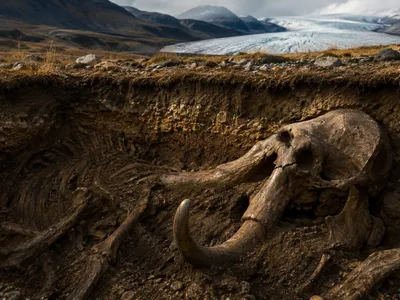
The study of ancient life relies entirely on a fragmentary and biased archive known as the fossil record. This archive is inherently incomplete because fossilization is an exceptionally rare event that requires a precise sequence of geological and biological conditions. The vast majority of organisms that have ever lived have left no tangible trace, their existence erased by the relentless processes of decay, scavenging, and erosion. Consequently, paleontologists must interpret grand narratives of evolutionary history from an extraordinarily sparse and non-random data set.
Decoding Death and Preservation
Fossilization begins not with life, but with death and the immediate post-mortem processes that either destroy or preserve an organism's remains. This initial phase, known as taphonomy, governs what information enters the geological record. The journey from a living entity to a fossil involves complex interactions between the organism's biology, the environmental context of its death, and subsequent sedimentary processes.
Rapid burial by fine-grained sediment is often critical for high-fidelity preservation.
Different modes of preservation capture varying levels of biological information. Permineralization, where minerals precipitate within porous tissues like bone or wood, retains original three-dimensional structure. In contrast, carbonization compresses organisms into a thin film of carbon, often preserving exquisite details of soft tissues in plants and some invertebrates. Exceptional fossil deposits, termed Konservat-Lagerstätten, provide rare windows into past ecosystems by preserving normally labile materials like skin, feathers, and internal organs through processes like rapid anoxic burial.
Understanding Past Life Through Trace Fossils
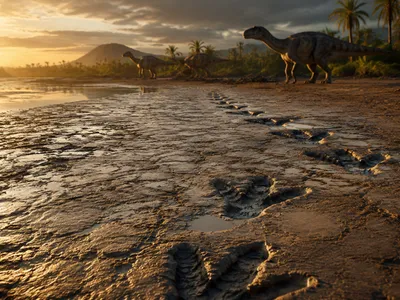
Paleontology extends far beyond the study of skeletal remains to include the investigation of trace fossils or ichnofossils. These structures are physical evidence of an organism's activity in its environment, capturing behavior frozen in time. Common examples include footprints, burrows, feeding marks, and coprolites.
The analysis of trace fossil assemblages, known as ichnofacies, allows paleontologists to reconstruct paleoenvironments with remarkable precision. A suite of deep-sea burrows indicates a specific water depth and oxygen level, while a complex network of terrestrial root traces defines ancient soils. Critically, trace fossils are almost always preserved in situ, providing unrivaled evidence for the envirnmental context and ecological dynamics of the past. They document the behavioral evolution of organisms, such as the transition from simple horizontal grazing trails in the early Paleozoic to complex three-dimensional burrowing systems that transformed seafloor substrates and ecosystem functioning.
The following behavioral categories are primarily preserved in the trace fossil record.
- 🏠 Domichnia: Permanent dwelling structures like burrows or borings.
- 🍴 Fodinichnia: Feeding traces within sediment, such as systematic mining patterns.
- 🌿 Pascichnia: Surface grazing trails left by deposit feeders.
- 🛌 Cubichnia: Resting impressions left by organisms settling on the substrate.
- 👣 Repichnia: Locomotion trails, including footprints and trackways.
The Chronological Framework
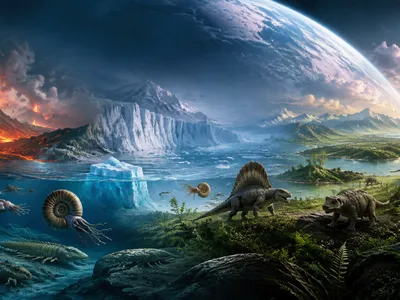
Placing ancient life within an accurate temporal sequence is fundamental to paleontological interpretation. This relies on geochronology, which combines relative dating principles with absolute radiometric techniques to build a robust timescale for Earth's history.
Relative dating, utilizing Steno's laws of superposition and faunal succession, establishes the order of events. The identification of index fossils—widespread, rapidly evolving, and easily identifiable species—enables the correlation of rock layers across vast geographical distances. To convert this relative sequence into numerical ages, scientists employ radiometric dating, which measures the decay of radioactive isotopes within volcanic minerals interbedded with fossiliferous sediments. The integration of these methods has produced the Geologic Time Scale, the essential calendar for Earth's history.
Key dating methods and their applicable time ranges are summarized in the table below, illustrating the toolkit available for chronological calibration.
| Method | Isotope System | Effective Time Range | Common Material Dated |
|---|---|---|---|
| Radiocarbon | Carbon-14 | Up to ~50,000 years | Organic matter, carbonate |
| Potassium-Argon | K-40 to Ar-40 | >100,000 years | Volcanic minerals |
| Uranium-Lead | U-238 to Pb-206 | >1 million years | Zircon crystals |
| Argon-Argon | Ar-40 to Ar-39 | >10,000 years | Volcanic ash, feldspar |
Reconstructing Ancient Ecosystems
Paleoecological reconstruction moves beyond cataloging species to synthetically modeling the structure and function of ancient ecosystems. This endeavor integrates disparate data streams: the taxonomic inventory from body fossils, behavioral and environmental data from trace fossils, and abiotic context from sedimentology and geochemistry.
A core analytical framework is the ichnofacies model, which links recurring suites of trace fossils to specific environmental conditions.
For instance, a Skolithos ichnofacies, dominated by vertical dwelling burrows in clean, shifting sands, points to high-energy, sandy shorefaces. In contrast, a Cruziana ichnofacies, with a diverse mix of horizontal feeding and grazing trails, indicates a quieter, softer seabfloor within the subtidal zone. These models are refined by recognizing sub-vironments; a single fan-delta complex can preserve distinct ichnofacies in its prodelta, distributary channel, and bar deposits, each with varying salinity, energy, and substrate stability. Beyond marine settings, terrestrial ecosystems are similarly decoded. Eolian dune fields are characterized by the Octopodichnus ichnofacies of arthropod and tetrapod tracks, while adjacent wet interdune areas may host a Scoyenia ichnofacies of horizontal burrows, together painting a picture of a dynamic desert landscape.
The behavioral data locked in trace fossils are paramount for reconstructing trophic relationships and organismal interactions that body fossils rarely capture. Feeding traces document precise predation and grazing strategies, from the systematic probing of deposit feeders to the rasping scars left by a predator on a shell. Dense, interpenetrating burrow networks (bioturbation) provide direct evidence of spatial competition within the sediment, a driver of ecological complexity. Furthermore, trace fossils uniquely record symbiotic relationships, such as the commensal organisms that iinhabited larger burrow systems. By quantifying ichnodiversity (the variety of trace fossils) and ichnofabric (the intensity of bioturbation), paleontologists can track the ecological engineering impact of organisms on their habitats and estimate the overall health, nutrient cycling, and productivity of an ancient ecosystem.
Key proxies used in quantitative paleoecological reconstructions include:
- Ichnodiversity Index Measures trace fossil variety
- Bioturbation Index Quantifies sediment reworking
- Tiering Profile Analyzes vertical occupation of substrate
Macroevolution's Grand Patterns
The fossil record is the primary archive for testing hypotheses about macroevolutionary processes—large-scale patterns of change above the species level. These include rates of diversification, the nature of evolutionary innovations, and the long-term consequences of mass extinction events.
Trace fossils provide an independent behavioral dataset to complement morphological trends from body fossils.
A powerful illustration is the Cambrian substrate revolution, a fundamental shift in seafloor ecology. Precambrian and earliest Cambrian sediments often show undisturbed microbial mats, with trace fossils limited to simple horizontal trails. Deeper vertical burrowing transformed this stable, firmground seafloor into a churned, softground substrate. This behavioral innovation by early bilaterian animals created new ecological niches, altered geochemical cycling, and irrevocably changed the selective pressures acting on all infaunal life. The escalation in bioturbation intensity through the Phanerozoic serves as a physical record of the ecological arms race driven by predation and competition.
The evolution of complex behavior can itself be analyzed phylogenetically through approaches like behavioral cladistics. By treating distinctive trace-making strategies (e.g., systematic spiral feeding, construction of lined burrows) as derived characters, researchers can construct cladograms that hypothesize the evolutionary relationships of behaviors. This reveals how complex actions, like building anastomosing gallery systems, were assembled from simpler components over geological time. Such analyses position behavior not merely as a byproduct of morphological evolution but as a potential evolutionary pacemaker, where novel behaviors establish new selective pressures that subsequently drive anatomical change.