Glymphatic Clearance During Deep Sleep
During deep sleep, the brain activates the glymphatic system, a coordinated waste-clearing process that uses glial cell dynamics and cerebrospinal fluid flow to remove metabolic byproducts from neural tissue. Slow-wave activity drives this system, pushing fluid through perivascular pathways and into brain regions where waste accumulates.
This process significantly enhances the removal of amyloid-beta and tau proteins, helping prevent toxic buildup linked to neurodegeneration. Efficient flow depends on aquaporin-4 channels in astrocytes, which become disrupted with poor sleep, reducing clearance. Imaging studies confirm that glymphatic activity is primarily tied to the sleep state, with deeper sleep enabling more effective brain maintenance.
Sleep and Synaptic Homeostasis
During wakefulness, the brain continuously strengthens synaptic connections as it processes sensory input and forms memories, leading to increased synaptic load and higher metabolic demand.
The synaptic homeostasis hypothesis suggests that sleep counteracts this buildup by globally reducing synaptic strength through a renormalization process. Evidence shows that after sleep, synaptic activity decreases while preserving relative differences formed during learning, maintaining network balance without erasing stored information.
Slow-wave activity drives this adjustment by triggering molecular mechanisms that reverse synaptic strengthening, allowing circuits to reset to an efficient baseline where new learning can occur effectively. Importantly, this scaling is selective, preserving the strongest and most meaningful connections while weakening less significant ones to maintain overall stability.
To better understand how sleep sculpts synaptic architecture, researchers examine key molecular players involved in this nightly rebalancing:
- Homer1a – An immediate early gene that accumulates during wakefulness and triggers synaptic weakening during sleep
- Arc/Arg3.1 – A plasticity protein that orchestrates the internalization of AMPA receptors to reduce synaptic strength
- eEF2 kinase – Phosphorylated during sleep to inhibit protein synthesis and favor synaptic downscaling
Disruption of this homeostatic scaling leads to aberrant synaptic potentiation, which underlies cognitive fatigue and memory consolidation deficits observed in sleep-deprived individuals. Sustained loss of synaptic downscaling also creates a permissive environment for excitotoxicity and neuronal hyperexcitability.
By resetting synaptic weights each night, the brain avoids the energetic and structural costs of unchecked synaptic growth. This nightly recalibration ensures that the same neural circuits can be repurposed the following day without losing the capacity for new plasticity.
How Deep Sleep Fortifies Memory?
Memory consolidation stabilizes fragile experiences by reactivating them during non-REM sleep. The hippocampus rapidly replays neural patterns from the day, allowing the neocortex to integrate this information into long-term knowledge structures.
This process is coordinated by thalamocortical spindles, which create brief periods of heightened plasticity and synchronize with hippocampal ripples. Strong spindle-ripple coupling enhances memory retention, while weak coordination increases the likelihood of forgetting. Different sleep stages contribute uniquely, with slow-wave sleep supporting declarative memory transfer and REM sleep refining emotional and procedural learning through distinct neurochemical conditions.
At the molecular level, synaptic tagging during sleep involves genes such as Zif268 and Arc, which are selectively reactivated to stabilize relevant synapses. Beyond strengthening, sleep reshapes memories by integrating them into existing knowledge frameworks, a process supported by prefrontal-hippocampal connectivity during slow-wave activity that enables abstraction and schema formation.
The functional architecture of memory processing across sleep stages follows a structured hierarchy:
- Sharp-wave ripples (SWRs) – Compressed replay sequences in the hippocampus that tag neural ensembles for consolidation
- Sleep spindles (12–16 Hz) – Thalamocortical oscillations that induce calcium entry and enable synaptic plasticity in the cortex
- Cortical slow oscillations (<1 Hz) – Rhythmic depolarization that groups spindles and ripples into repeating consolidation episodes
Disruption of this oscillatory hierarchy impairs memory retention more severely than total sleep deprivation of equivalent duration. Patients with sleep disorders characterized by spindle deficits consistently exhibit declarative memory impairments that correlate with reduced overnight performance gains.
Clearing Neural Debris for Renewal
Beyond soluble waste clearance, sleep initiates autophagic and lysosomal pathways that degrade damaged organelles and aggregated proteins. This intracellular sanitation process prevents the accumulation of dysfunctional mitochondria and ubiquitinated protein clusters.
The autophagy-lysosome pathway shows circadian rhythmicity, with peak activity during the rest phase in both rodents and humans. Transcriptomic analyses reveal that genes governing autophagosome formation and lysosomal acidification are synchronized by the clock machinery.
Microglial cells, the brain's resident immune sentinels, adopt a ramified morphology during sleep that facilitates surveillance and synaptic pruning. Their activation state shifts from pro-inflammatory to homeostatic, promoting synaptic refinement rather than destructive inflammation.
This nightly clearance extends to the glymphatic-associated meningeal lymphatic vessels, which drain fluid and immune cells from the central nervous system. Sleep deprivation reduces lymphatic drainage efficiency by over sixty percent, creating a reservoir of inflammatory mediators that compromise neuronal function.
The table below outlines key clearance systems activated during sleep and their primary functions in neural maintenance:
| Clearance System | Primary Function | Sleep-Dependent Mechanism |
|---|---|---|
| Glymphatic System | Interstitial fluid convection and solute clearance | Perivascular flow driven by slow-wave activity |
| Autophagy | Organelle turnover and protein aggregate removal | Circadian-regulated LC3 lipidation and lysosomal fusion |
| Microglial Pruning | Synaptic remodeling and debris phagocytosis | Transcriptional shift to homeostatic state during sleep |
Failure to activate these clearance mechanisms across successive nights produces cumulative neural injury. Extracellular tau concentration rises within a single night of sleep restriction, while chronic fragmentation accelerates markers of oxidative stress and neuroinflammation.
The therapeutic implications are substantial: enhancing sleep architecture through pharmacological or non-pharmacological means may slow neurodegenerative progression. Preserving the brain's self-cleaning capacity represents a promising frontier in preventative neurology, emphasizing sleep as a non-negotiable pillar of long-term brain health.
Myelination and Restorative Growth
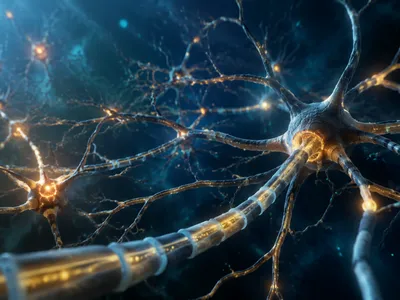
Sleep regulates the maturation of oligodendrocyte precursor cells (OPCs) into myelinating oligodendrocytes, a process aligned with circadian rhythms. During rest, genes related to myelin basic protein (MBP) and lipid production reach peak activity, supporting efficient myelin formation.
Differentiation accelerates during slow-wave sleep, driven by biochemical conditions such as increased adenosine and reduced noradrenaline levels, which promote cell growth and membrane synthesis. This process is controlled in part by circadian regulators like BMAL1; when sleep is disrupted, these signals weaken, reducing key gene expression and impairing myelin renewal.
Long-term sleep restriction leads to structural damage in white matter, including thinner myelin and greater axonal fragility, which correlate with declines in motor and cognitive performance. Analyzing these cellular changes illustrates how anatomy helps understand human structure at a microscopic level. Beyond maintenance, sleep also enables new myelin formation after learning or injury, reinforcing active neural circuits and showing that sleep sustains and adapts white matter integrity.